
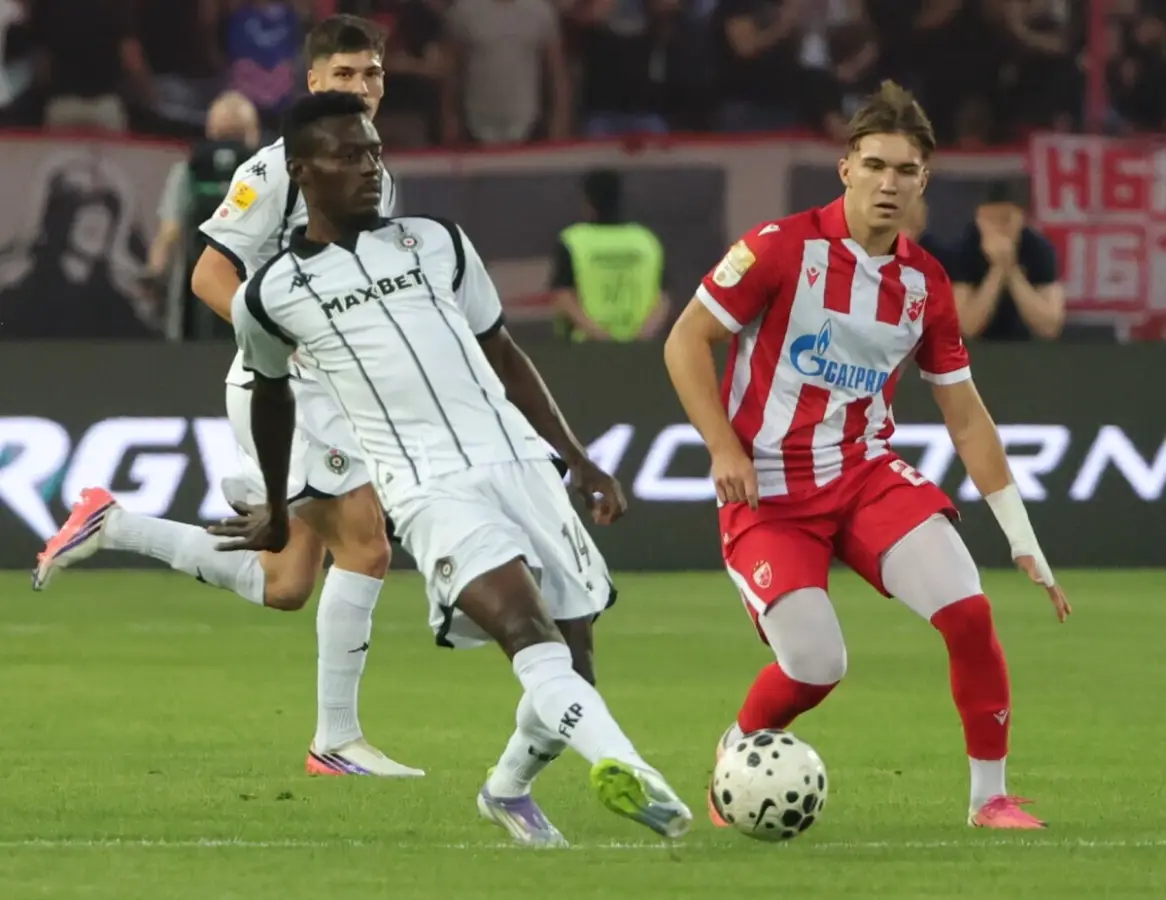
Partizan went ahead in the 180th Eternal Derby just 51 seconds in, a new record for the fixture. Red Star would not allow that early strike to decide the entire match. Bamba Diheng equalised in the 17th minute, and Mirko Ivanić completed the turnaround in the 28th. The second half brought sustained pressure and substitutions on both sides, but the hosts protected their lead and won 2:1 at the Rajko Mitić Stadium.
Partizan turned their first attack into a historic start
The visitors needed less than a minute to change the mood. A direct, decisive move was finished before Red Star had settled into their usual defensive shape. The timing of the goal became a record for Eternal Derbies. Its value went beyond the statistic, since it let Partizan control the middle of the pitch and leave the hosts with the next risk to take.
Red Star responded by restoring order in midfield
The home side did not rush to erase the deficit with every pass. Midfielders moved towards the ball, full-backs chose their moments to push forward more carefully, and attacks reached the final third with support in place. That arrangement reduced Partizan’s chances of repeating the same transition. The equaliser came after sustained pressure rather than a single isolated attempt.
| Match point | Confirmed detail |
|---|---|
| Stadium | Rajko Mitić |
| First goal | Partizan, 51st second |
| Red Star scorers | Bamba Diheng and Mirko Ivanić |
| Half-time | Red Star leading by one goal |
| Final score | Red Star 2:1 Partizan |
Diheng shifted the emotional balance
Bamba Diheng struck in the 17th minute and took away the visitors’ early control of the scoreline. The goal rewarded the width Red Star used to stretch Partizan’s last line. The visitors then had to decide whether to stay deep or press high again. That uncertainty opened more space for the hosts between the first and second lines of Partizan’s defence.
Ivanić completed the comeback before the break
Mirko Ivanić scored the second goal in the 28th minute. His contribution was more than a finishing touch, as he linked possession in midfield with runs around the penalty area. Red Star went into the break without needing to chase the game. Partizan had to find a new route into the match after the strongest start in Eternal Derby history was overturned in the same half.
In the second half Red Star had to protect their control
A narrow lead gave the hosts no room to relax. Red Star had to guard the spaces beside their centre-backs while keeping enough threat to stop Partizan from committing everyone forward. The visitors added energy with their substitutions and looked for cleaner final passes. Without another goal, many decisions were measured against the stakes of a derby.
After the substitutions, roles had to be clear at once
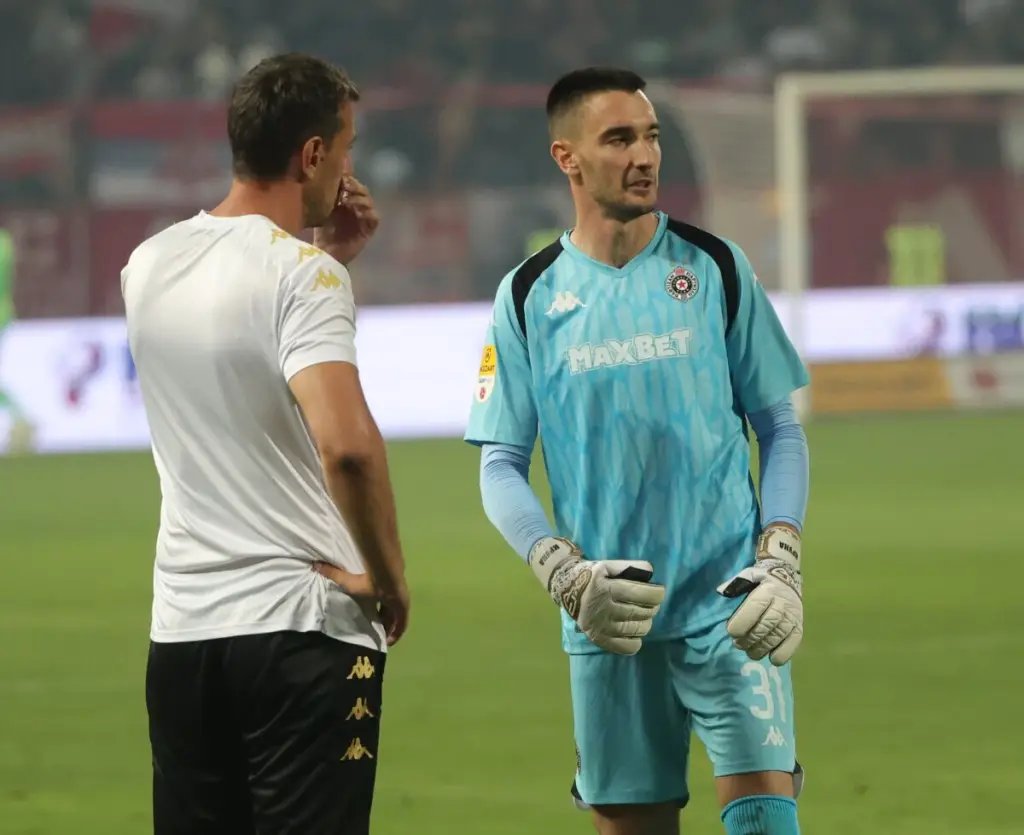
Both coaches introduced fresh players as the rhythm and physical load shifted. A substitute coming into a noisy match has little time to adjust. The first instruction has to be simple: which zone to protect, whom to mark, and where the next forward movement begins. Red Star’s shape held up through the changes, while Partizan did not turn their extra movement into a clear chance to equalise.
The result matters to the league, not just the rivalry
The Eternal Derby carries a special history, but points affect a season that runs long after the final whistle. Red Star can take confidence from answering an early blow. Partizan need to separate a successful opening plan from the later problems that allowed two goals. That distinction is more useful than judging the whole performance as simply good or simply bad.
The analysis starts with the first thirty minutes
For Red Star, the key lesson is the calm reaction after conceding an almost immediate goal. For Partizan, the question is why their early compactness stopped protecting the same spaces. Both teams can review the gap between midfield and defence, the first action after losing the ball, and the support around it. Those details explain the turnaround better than the emotion of the derby does.
Supporter safety remains separate from the result
A report on the derby can describe the atmosphere without glossing over dangerous behaviour. Tickets, the assigned sector and the official arrival guidance remain a reliable guide even after the match. Neither the early goal nor the comeback justifies objects on the pitch or movement between closed zones. A clear line keeps the football story at the centre and respects the work needed to stage a meeting of this rivalry.