
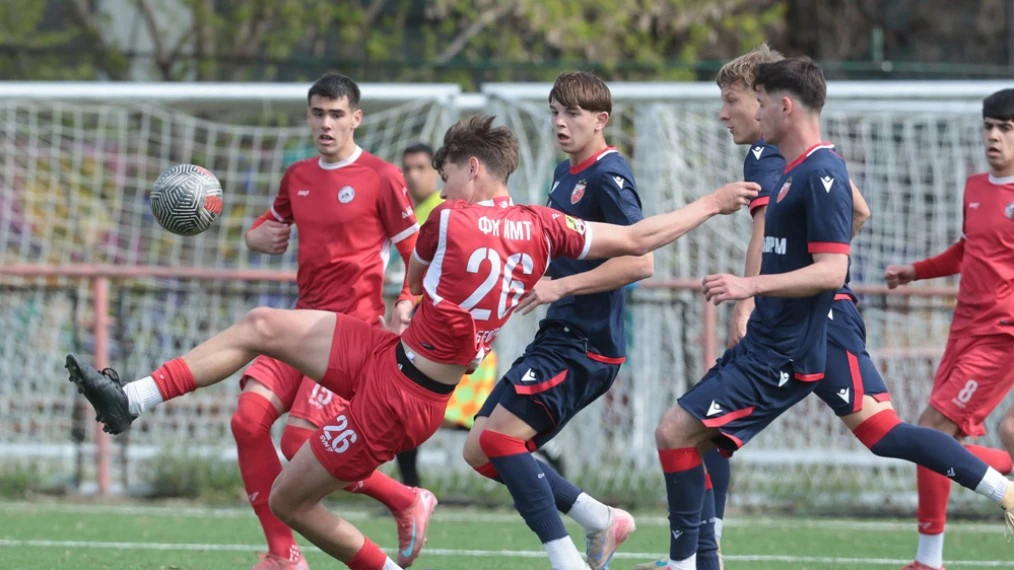
Red Star Belgrade’s cadets beat IMT 4:0 in the Serbian Cadet League. The official record confirms a clean sheet and a result built across both halves, not from one brief burst. The hosts took control, protected the midfield after losing possession and kept creating organised attacks once they had a clear advantage. For a youth side, that combination counts for as much as the final margin.
The opening required patience
IMT kept enough players behind the ball to shut down the direct route through the middle. Red Star had to circulate possession, use the width and wait for a player to find space between the lines. Young footballers often mistake control for the urge to shoot straight away. The hosts benefited from keeping the next pass in reserve and shifting their shape before entering the penalty area.
Pressing after losing the ball protected the attack
A youth side can build a good move only to concede straight away because too many players have stayed forward. The nearest Red Star midfielders reacted quickly whenever an attack broke down. That slowed IMT’s first pass and gave the defence time to hold its distances. The clean sheet was built in those moments well away from the goal, not only in the saves and blocks.
| Detail | Confirmed information |
|---|---|
| Competition | Serbian Cadet League |
| Teams | Red Star Belgrade and IMT |
| Winner | Red Star Belgrade |
| Defence | No goals conceded |
| Final score | 4:0 |
The lead did not remove the need for structure
Once ahead, the hosts kept their roles clear. The wingers stretched the pitch while central team-mates offered support rather than standing in the same line. Later chances came more easily and there were fewer unnecessary touches. A heavy win develops players most when it comes from repeating good decisions, not from simply exposing an opponent’s loss of shape.
IMT lacked a safer first pass
The guests’ best route was to break out of the first wave of pressure and move the ball into calmer areas. When the initial pass stayed close to danger, the next player had little time and few angles. A switch to the side could have shifted play away from Red Star’s strongest pressing zone. That is a precise training point, not a broad criticism of the whole squad.
Substitutions kept the match useful for development
Coaches could test new players in a game whose course had become hard to change. Substitutes still needed clear tasks and the same demands on positioning. Red Star looked for organised chances without leaving defensive cover. IMT had the chance to see who kept asking for the ball and made calm decisions under pressure.
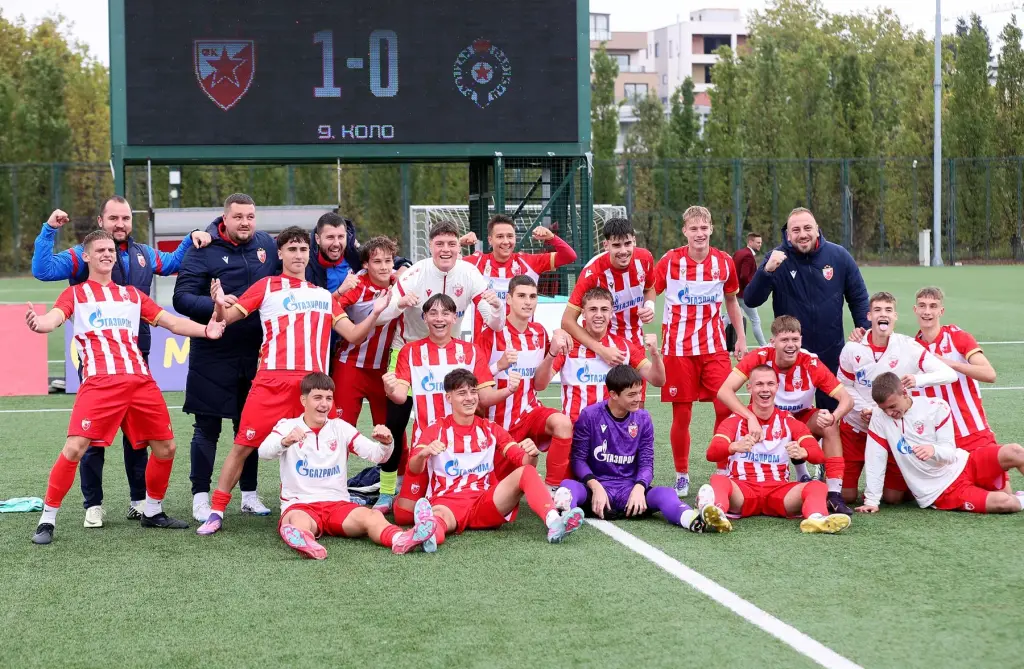
The four goals should be separated by how they were created
Useful video analysis groups chances by origin: a built possession, a high turnover, a combination down the flank or a set piece. If several goals came from the same pattern, Red Star has a repeatable strength. If they came in different ways, the match shows the breadth of the attack. The coaching value lies in the action before the shot, not only in the final touch.
The clean sheet also holds defensive corrections
IMT did not score, but Red Star still needs to review the moments when the guests reached space or forced a sprint back. A favourable result can hide poor body position or a late read. The correction now protects the players when the next opponent is more accurate. Development demands the same honesty after a win as after a hard defeat.
The next match will show whether the habits have settled
Control against IMT becomes a stronger sign if Red Star repeats the same spacing in a tighter game. The coaching staff can keep patient possession, quick support after losing the ball and discipline after taking the lead. IMT needs to work on its first pass and the distances that help it escape pressure. Both sides therefore have concrete work to do, not just a line in the table.
Praise for individuals must stay tied to the team’s task
Scorers and goalkeepers attract most attention, but an assessment of cadets should also cover decisions without a final touch. Coaches can note who stretched the pitch, who protected the space behind team-mates and who offered a simple pass under pressure. Young players then learn that goals and saves are not the only things that matter. A full analysis rewards the habits that create visible moments and prepares the group for senior football.
The report must keep the age group in view
A cadet result should not be presented as proof that the whole generation is ready for the first team. Pace, physical contact and responsibility in senior football come gradually. This match confirms that the players carried out their tasks against peers in a league setting. The next value comes when coaches see the same principles away from home, under different pressure and without an early lead.