

Red Star and the Champions League: How Red Star Belgrade Plans to Navigate the 2026/27 Qualifying Gauntlet
For Red Star Belgrade, the summer calendar follows a familiar rhythm: win or fight for the domestic title, take a brief breather, then turn sharply toward the Champions League qualifying rounds. That three-month window between late June and late August, when ambition collides with the harsh arithmetic of European football’s knockout preliminaries, has defined the club’s modern era. The question ahead of the 2026/27 cycle is not simply whether Red Star can qualify, but whether this summer’s squad building will finally deliver the depth and quality that make the route less perilous.
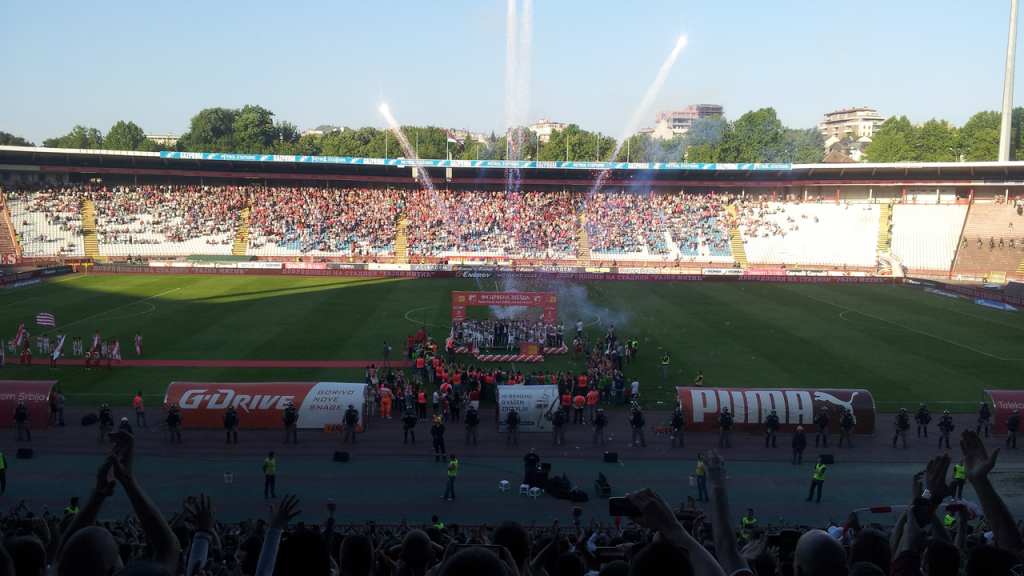
The supporters at the Marakana have grown used to the agony and occasional ecstasy of the qualifying path. A club of Red Star’s historical stature, the 1991 European champions and a giant of the former Yugoslav game, deserves a permanent seat at European football’s table. The infrastructure, the fan base and the ambition are all in place. What the sporting directors and coaching staff must deliver this summer is a team capable of surviving three or four two-legged hurdles against opponents who may be better funded and better rested.
Understanding the qualifying route
The structure of Champions League qualifying means that clubs entering in the first or second round can be knocked out before many of their rivals have even returned from pre-season. For Red Star, the entry point for 2026/27 will depend on the final UEFA coefficient and the draw. Historically, Red Star has entered at the first or second qualifying round, which means an early, brutal exit against a well-organised side from a stronger league is a very real possibility.

The format demands consistency across the whole summer, not just one good performance. A single poor defensive display or one moment of individual error in a return leg can wipe out months of preparation. That reality shapes everything, from the approach to the transfer market to the daily work on the training ground. Squad depth matters as much as star quality. A group of seventeen or eighteen dependable players is worth more than eleven exceptional footballers and an empty bench.
Clubs from leagues with higher UEFA coefficients can enter at the play-off level or straight into the group stage, which gives them extra preparation time. Red Star must offset that imbalance with superior fitness, tactical cohesion and, crucially, a well-stocked squad that can rotate without a visible drop in quality. The summer of 2026 is therefore not just a matter of ambition. It is a matter of pragmatic, intelligent planning.
Squad needs: Where the gaps are
Any honest assessment of the Red Star squad ahead of this qualifying campaign has to acknowledge that the areas of greatest vulnerability are the same positions where the club has historically struggled to hold on to talent. Technically gifted central midfielders, creative number tens and mobile wingers with the pace to unsettle European defences are the profiles that keep arriving, impressing and then attracting the attention of bigger markets. That cycle of developing talent and then selling it is deeply embedded in the club’s economic model, and sporting leadership has to plan around it.
Defensive stability has generally been one of Red Star’s strengths in European competition. The club has shown it can be compact and difficult to break down in qualifying rounds, particularly in return legs when protecting an advantage. However, the full-back positions, both left and right, are areas where greater attacking quality would help in a modern system built on high pressing. A full-back capable of working as a supporting winger in transition, contributing to build-up play while still tracking opposing attackers defensively, is exactly the type of player who separates clubs that merely qualify from those who genuinely threaten in the group stage.
In attack, the question of goals is always central. Aleksandar Mitrović, now at Al-Hilal and very much in the autumn of his international career, represents the kind of physical penalty-area striker that is becoming harder to replace at this level. Red Star will need a reliable finisher, not necessarily a player of Mitrović’s profile, but someone dependable enough to carry the load across several qualifying ties when the pressure is at its peak.
Transfer targets and market strategy
Red Star’s transfer approach in recent windows has combined three elements: retaining key domestic pillars, targeted signings from Balkan and Eastern European markets that offer value, and occasionally bringing in a higher-profile player, most often someone returning from a bigger league or a Serbian international seeking regular minutes. That framework is sensible given the club’s financial position relative to western European rivals, and there is no reason to depart from it dramatically in the summer of 2026.
The Serbian football market remains a productive hunting ground. Superliga players who have shown quality in the domestic game but have not yet been tested in European competition represent low-cost, high-potential acquisitions. Red Star’s scouting operation, which has been significantly upgraded over the past decade, should be capable of identifying two or three such players this summer. Beyond the domestic market, clubs in Romania, Croatia, Slovakia and the Czech Republic have historically produced technically competent midfielders and attackers who suit Red Star’s style.
Perhaps the most intriguing strategic question is whether the club will try to bring back a player with Superliga experience who is currently playing abroad. Players such as Strahinja Pavlović, who has built a reputation at AC Milan, represent the peak of Serbian footballing talent, and while the return of a player of Pavlović’s calibre in the prime of his career is unlikely, his path illustrates the development route that Red Star can credibly offer younger talents before they take that next step.