
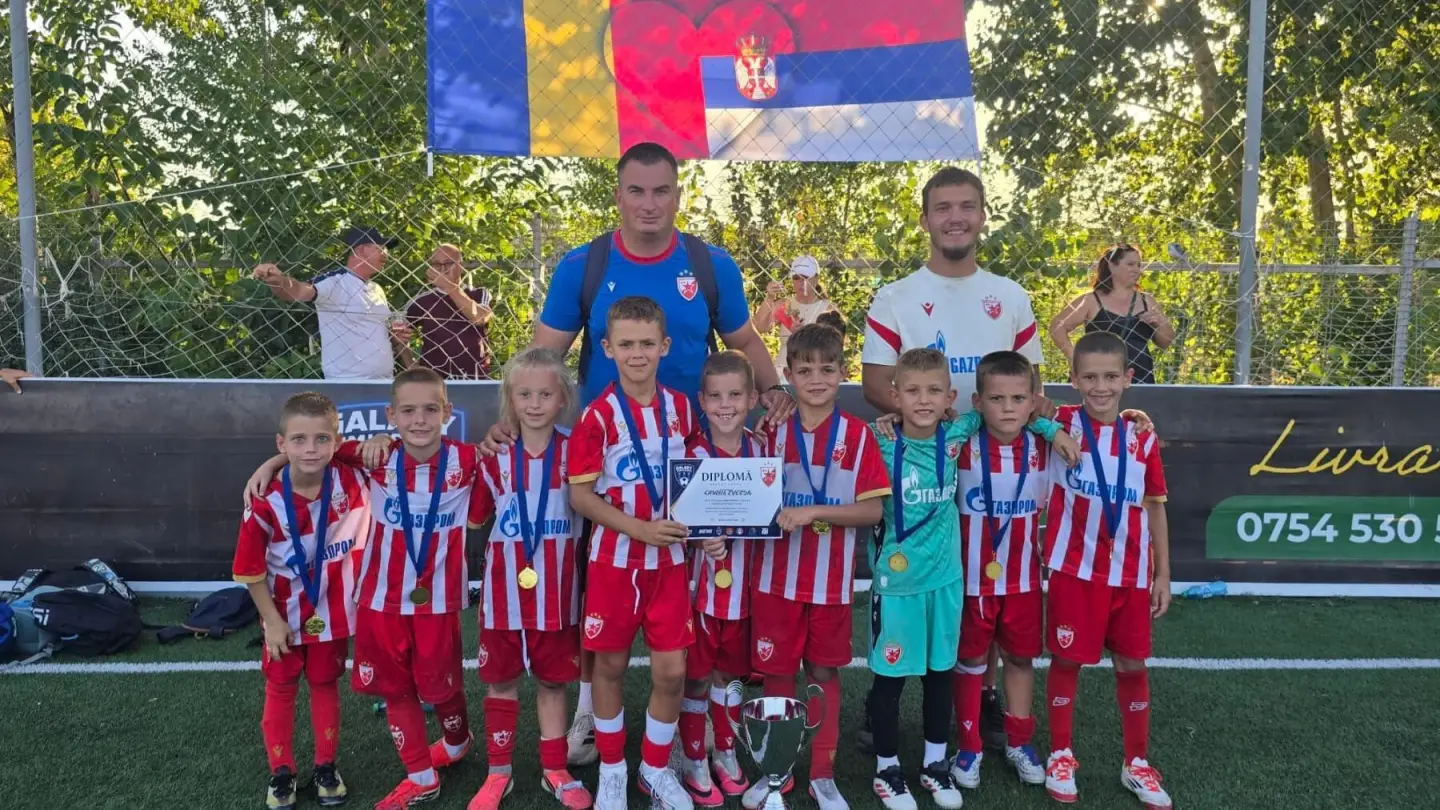
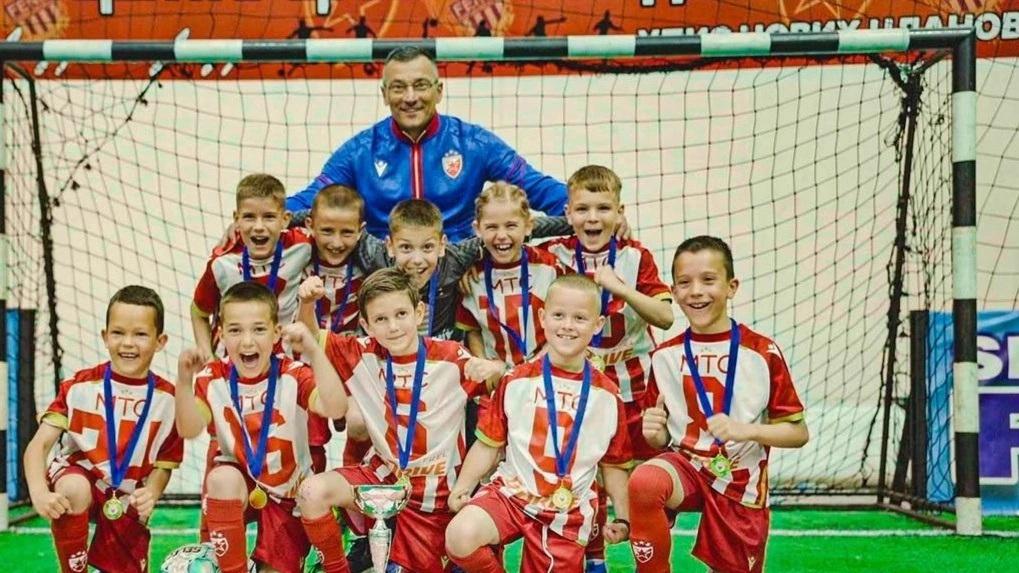
Red Star Belgrade’s footballers born in 2019 lifted the international Galaxy Cup in Timișoara. Coach Žarko Marković’s team won every one of its seven matches and ended with a goal difference of 51:1. CSS Banatul were overcome in the semi-final and Kristiyau Kris in the final, so the club’s youngest red-and-white generation came back from Romania with silver on display.
The result reflects consistency across the whole tournament
A youth tournament can turn quickly, since sides play several short games with limited recovery time. Red Star won every group game and then kept the same focus through the semi-final and final. A 51:1 goal difference shows a huge margin, but seven separate wins prove even more about steadiness. Players had to reset after each match rather than carrying the previous result into the next one. Coaches can use that process to teach good preparation and respect for each new opponent, even when the last win was emphatic.
Big scores should not become the only story
The group stage brought several convincing victories. Repeating every scoreline would pull attention away from the tournament’s developmental value. At this age, coaches also watch whether players spread out properly, pass to a teammate in a better position and react when they lose possession. A child who scores a few goals still has to build those habits. The overall performance confirms Red Star’s dominance, while a balanced assessment keeps the focus on the decisions that will matter when future opponents leave less time and space.
| Stage | Confirmed outcome |
|---|---|
| Group stage | Five wins |
| Semi-final | Victory over CSS Banatul |
| Final | Victory against Kristiyau Kris |
| Overall in the tournament | Seven wins and a goal difference of 51:1 |
The single goal conceded gives staff useful material
Conceding just one goal in seven matches is an excellent defensive return, and that one moment may be especially useful to analyse. Coaches can ask how the attack began, whether the team was well positioned and how players reacted after the goal. The aim is not to pin blame on a very young player. It is to make sure the squad understands that defending starts the moment the ball is lost and involves strikers and midfielders as well as defenders. A clear lesson from one goal can improve future positioning more than another round of praise after an easy win.
Knockout matches demand fresh preparation
Red Star beat CSS Banatul in the semi-final and faced Kristiyau Kris again in the final, a side they had already met in the group. A rematch brings its own challenge, because both teams already know some of each other’s habits. The final cannot be treated as a continuation of the earlier game. Players must take on new instructions, calm early nerves and avoid assuming the previous result will repeat itself. A second win over the same rival shows the squad had prepared well again and kept enough discipline to finish the tournament strongly.
International travel is part of the education
The trip to Timișoara adds routines that do not appear in ordinary training. The group has to travel together, organise meals and rest, look after equipment and behave sensibly between matches. These simple responsibilities help young players understand team conduct away from their usual surroundings. Coaches and families play a major part in creating a calm environment. The trophy is the visible reward, but the experience of travelling and competing without losing everyday discipline can stay useful long after the match reports are forgotten.
Every player shares responsibility for the final success
Red Star’s squad included Lazar Marković, Andrija Koprivica, Pavle Marković, Viktor Lukić, Marko Živanović, Lazar Bogdanović, Aleksandar Dobrosavljević, Ahmed Murić and Viktor Stankul. At this age it is better for development to highlight the whole group than to build the story around a single scorer. Players contribute through pressing, passing, covering space and supporting teammates. The tournament record belongs to the team and its coaching staff, although individual progress will continue at a different pace once the squad returns.
The next step is steady work, not a bigger title
Winning an international youth cup is a positive sign for Red Star, but it does not decide a professional career. These players were born in 2019 and need patient technical, physical and personal development. Their next sessions should return to tasks suited to their age rather than chase the same margins of victory. Coaches can protect the squad’s confidence while introducing harder exercises and more evenly matched opponents. The healthiest meaning of the Galaxy Cup is that the group applied its work successfully and earned another challenge, not that development is complete.