

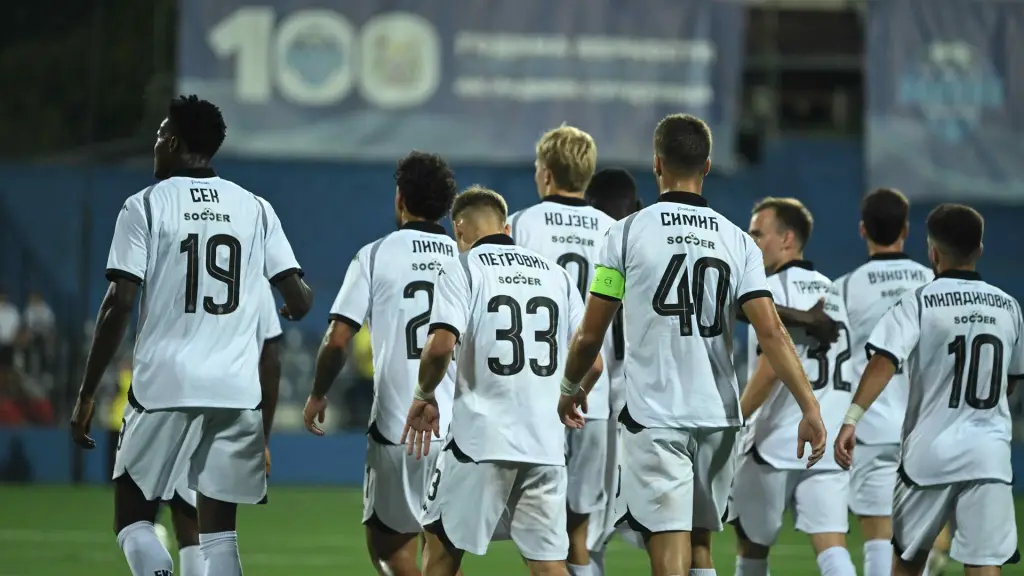
Partizan took a point from Radnik in a 4:4 draw, even though they had been down to ten men since the first half and twice trailed by two goals. Erik Kojzek gave Partizan the opening goal, the hosts then scored three, and Demba Sek, Marko Simić and Lima led the black-and-white response. The point came from determined play, but the four goals conceded remain an important part of the analysis.
The first goal did not settle the match
Kojzek scored after a good Partizan move, following a Miladinović effort that had already struck the woodwork. Radnik then exploited the space around the visitors’ midfield line.
Three goals from the hosts changed both the scoreline and the flow of the game. Partizan had to adjust their approach rather than rushing every attack. Their opening goal came from a move that quickly reached a shooting zone. The lead, however, did not stop Radnik from pushing forward, and soon Partizan were defending for longer rather than controlling the tempo with the ball. FK Radnik’s quick reply showed why the first goal could not be a reason to slow down. Partizan lost control of the space around midfield and let the hosts attack before the visitors could regroup.
The red card made every comeback attempt harder
The dismissal of Milan Vukotić left Partizan with ten men before the end of the first half. The side still had to keep their width, while also protecting the centre of the pitch.
A poorly coordinated press would have given Radnik a direct route to goal. That is why correct positioning and collective movement mattered more than sheer willingness. Playing with ten changed the space each midfielder had to cover. Partizan could not press every pass and instead had to pick their moments, protect the middle and accept some of Radnik’s possession out wide. The red card also changed the substitution plan, because each new player had to solve both the attack and the reduced numbers. Energy alone was not enough; behind every run, someone had to guard the centre of the pitch.
| Phase of the match | What changed |
|---|---|
| Start | Partizan scored the first goal |
| Before the end of the first half | Radnik took the lead, and Partizan were playing with ten men |
| Second half | Partizan twice came back after trailing by two goals |
| Final result | 4:4 |
Sek and Simić brought the match back into balance
Sek’s goal reduced the deficit and allowed Partizan to push their lines forward. Simić then equalised, before Radnik took the lead again.
The black-and-white side kept creating chances without giving up their protection behind the ball. The hosts therefore had to defend transitions rather than simply keep possession. Sek’s goal cut the gap and gave the next attack a clear target. Simić then enabled the comeback with a timely run into the space in front of goal, which showed that coordinated movement allowed the team to remain dangerous even a man short. The equalising goals restored belief because they came from organised moves. Partizan pushed up against FK Radnik’s defensive line, supported the player on the ball and reached the box with more options available.
The second equaliser came after Lima’s strike
Lima’s goal answered Radnik’s latest strike and produced the final 4:4 scoreline. Partizan remained one goal short of a lead despite being a man down.
The 4:4 result shows character, but it does not erase the problems that led to four goals conceded. Both conclusions matter for a fair assessment of the match. When FK Radnik retook the lead, Partizan did not turn every ball into a random cross. Lima’s goal brought the second equaliser because the visitors stayed close to the ball and kept the positions needed for another attack. His strike ensured that a bold reply was not left without reward. It also confirmed that the visitors could still make clear decisions after the emotional blow of falling behind again.
The key lesson concerns control
Partizan showed they can stay in a difficult match when roles are clear. The coaching staff must now establish why Radnik so often reached shooting positions.
Attacking courage will carry more value with a better first reaction after losing possession. The point from Surdulica only earns its full worth if the side reacts that way consistently. The point rewards character, but the four goals conceded remain a necessary part of the analysis. Partizan should keep their tenacity while reducing the space that twice gave Radnik a two-goal advantage. The coaching staff’s task is to separate courage from needless chaos. If they keep the first quality and correct the second, Partizan’s next responses will not depend on four goals in the visitors’ favour. The gap between the last line and the midfielders after their own attacks deserves particular scrutiny. When that space is smaller, the team can slow the counter earlier and save energy for the next possession. The match in Surdulica also showed that clear communication remains possible when a player down. That quality is worth keeping, but with a calmer choice of moment for stepping out to the ball. The next game should show whether the side has carried that lesson into more stable organisation. That will be a stronger proof than the final scoreline. Control must last from the first minute.