
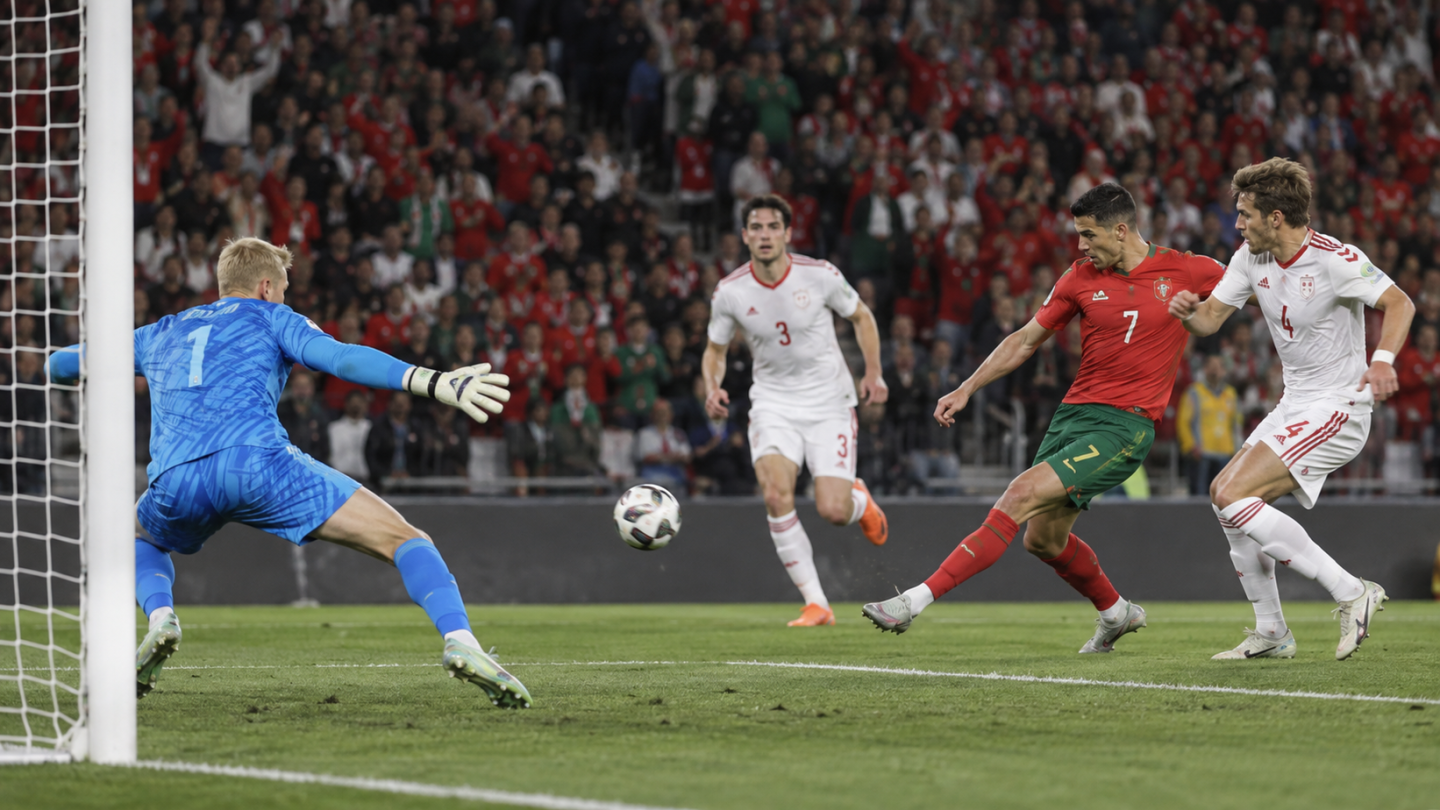
Portugal beat Denmark 4-2 in Copenhagen to keep their perfect record after three rounds of the Nations League. The reigning champions now sit six points clear at the top of the group, having settled a six-goal contest with a sharper finish and several sudden shifts in rhythm.
João Cancelo opened the scoring after a pass from Gonçalo Ramos, but Mikkel Damsgaard levelled with a strike from a tight angle. Ramos then finished a move set up by Bruno Fernandes, restoring Portugal’s lead. Three goals in a short spell of the first half showed how dangerous both sides were once they won the ball back.
Denmark drew level again in the 53rd minute through Rasmus Højlund, after Damsgaard played an accurate ball over the last line. Portugal answered with two more goals and secured their third win. The visitors managed the space better once the hosts had to take risks.
Ramos linked the attack between the lines
Ramos’s contribution went beyond the goal and the assist. His movement pulled centre-backs out of position and opened the inside channel for Cancelo and Fernandes. When the striker received the ball with his back to goal and released it quickly, Portugal could switch play before the Danish block reset.
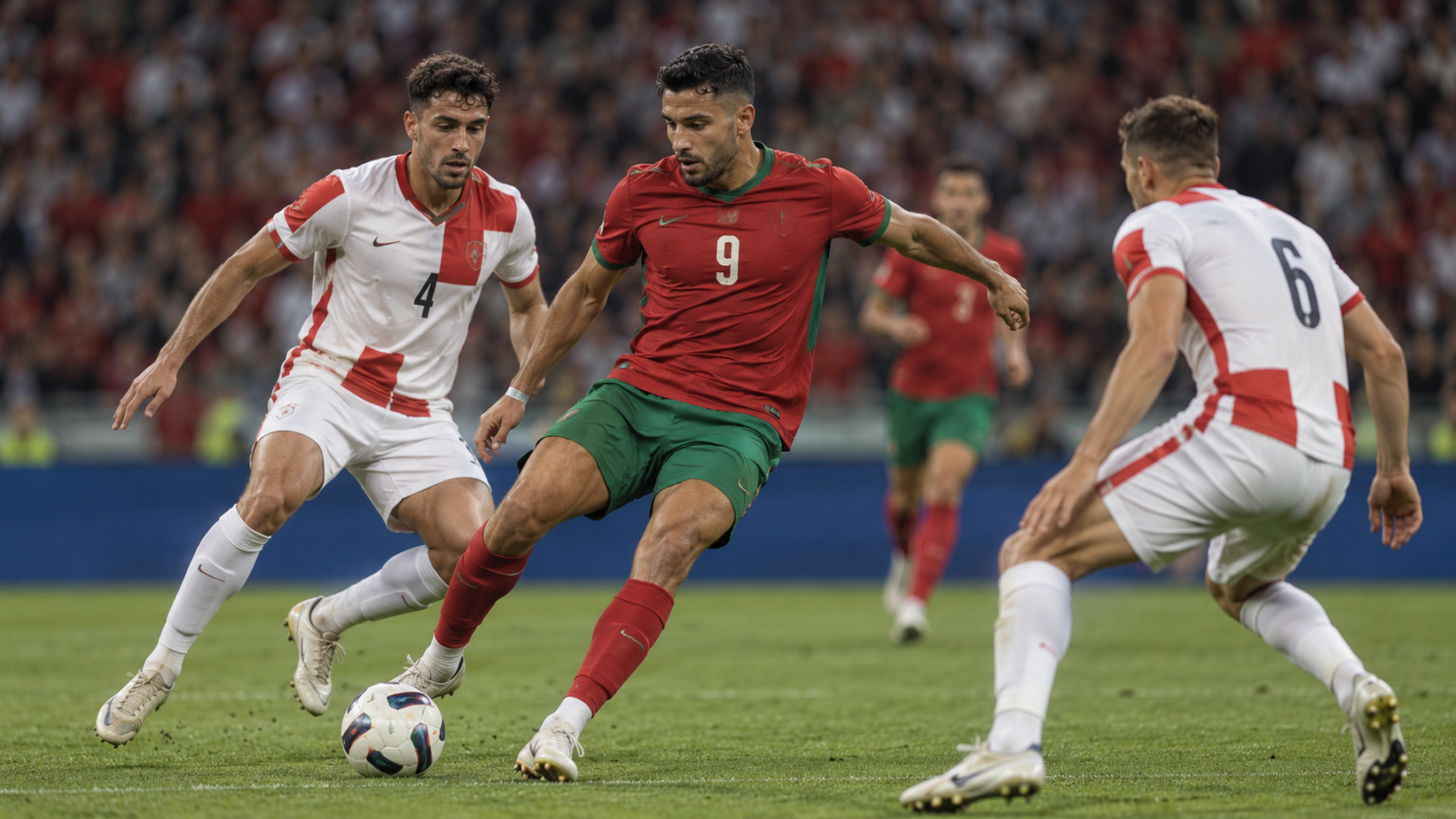
Denmark looked their best when Damsgaard received the ball between the midfield line and the defence. His first goal came from individual precision, and his assist to Højlund from timely reading of depth. The problem was that the hosts too rarely won the second ball to repeat those attacks.
After 2-2, Portugal showed an important competitive quality: they did not reduce the number of players arriving for the finish. The full-backs picked their moments, the midfield stayed compact enough, and the forwards used the space behind the Danish line. The balance was better than in earlier phases of the open game.
The maximum return gives Portugal control of the group
A six-point lead does not guarantee first place, but it changes the calculation for the coming rounds. Portugal can choose when to accelerate, while their rivals must chase wins. That suits a side with quality passers, because an opponent can no longer spend the whole match in a low block.
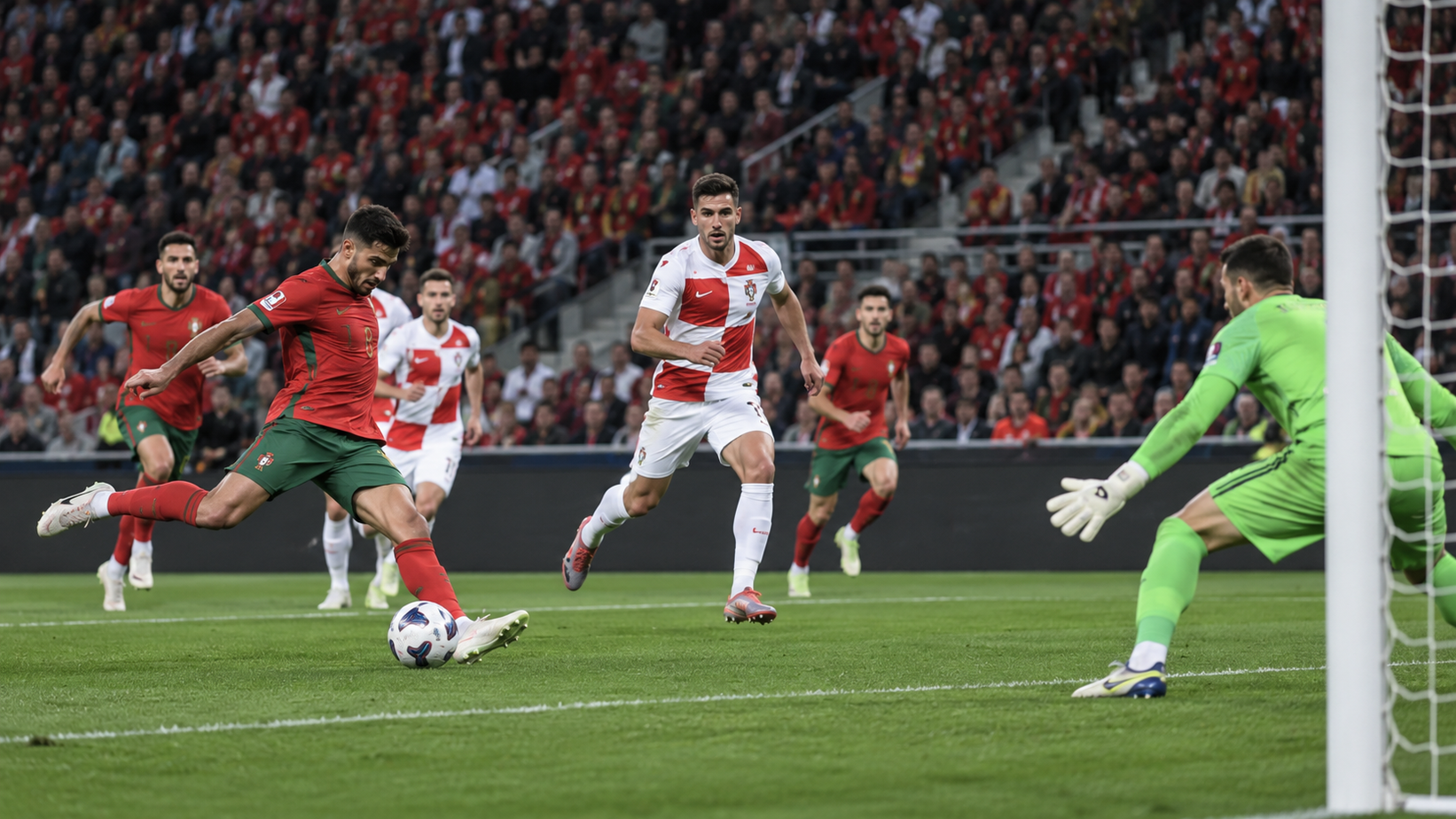
The coach still has material to correct. Two goals conceded came when the gaps between the lines were not small enough. Against a stronger opponent, one poor recovery run by a full-back can change a match, so video analysis will focus closely on protecting space after a lost ball.
With the result, Portugal confirmed their depth without relying on a single big name. Ramos, Cancelo and Fernandes shared the key roles, while substitutions kept the intensity up. If the side keeps that spread of responsibility, the closing stages of the group can serve as further preparation rather than a fight to stay near the top.
The next round will test how well Portugal manage the lead they have built. The most useful measure will not be possession alone, but the number of entries into the box after controlled attacks and how quickly they react to losing the ball. If the side stays dangerous without opening itself up needlessly, it can secure its target early. That would give the coach room to widen the rotation and test further options ahead of the end of the season. The next outing or official result will show how far this conclusion holds under new pressure. The figures should be read together with the quality of the opponent, the conditions and the decisions made at key moments. It is important to separate the current result from the longer trend: one success confirms good preparation, but only repetition shows stability. The coaching staff should therefore track a few clear indicators, compare them with the previous outing, and change only what has proven to be a weak point. That approach protects confidence while leaving room for progress. The reaction of direct rivals will also matter, as preparation changes once an opponent recognises a successful pattern. For that reason the analysis should include situations where the original plan did not work. The best performances come when a team or athlete keeps its core strength and makes a small, timely adjustment during the event.