
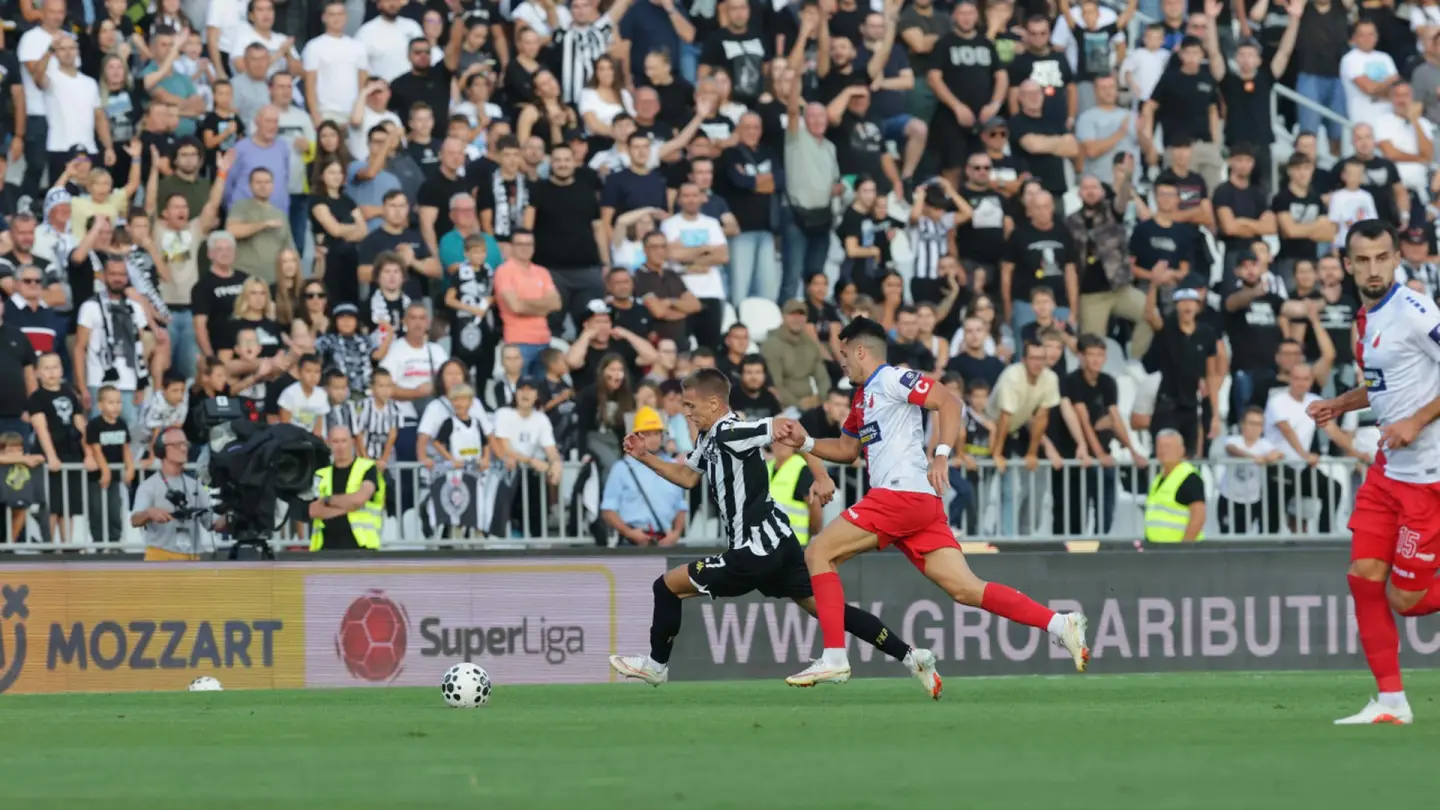
Partizan came back into the match after a difficult first half and scored twice through Erik Kojzek, but Vojvodina won 3:2. The home side applied their heaviest pressure after the restart. The visitors already held a two-goal lead before adding a third just as Partizan moved within reach of an equaliser. A bright opening from the hosts failed to yield a goal, and defensive mistakes along with Vojvodina’s more precise play settled the outcome.
A good start did not bring a reward
Partizan began with energy, backed by well-filled stands. Ze had the first big chance but could not turn it into a goal. That miss did not decide the game on its own, but it shaped the early phase. Vojvodina soon moved forward, and Milan Kolarević scored after his shot deflected off Sidnei Lima and wrong-footed the keeper. Such a ball is hard for a goalkeeper to read, yet the move showed how quickly the visitors could reach a good shooting position.
Kolarević added a second goal before the break, this time from a more direct move. Partizan therefore struggled not only with finishing at half-time. They were reaching the final third, but Vojvodina stayed calmer when the last decision had to be made. The gap between activity and control was wide. Partizan’s aggression brought hope, while the more accurate choices of the visitors set the pattern for what followed.
Kojzek added more danger in front of goal
Ze left the pitch injured before the break and Kojzek came on in his place. Partizan also introduced Vukotić and Sekulić, seeking more movement around the penalty area. The changes altered the home attack. Partizan began winning loose balls closer to goal and forced Vojvodina to defend for longer spells. Kojzek then reduced the deficit and gave the home supporters renewed hope.
Kojzek stayed close to goal as the attack developed and offered a clear option whenever Partizan moved the ball quickly forward. Even so, the home side had to protect the space behind the players who were pushing forward. While Partizan chased the equaliser, Vojvodina found that space, and Pavle Ranđelović scored the visitors’ third. Partizan’s intent was clear, but their defensive security was not enough.
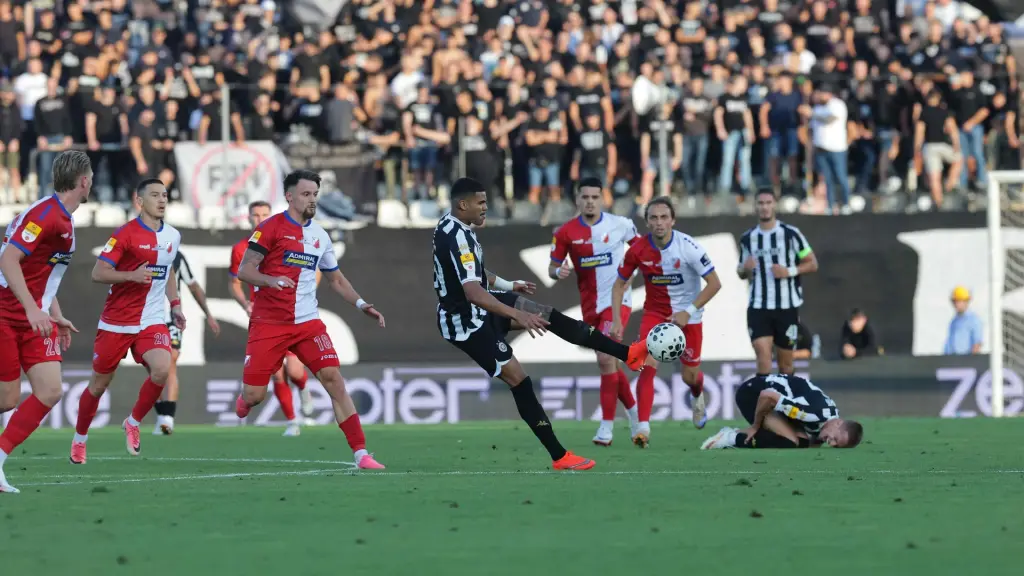
The third conceded goal changed the significance of the late strike
After Ranđelović’s goal, Partizan needed two more to level the score. Kojzek struck again in stoppage time, but his second goal only reduced the gap. His contribution still matters. Two goals from a reserve striker give the coaches an extra option and show the side fought to the end. That should not hide the moments when Vojvodina found room too easily.
A 3:2 defeat looks very close on paper, but the order of the goals tells a larger story. Vojvodina led by two, survived Partizan’s strongest spell and scored again before the hosts’ final goal. The visitors did not control every minute, but they played the moments that changed the match better. Partizan’s late pressure made the finish tense but could not repair the damage done in the first half.
What Partizan can take into the next game
The lesson is not that the approach from the second half should simply be applied from the first minute. Partizan raised their risk because they were already losing. A better start would combine the same directness with greater care after losing the ball. Players must stay close enough to support the attack, while the defence needs a position from which it can slow the opponent’s first pass. That way, the pressure could last without leaving large gaps behind it.
Kojzek strengthened his case for a bigger role, but one striker cannot solve every problem. Partizan must finish early chances more calmly, react faster after losing possession and communicate better when the ball rebounds inside the box. Vojvodina showed the value of simple and precise finishing. The hosts did not give up, but a better result will require balance and composure from the first minute.
The coaches can take a sound base from this match for the work ahead. The side lifted its tempo after the break, and a reserve striker turned that pressure into goals. The next step is not more attacks at any cost but better connection between the lines. When the last midfielder and the defence stay close enough to support the attack, Partizan can keep the ball around the penalty area and reduce the danger of a quick reply. Such a shape would bring more stable play from the start.