
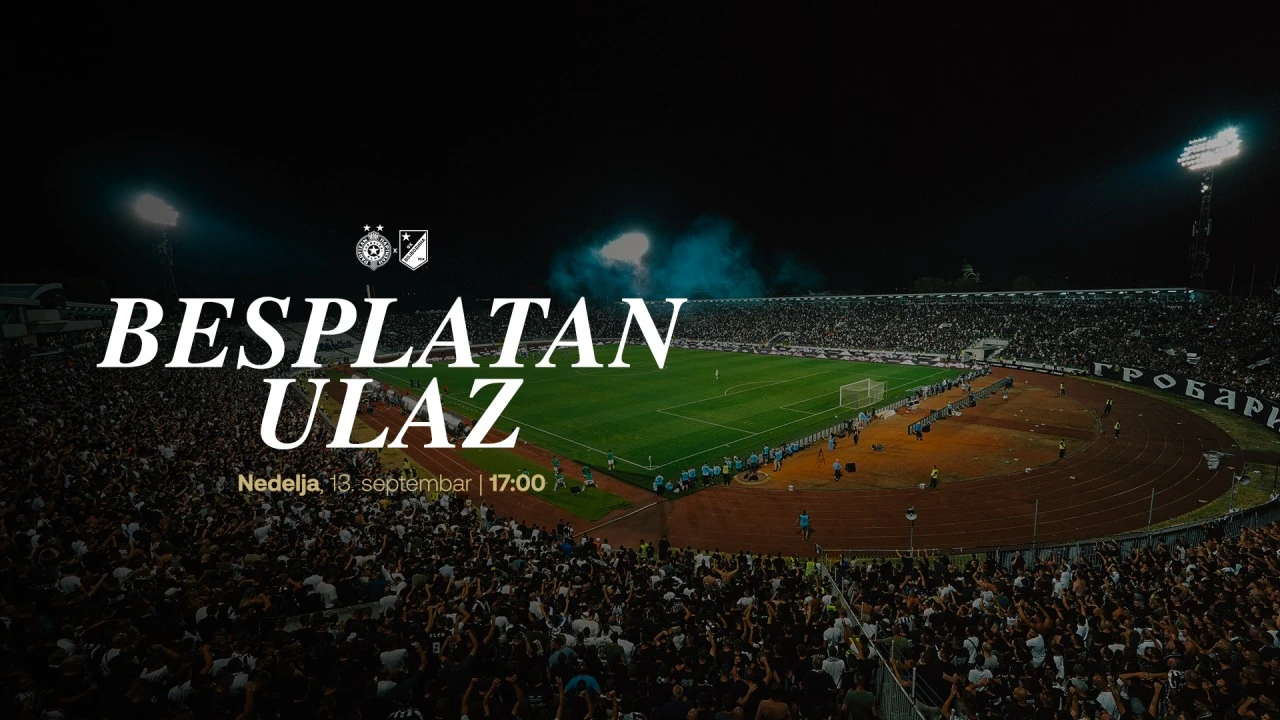
FK Partizan has announced that entry to the home fixture against Vojvodina will be free. At the club’s request, the start of the match at Humska has been brought forward from 21.00 to 17.00. Partizan tied both decisions to the backing it has enjoyed since the opening of the season, particularly from supporters who make the trip to games from other towns. The practical goal is straightforward: the club wants a bigger crowd at an important league encounter, and it is removing two barriers, the price and a late return home.
An earlier kickoff reshapes the whole day
Moving the start forward by four hours is no minor change to the calendar. Fans can set off earlier and leave Belgrade sooner, families get a more manageable schedule, and people coming from outside the capital have more options for getting back. Even so, supporters should check the club’s latest notice before setting out, since free admission may come with special gates or capacity rules. It is sensible to arrive early when the exact number of spectators is not yet known.
Free entry is a direct call to fill Humska
Partizan has linked the decision to the loyalty of its supporters. The club now wants that energy to turn into a visible advantage on the pitch. Removing the price tag may draw in people who do not attend every round, but the atmosphere also depends on good organisation. Clear information about entrances, orderly security checks and open access routes to the stands will matter. Fans can help by getting there well before the start.
| Detail | Confirmed decision |
|---|---|
| Fixture | Partizan – Vojvodina |
| Venue | Partizan Stadium, Humska |
| Kickoff | 17.00 instead of 21.00 |
| Entry | Free for supporters |
Vojvodina arrive to play a competitive match
The visitors are not coming to a fans’ celebration but to a serious league contest. A louder stadium may push them further towards firm defending and discipline. Partizan therefore needs a calm start. Quick football makes sense when there is space, but hurried long passes can open the door to a counter-attack. The home side should move the ball until Vojvodina’s shape shifts, and only then attack the space that results.
Support must lead to clear decisions
A large crowd can lift a team, yet it can also encourage an unnecessary shot or a poor final pass. The players nearest the ball must set the rhythm. If Vojvodina close the middle, Partizan can switch the play and bring a full-back into the attack with proper cover behind. If the visitors press high, the first player to receive the ball needs a simple option back. Fan energy becomes an advantage when the team stays patient enough to use it throughout the match.

The first reaction in defence will be crucial
Vojvodina could threaten after a lost ball if Partizan send too many players forward on one side. The nearest midfielder must judge at once whether pressure can stop the counter. If it cannot, the group should restore its shape rather than chase the ball one by one. The defence must close down the early pass into space. A single successful counter-attack from Vojvodina could change the mood of a full stadium.
Corners and free kicks could decide a close game
A duel between two major Serbian clubs can stay tight even when Partizan enjoy more possession. Corners and wide free kicks offer a direct route to a good chance. The delivery from the flank towards the penalty area must be matched by agreed movement, not just a crowd of bodies. On the other side, Partizan must control the loose ball after the first clearance. A player on the edge of the box can stop a second cross from the flank and launch a counter.
Fans from other cities should check their journey
The kickoff time was also chosen with supporters from other parts of Serbia in mind. They should compare road and rail links with the confirmed match time, allow for city traffic and avoid relying on the last possible departure. The club’s official channels remain the best place for any change. Posts elsewhere can spread quickly, but sometimes they carry the old kickoff time.
The decision will be judged by the experience in the stadium
Free entry and an earlier start create the conditions for a good attendance. The real value depends on whether people can enter safely, watch a responsible game and leave without unnecessary confusion. Partizan has issued a clear invitation. The team must now treat the fixture as seriously as any other, and supporters can apply pressure without behaviour that harms the club. A good day would combine a practical plan with a competitive result.