
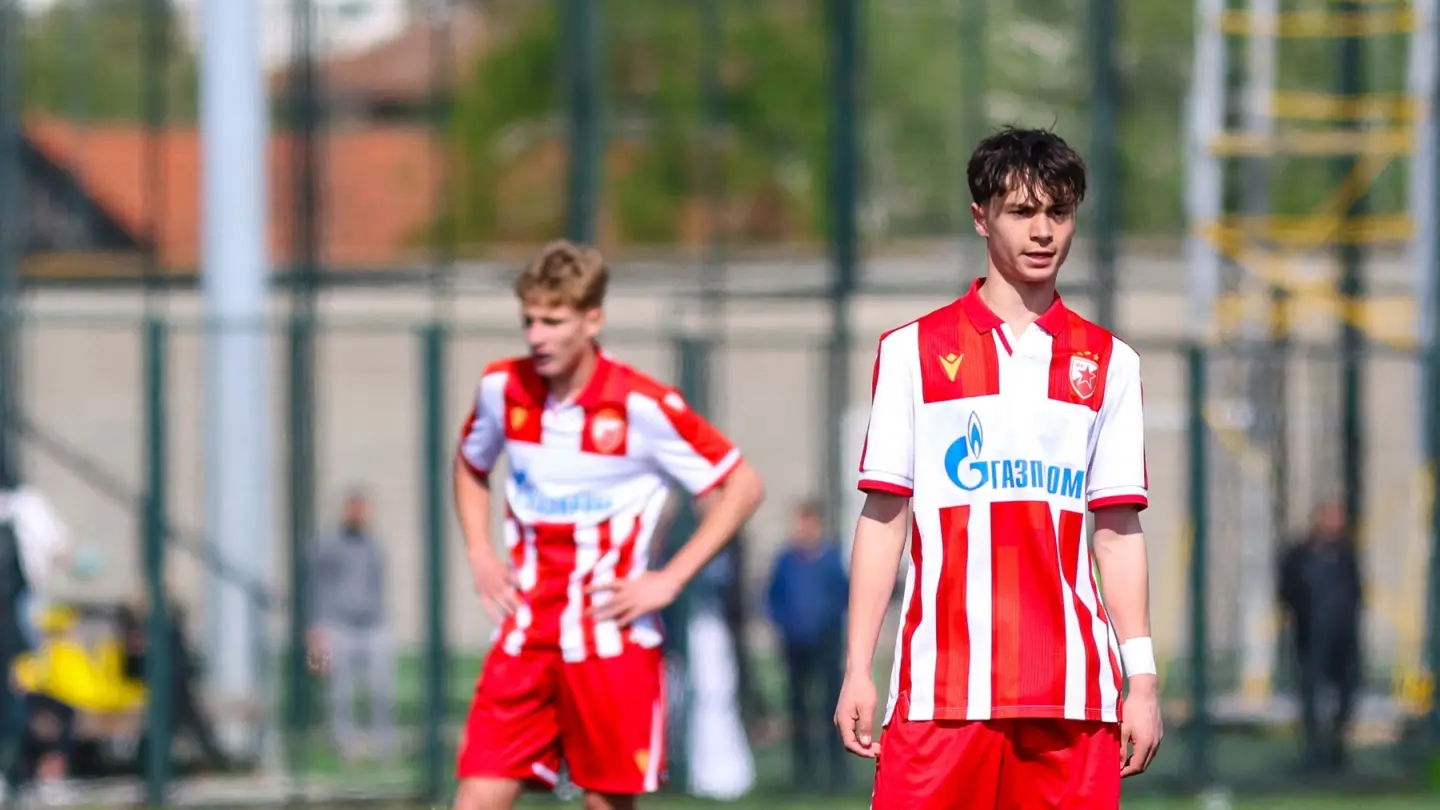
Red Star Belgrade have profiled Luka Trpevski in their series on young players. He was born on 22 January 2010 and started playing football at the age of five at the Famos school. His path went through Vardar before he reached Zvezda. Last season he played for the cadets of Grafičar and Red Star, and his progress won him a place at the first team’s summer preparations. He has returned to the cadet squad, but he now understands far better the standard that awaits him in senior football.
Training with the seniors gave him a clear yardstick
Young players are often told that the first team is faster, yet only a shared training session shows how big the gap really is. The next pass has to be planned before the ball arrives, space closes sooner, and a poor first touch can kill an attack. Trpevski did not have to come back as a finished senior player. The biggest gain from the preparations is that he now knows which habits survive at higher speed and what he must improve every day.
His journey already spans several environments
Starting at Famos, spending time at Vardar and then joining Zvezda’s system brought new team-mates, coaches and demands. That experience can help an attacking midfielder, who has to read several relationships at once. He must follow the movement of the forwards, offer support to the deeper midfielder and judge when to hold his position between the lines. A change of club is worthwhile when a player grasps why each team asks for a different position or tempo.
| Stage | Step in his development |
|---|---|
| First club | Famos football school |
| Next stop | Vardar |
| Cadet football | FK Grafičar and Red Star Belgrade |
| Summer preparations | Training with Zvezda’s first team |
| Position | Attacking midfielder |
Cadet matches are the right place to apply the lessons
Going back after the first-team preparations is no step backwards. Trpevski gets regular competitive minutes at a level that suits his age. What matters is that he carries over his senior habits without trying to settle every attack himself. A quick scan of the pitch, a clean first pass and an instant reaction after losing the ball can lift the whole side. Consistency in regular league matches is worth more than one eye-catching moment.
An attacking midfielder is not just goals plus assists
The final numbers draw the eye, but this position links the different parts of the game. Trpevski can be valuable when he receives the ball on the half-turn, draws in a defender and frees a team-mate. If the forward pass is closed off, keeping possession may be the best attacking decision. Coaches will also watch his reaction when a move breaks down. Cutting off the nearest passing lane gives the team a chance to win the ball back quickly.
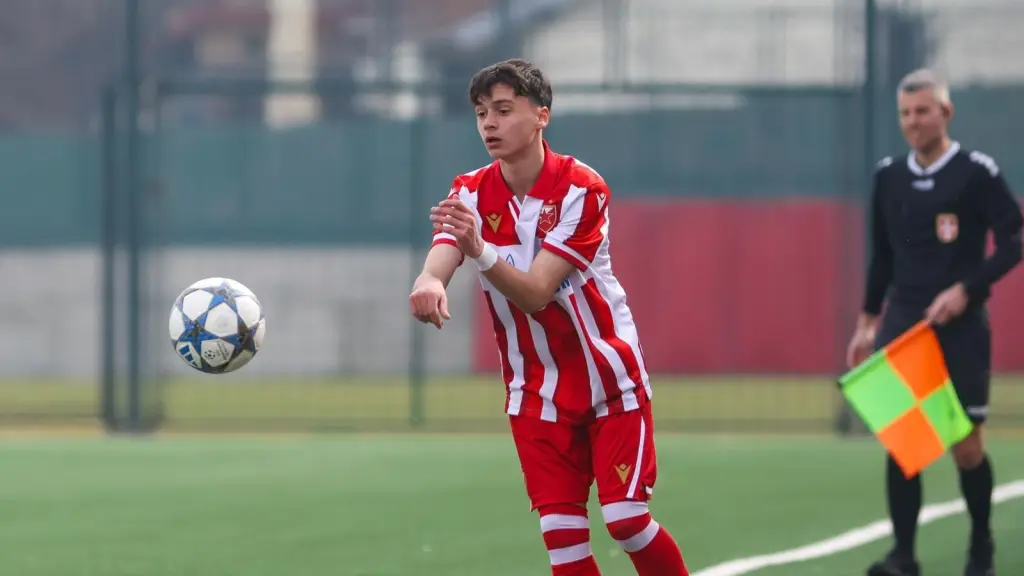
Youth international experience brings a fresh lesson
Trpevski has played for North Macedonia’s youth national teams. National team camps are short and demand quick adjustment to new team-mates. The basic principles stay the same, but the language, the roles and the timing of movements change. That can build communication and independence. Club and national team coaches should share information about workload, because a young player needs useful matches and enough rest.
Physical development should not be rushed
At 16, strength and speed can change considerably in a short time. The aim is not to copy the body of an experienced first-team player straight away. Quality of movement, balance, sleep and gradual strength work provide a safer base. An attacking midfielder who stays healthy can keep building his technique under pressure. Overloading interrupts that process. The coaching staff can raise the demands once the player is ready.
A young player learns from the actions of more experienced team-mates
Trpevski spoke about the details he takes from the seniors. The most useful examples are often simple ones: checking space over the shoulder, body position before receiving and a quick reaction after a mistake. A young midfielder can pick one detail from each session and repeat it with the cadet side. That is more practical than copying the whole style of a famous player with different physical traits and responsibilities.
The next step calls for proof, not a deadline
The call-up to the summer preparations shows that the club sees potential, but it does not promise an immediate debut. Progress should be judged by regular playing time, training habits and the response against stronger opponents. The route could include the youth team, FK Grafičar or another controlled step before senior minutes at Zvezda. A clear plan protects both ambition and patience. Performances on the pitch should confirm he is ready for each following step.