
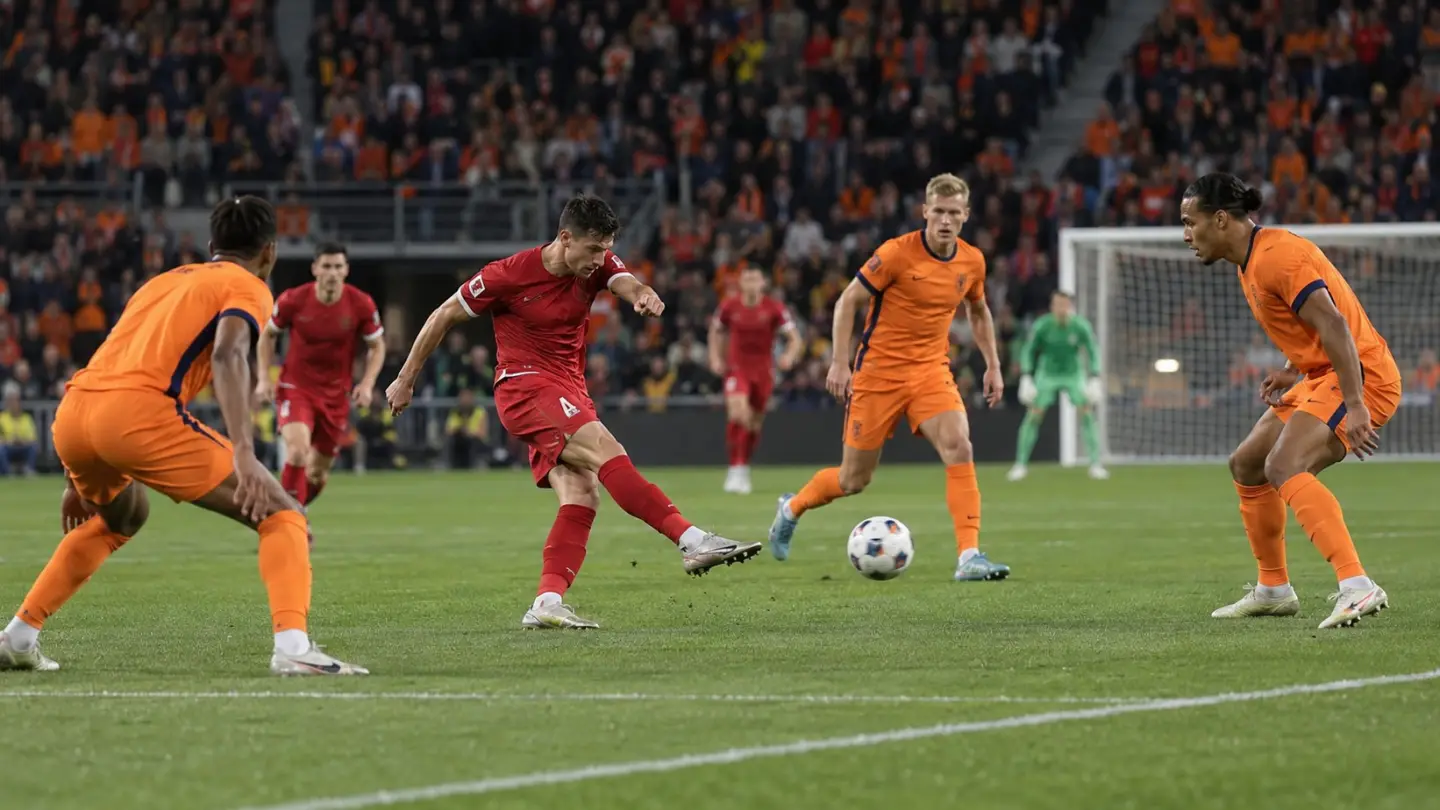
Serbia’s national football team fell 2-1 to the Netherlands in Eindhoven in a Nations League fixture. The hosts controlled much of the game through extended possession and a high press, while Serbia tried to stay compact and hit the space left behind when they won the ball back. The score stayed open right up to the final whistle, but the Serbian side could not create another clear chance to level.
The Dutch found most of their room between the Serbian flank and the central line. Whenever a full-back came out to meet the man on the ball, the hosts quickly brought another player in behind him. Serbia closed that channel well at times, but the constant shifting of the defence drained energy and made it hard to break out cleanly once possession was finally won.
For the visitors, the problem lay with the first pass after winning the ball. The Dutch midfield pressed the receiver immediately and stopped Serbia from setting up a block. Long balls occasionally produced aerial duels, but without enough players around the second ball the attack would fade quickly. As a result, the strikers often drifted away from the rest of the side and were left without support in the final third.
The Netherlands imposed their possession and pressure
A one-goal defeat does not call for a complete change of system, but it does demand sharper roles when playing out from the back. One midfielder has to offer a safe diagonal option, while a winger immediately attacks the space behind the opposing full-back. If both players wait for the ball to arrive at their feet, the Netherlands can press higher up. Serbia then win possession for only a few seconds and fall back into a long defence again.
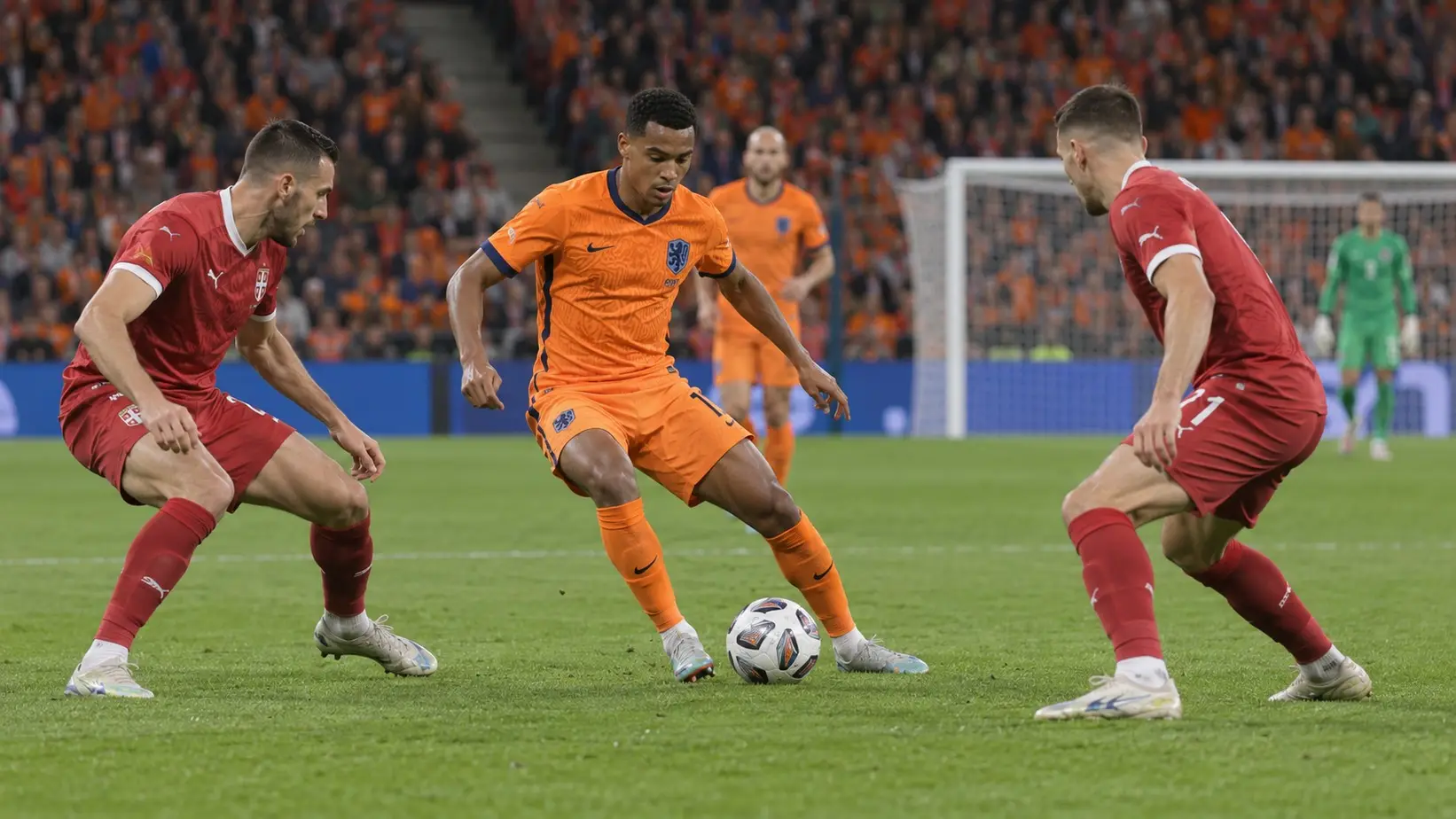
The encouraging side was the team’s ability to stay in the match after spells of home dominance. The defence did not lose its shape after each switch of play, and goalkeeper Đorđe Petrović kept clear communication with the last line. Still, good organisation only reaches its full value when it produces an attack that forces the opponent back.
The coach will look closely at the distance between the midfielders and the strikers. Too much space allows the opponent to keep more players in front of the ball without risk. By shrinking that gap, Serbia can keep the second ball, win a stoppage, or at least force the Netherlands to break a counter with a foul well away from goal. These small gains can change the course of an away game.
Serbia must turn won possession into attacks faster
The Nations League punishes every weak spell, because a group does not offer many games in which to put things right. Serbia now has to turn this analysis into clear tasks for the next date: a safer first pass, more players around the second ball and quicker recognition of the moment to press high. Simply dropping back will not be enough against sides who can circulate around the penalty area for long periods.
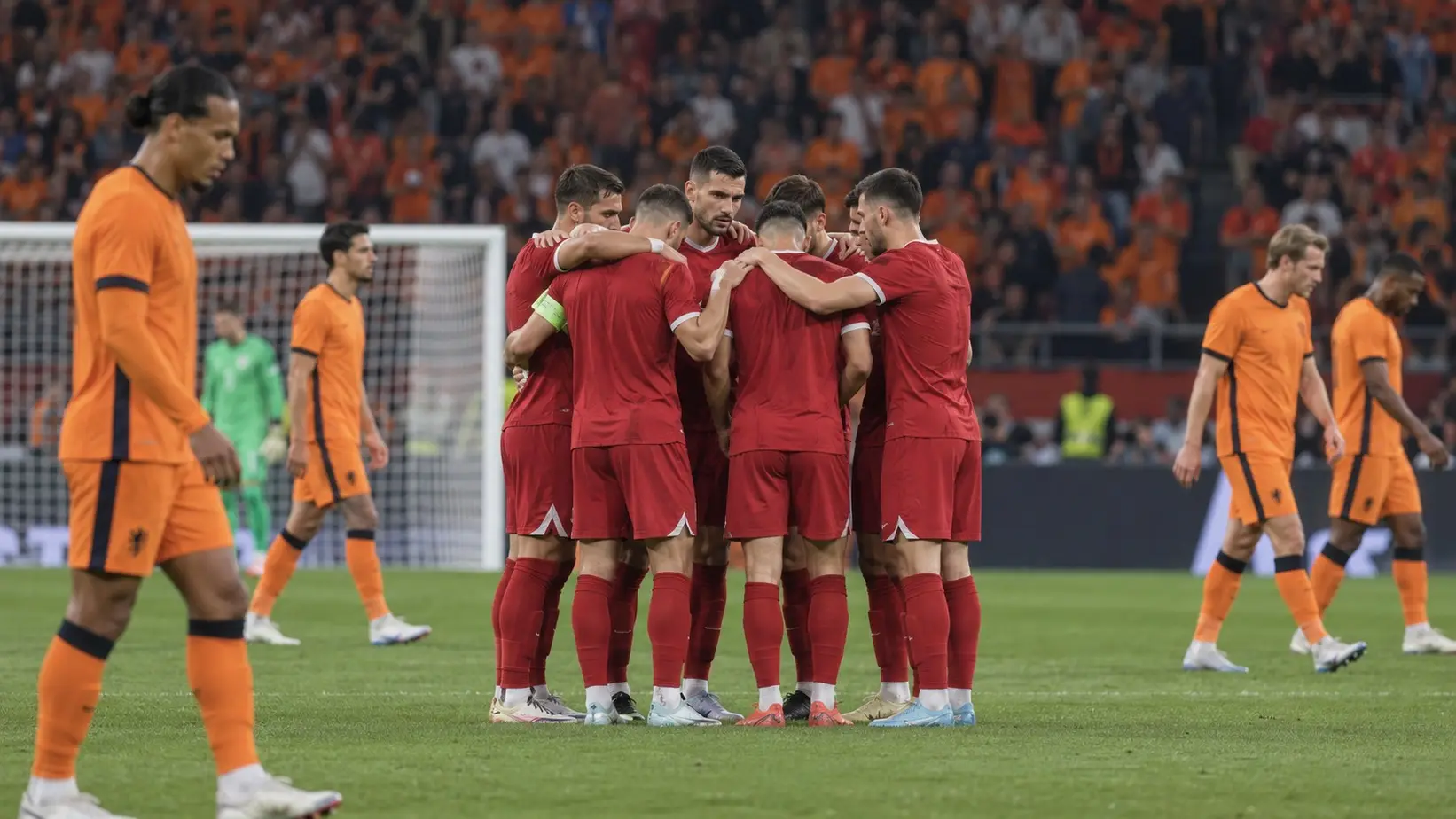
The 2-1 scoreline shows the gap was not unbridgeable, but also that one good burst cannot replace control across most of a match. Serbia has physical strength and individuals capable of a direct attack. The next step is to connect those qualities to an organised way of playing out. Only then will a solid defence become the basis for winning points rather than simply a way of keeping a defeat to one goal.
The reaction in the next round will be key to judging this result fully. A single match can reveal a good plan, but only repetition shows whether a side has a reliable pattern. Coaches will pay particular attention to the start of the game, the quality of decisions after losing the ball, and the bench’s ability to keep the same intensity once the main players leave the pitch.
Statistics should be read alongside the flow of the match. The final score does not always show how often a team reached a quality finish, nor how often the opponent was forced into a difficult attempt. Video analysis will therefore be important for counting clear chances, balls lost under pressure, and situations where good communication prevented a greater danger.
Long-term value comes when the lessons from this match carry over to a different opponent. The next rival may not offer the same space or the same rhythm, so the principles must be kept while the details change. A side that can adjust its pressing, width and tempo without losing basic discipline usually turns one strong result into a reliable run.