
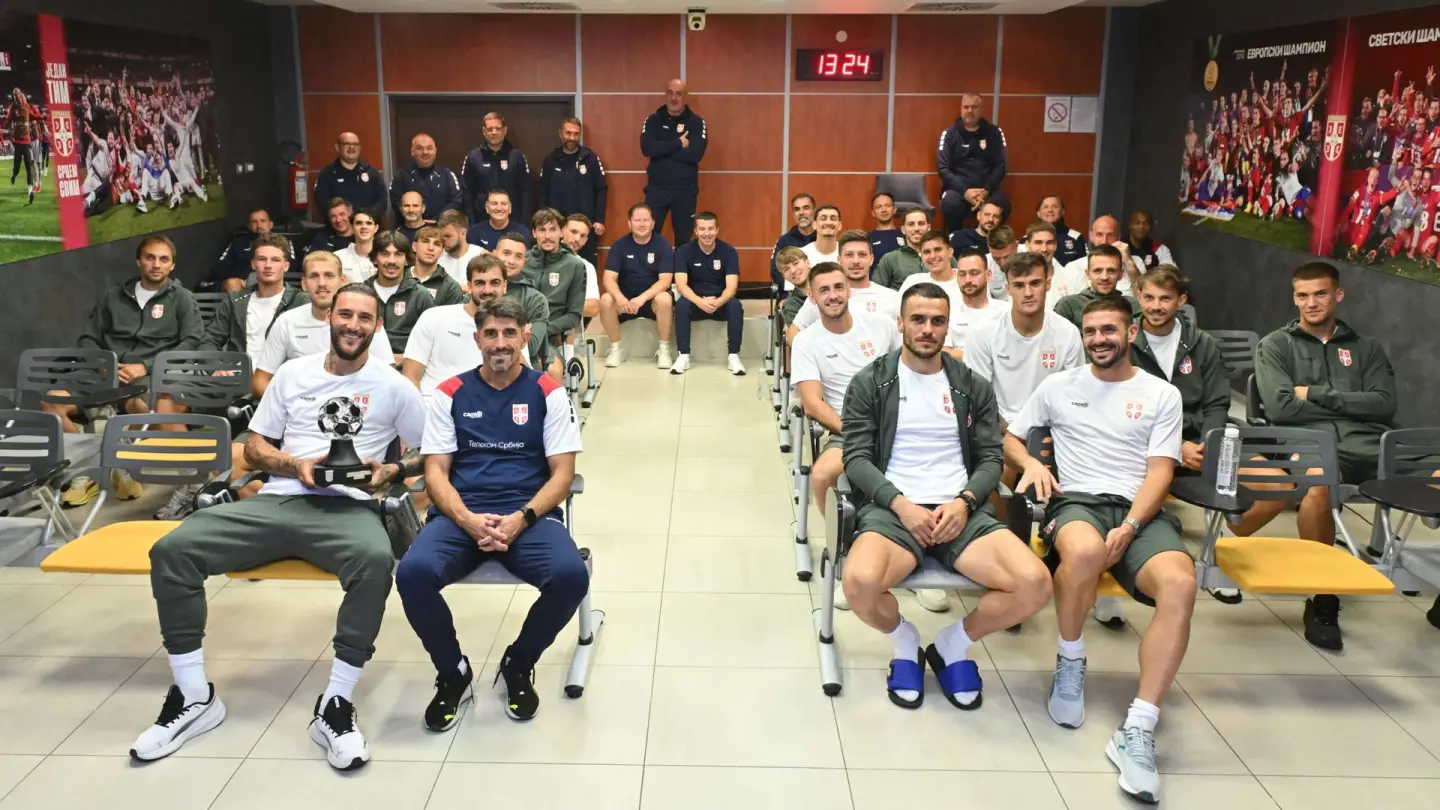
The Football Association of Serbia has presented Nemanja Gudelj with the Diamond Ball for 75 appearances for the senior national team. The award was handed over at the FSS Sports Centre in Stara Pazova and recognises more than ten years of work under different coaches and in a range of positions.
The journey began in Dublin
Gudelj made his debut against the Republic of Ireland in March 2014, and he recorded his 75th appearance against Spain. The plan loses its meaning if one risk is overlooked: an earlier contribution can be mistaken for an automatic place in the future. The final assessment should be made after the next test, the upcoming international cycle. The confirmed starting point is clear: the Diamond Ball rewards 75 appearances across more than a decade.
The gap between those matches shows longevity across several tactical cycles rather than a single spell of form. The analysis must not hide the most likely complication: an earlier contribution can be mistaken for an automatic place in the future. The safest practical guidance is to match current readiness and the task to the opponent. The available data supports a limited conclusion: the Diamond Ball rewards 75 appearances across more than a decade.
His role changed, the responsibility stayed
He played in midfield and in defence, giving coaches an extra way to balance the side. The simplest way to protect that advantage is to match current readiness and the task to the opponent. At the same time, one condition deserves attention: an earlier contribution can be mistaken for an automatic place in the future. The practical benefit is also specific: Serbia can draw on his experience in several tactical roles.
Versatility only has value when position and communication stay clear after a change of duties. The immediate priority can be stated simply: match current readiness and the task to the opponent. Later judgement should use the next test as its basis: the upcoming international cycle. The importance of this detail can be explained plainly: Serbia can draw on his experience in several tactical roles.
Major tournaments are part of the record
Gudelj represented Serbia at the World Cup in Qatar and the European Championship in Germany. The quality of his approach can be judged by the following check: the upcoming international cycle. The fact can be separated from expectation through this confirmation: the Diamond Ball rewards 75 appearances across more than a decade. The main risk should be stated directly: an earlier contribution can be mistaken for an automatic place in the future.
Those tournaments attract the most attention, but the number of appearances is built from qualifiers and friendlies too. New evidence should come from the upcoming international cycle. The analysis remains accurate only while it respects the confirmed fact: the Diamond Ball rewards 75 appearances across more than a decade. A balanced assessment has to take one problem into account: an earlier contribution can be mistaken for an automatic place in the future.

The award rewards availability and trust
Reaching 75 matches takes repeated call-ups, physical readiness and acceptance of different tasks. The strongest confirmed point stays the same: the Diamond Ball rewards 75 appearances across more than a decade. The decision is easier to understand when its purpose is visible: Serbia can draw on his experience in several tactical roles. The first sensible response is one concrete step: match current readiness and the task to the opponent.
A national team career is built by arriving in good condition, even when the role changes from one cycle to the next. The current picture is clearer when one fact stays at the centre: the Diamond Ball rewards 75 appearances across more than a decade. This approach keeps a useful part of the change: Serbia can draw on his experience in several tactical roles. Preparation should therefore begin with a clear task: match current readiness and the task to the opponent.
Future contributions still depend on performance
Gudelj said he will be there as long as he can help Serbia, but the award does not replace sporting decisions. A useful outcome can be described without exaggeration: Serbia can draw on his experience in several tactical roles. One warning remains important throughout the process: an earlier contribution can be mistaken for an automatic place in the future. The next reliable check will be the upcoming international cycle.
Selection should continue to follow health, form and the demands of the next opponent. That fact brings a measurable benefit: Serbia can draw on his experience in several tactical roles. The conclusion is not complete until it accounts for this risk: an earlier contribution can be mistaken for an automatic place in the future. The conclusion can be checked after the next test: the upcoming international cycle.