
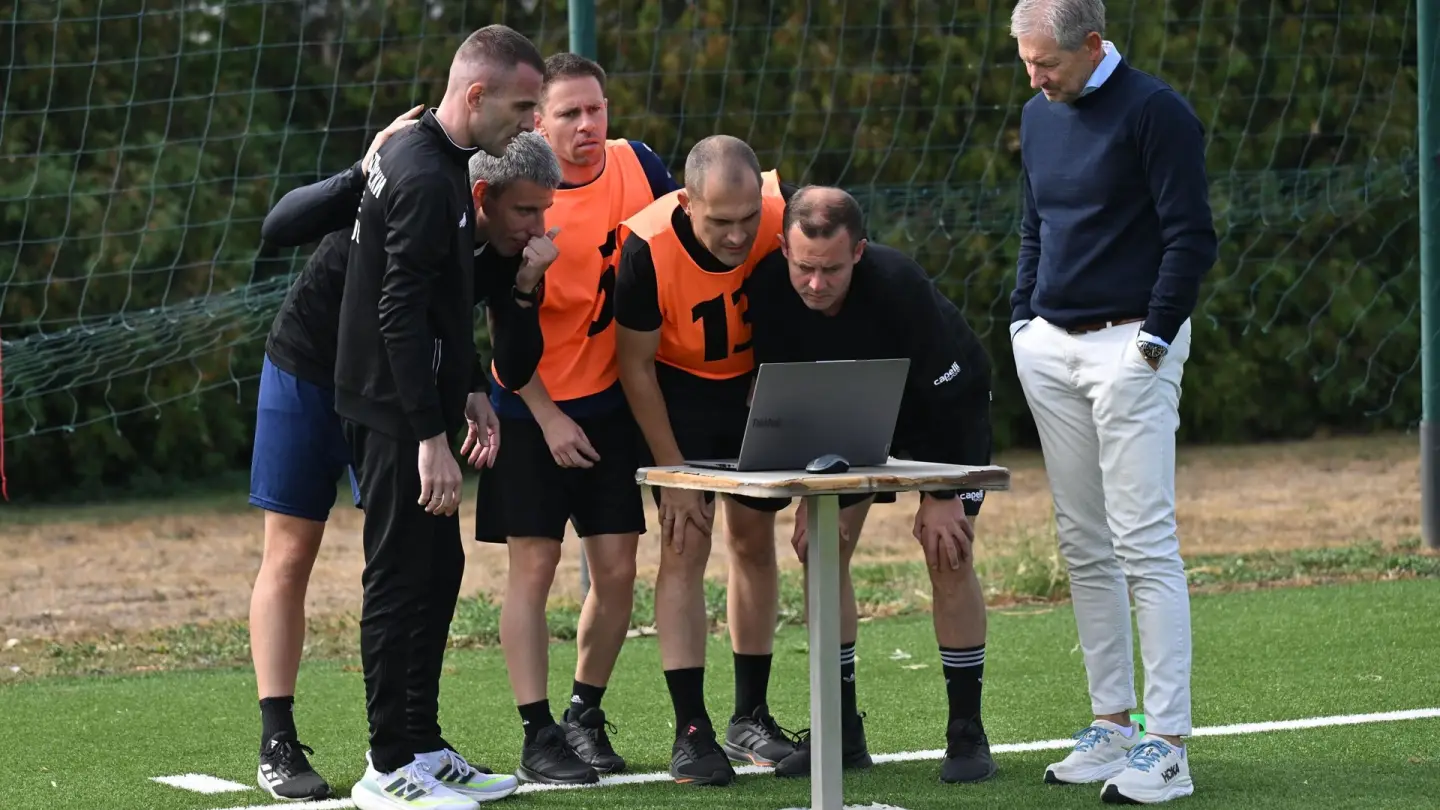
The Football Association of Serbia has wrapped up the two-day Referee Day programme at the Sports Centre in Stara Pazova. Frank de Bleker and VAR expert Christophe Dirik worked with referees from the First League and the SuperLiga through physical training, technical instruction and analysis of decisions from matches already played. The programme is over, so its value lies in what the referees carry into the coming rounds: a unified reading of the Laws of the Game, a clearer threshold for VAR intervention and a uniform physical standard. The public will be able to judge the effect through the consistency of decisions in the matches ahead.
The training was tied to decisions on the pitch
The on-field work followed the UEFA elite referee model and combined physical load with match-like situations. A referee has to reach a good angle while accelerating, changing direction and avoiding players.
Physical fitness is therefore not a separate test but part of the quality of judgement. A referee who holds a stable position can see contact more clearly and communicate a decision with more confidence. Movement drills only made sense when they were linked to the position from which the referee actually sees the contact. The aim was not the fastest sprint but arriving at an angle that players do not block. A good position leaves more time for assessment and reduces the need to correct a decision afterwards.
Examples from the First League gave concrete tasks
On the first day, situations from matches already played in the Serbian First League were analysed. Good decisions were highlighted, along with details in positioning, timing and interpretation that need improving.
Footage of domestic games is useful because referees know the rhythm and patterns of their own competition. The commission can thus set the same criterion for several refereeing teams. Recordings from the domestic leagues made it possible to discuss situations that referees meet regularly. Participants could compare the starting position, the line of movement and the moment of the whistle. Such analysis is more useful than a general message to be more careful, because it gives a clear task for the next match.
| Part of the programme | Goal |
|---|---|
| Training on the pitch | Better angle under physical pressure |
| Analysis of matches from Serbia | The same criterion for all referees |
| VAR guidelines | A clear limit on intervention |
| Regular feedback | Benefit in the next matches |
VAR needs a clear limit
Christophe Dirik presented the latest UEFA guidelines for video technology. The main task was to separate situations that call for intervention from decisions that remain with the referee on the pitch.
Too few interventions leave an obvious error in place, while too many reviews interrupt play and weaken accountability. A single threshold helps players and coaches understand why a similar incident receives similar treatment. With VAR it is especially important that the referee on the pitch keeps responsibility for the original decision. The video assistant should step in when the footage shows a clear error, not merely a different possible view. A single threshold shortens unnecessary stoppages and makes the process easier for teams to understand.
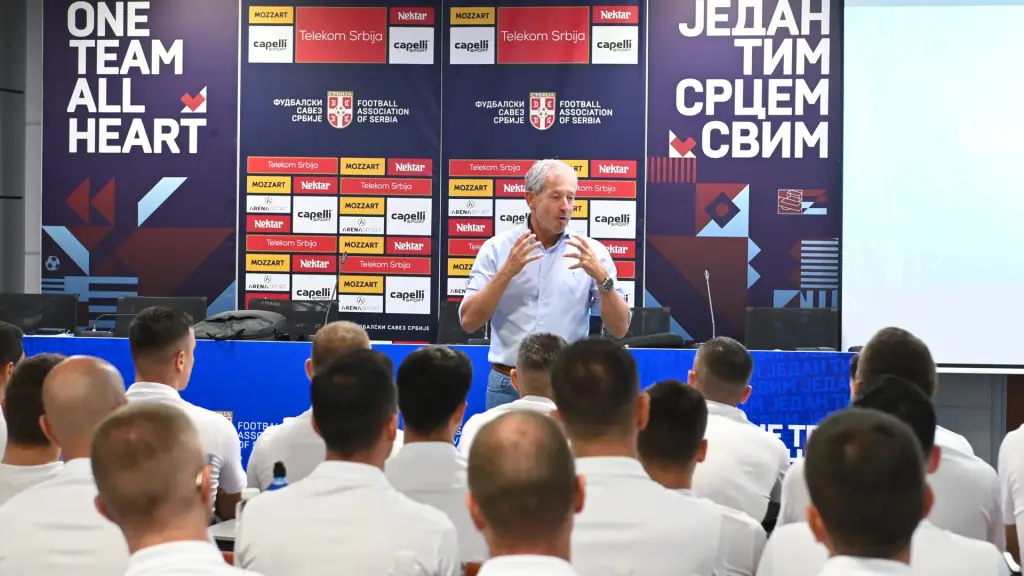
SuperLiga referees analysed the matches they had played
The second day followed the same principle and was devoted to referees of the Serbian SuperLiga. De Bleker reviewed key situations with them, the general criterion and room for improvement.
Analysis is worth the time when it leads to a concrete change in angle, communication or the management of play that follows. General criticism without a clear task is hard to apply in the next match. The SuperLiga referees discussed matches they had already played, so no example stayed abstract. It was possible to see how a small shift in position changes the view of a duel and how the tone of communication affects whether a decision is accepted. The main point is that the same lesson is applied when the next match brings greater pressure.
Consistency matters most to the public
Fans do not see a seminar during a match, but they notice when similar situations receive different decisions. Consistency does not mean that every contact will become simple, nor that VAR removes every argument.
It means the same procedure, the same threshold for intervention and the same explanation in all competitions. Such a standard builds more trust than a promise that mistakes will never happen. Consistency does not mean that every disputed situation will vanish. It means the same criterion is applied to similar contacts and that VAR does not shift the threshold from one stadium to another. When players understand the limit of a permitted duel in advance, less energy goes into argument and more into the game itself.
Education has to continue
Two days can align language and priorities, but they cannot replace regular review. New situations will keep arising, and referees need a quick response.
Physical work, video analysis and communication must therefore remain part of the same cycle. Referee Day has its greatest value as a checkpoint rather than as a one-off event with no follow-up. Work after the seminar must include regular review of new situations and feedback while the match is still fresh. Physical preparation, positioning and communication cannot develop separately. Progress will only be visible when refereeing teams repeat the same quality of decision across different rhythms and in different stadiums.