
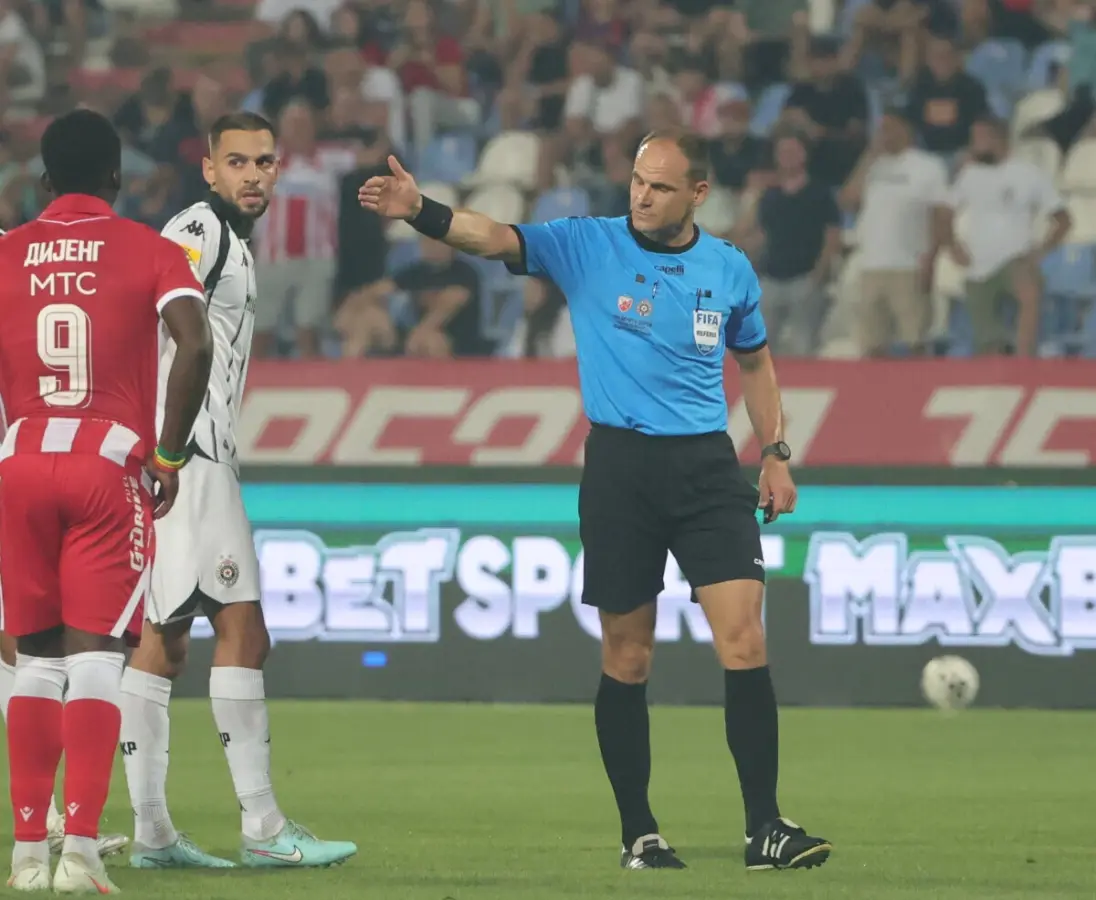
The Football Association of Serbia has assessed two refereeing decisions from the Red Star Belgrade and Partizan match. The eighth-round review backs the penalty awarded after a video check in the 24th minute. For a dangerous challenge in the fifth minute of stoppage time in the second half, a red card should have been shown. The video assistants were required to request a fresh assessment of that situation.
Penalty awarded after the original call was corrected
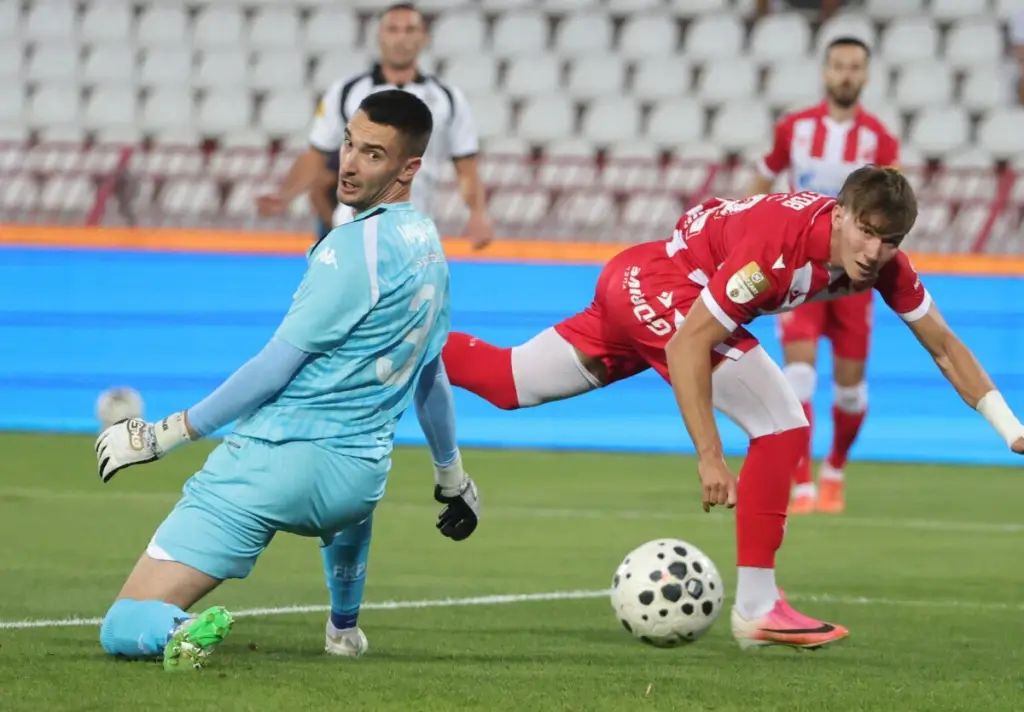
In the first incident, the referee initially allowed play to continue. According to the FSS explanation, the attacker was running into the penalty area with the ball, while the defender made contact with his leg without playing the ball. The VAR then recommended that the referee review the available footage at the pitchside monitor.
Following that review, a penalty kick was awarded. The Association considers the final decision correct because there was clear video evidence of the offence. It is important to separate the initial call to play on from the decision reached after the intervention. The positive verdict applies to the penalty given after the review.
Dangerous challenge in stoppage time warranted a red card
In the fifth minute of second-half stoppage time, marked as 90+5, the referee awarded a direct free kick and showed a yellow card. The video assistants accepted that decision. A subsequent analysis judges that the manner in which the opponent was brought down was so dangerous that the player should have been sent off.
The player came in from behind and slid into his opponent with both feet, at high speed and with considerable force. That movement endangered the opponent’s safety. The Association therefore believes the video assistants should have intervened so that the referee showed a red card. The decisive factor was the danger the player created, not merely the fact that contact occurred.
Assessing that danger requires watching the entire movement: the approach to the opponent, the position of both legs and the contact made. A frozen frame with the ball between the players does not show the speed at which the collision happened. The published reasoning therefore links the position of the legs to the force and direction of the movement. All these circumstances together determine how serious the offence was.
| Time | Decision during the match | Later assessment |
|---|---|---|
| 24th minute | Penalty kick after review of the footage | Final decision correct |
| 90+5 | Free kick and yellow card | Video assistant intervention and a red card were required |
Touching the ball does not cancel the danger to an opponent
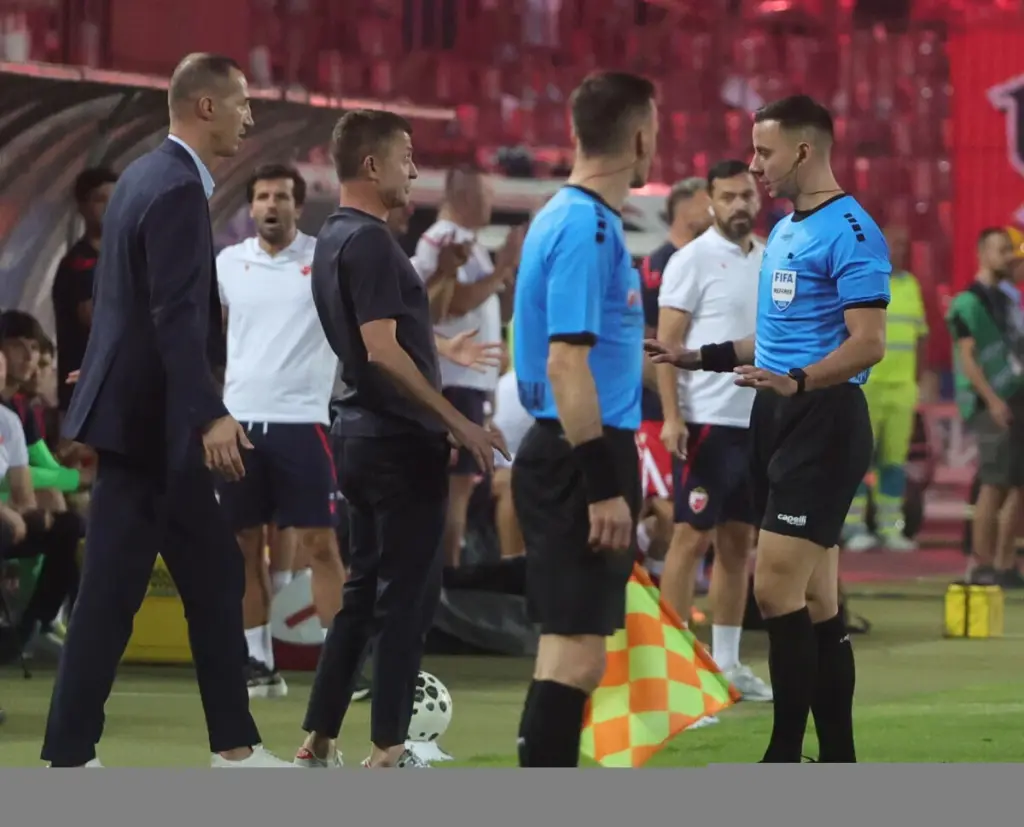
The Association specifically explained that playing the ball in the second incident does not reduce the seriousness of the offence. If a player slides in from behind at speed with both feet and endangers an opponent, touching the ball does not make such a movement acceptable. The referee must still assess the danger to the other footballer.
That is why the two incidents from the derby need separate explanations. In the penalty area, the defender did not play the ball but caught the attacker’s leg. In stoppage time, touching the ball did not remove the danger of a two-footed slide. Every assessment must take into account the player’s movement and the contact with the opponent, not just the position of the ball.
The analysis separates the in-match call from the later verdict
The FSS document presents, for each incident, the original decision, the VAR procedure and the reasoning. That makes clear what was corrected immediately and what was identified as a mistake only after the match. The penalty was awarded during the game after a review. The yellow card decision was not changed at that time.
The published analysis is not, in itself, an announcement of any change to the result or a decision on any later disciplinary sanction. It explains how the analysed situations should have been handled. Any further step would have to be confirmed in a separate document, not inferred from a single sentence about a VAR intervention.
The same document covers different types of intervention
The eighth-round analysis also covers the matches Novi Pazar against Železničar and Radnik against Čukarički. In Novi Pazar, a goal was disallowed after it was established that the scorer was offside when his teammate played him the ball. The Association describes this as a factual decision and considers the disallowance correct.
In the Radnik against Čukarički game, the analysis examined a late aerial duel in which a defender struck an opponent in the head with his elbow before heading the ball. After a review, a penalty and a red card were awarded, and both decisions were judged correct. These examples show how important it is first to identify the type of evidence and the decision, and only then to compare the different interventions.
Two conclusions are not a verdict on every refereeing decision
The part of the document devoted to the derby reaches two specific conclusions: the penalty given after the review was correctly awarded, and the late decision on the yellow card required a new intervention. This does not amount to a full assessment of every decision in the match. Nor has any intention to favour either club been established.
The clearest reading therefore stays within what was published. One situation shows a successful correction through review of the footage. The other shows an intervention that, in the Association’s view, did not happen. Explaining those two procedures separately is more useful than presenting the whole analysis as a single general endorsement or condemnation of the officiating.