
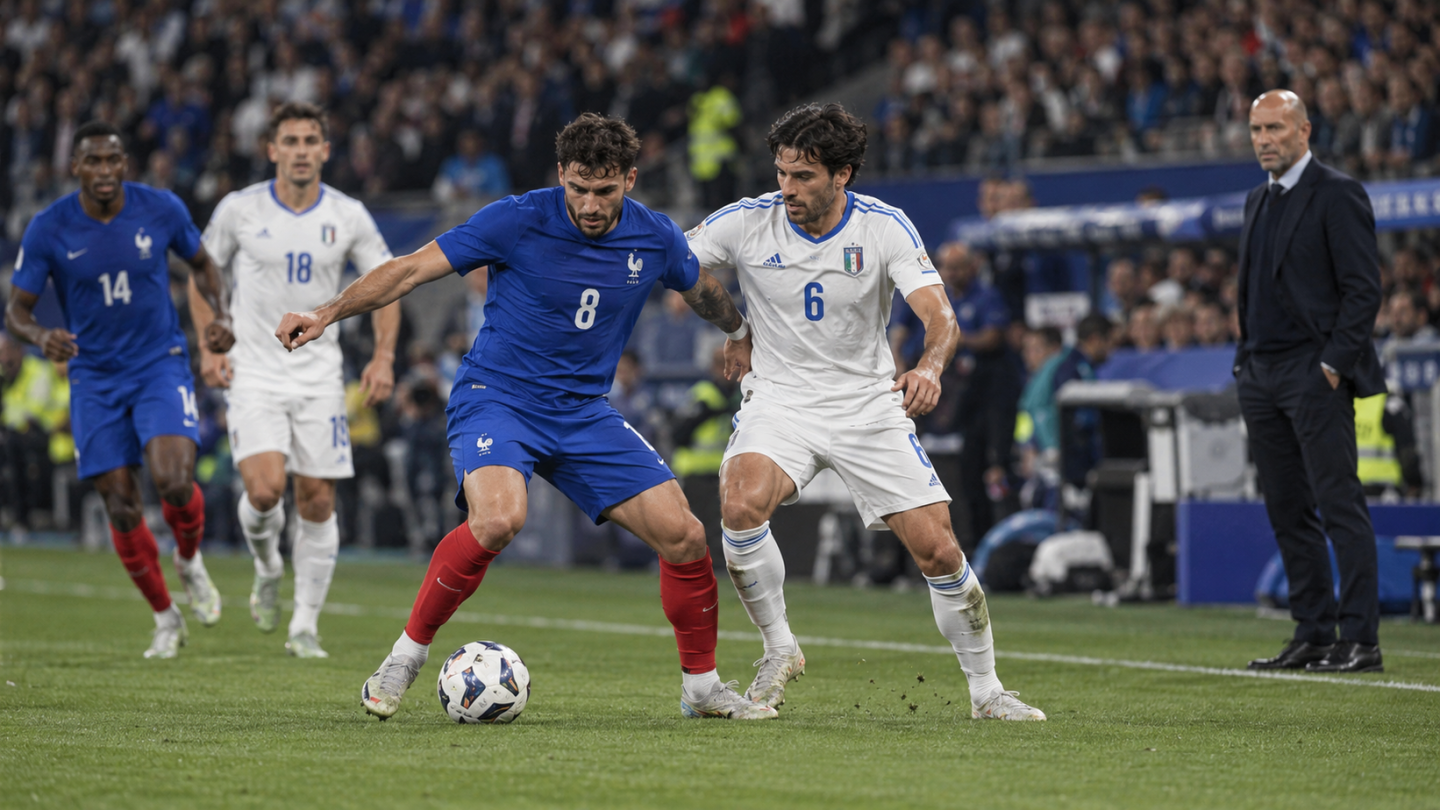
France and Italy played out a 1:1 draw in the Nations League, the first home fixture for Zinedine Zidane on the bench of the French national team. The return of the former captain to the stadium brought a powerful atmosphere, yet the French side could not turn that early energy into a win. Italy weathered spells of pressure, answered with organised possession and took a point from a game that carried extra emotional weight for the hosts.
The result leaves both sides in an open fight for the group. France looked for quick links between the wingers and the central forwards, while Italy shut down the space in front of their box and tried to break out of the press with a few secure passes. Whenever the hosts lost the ball with many players ahead of it, the visitors were handed their most dangerous space. As a result, the rhythm of the match swung back and forth, with no lengthy spells of complete control.
France had the energy, Italy had better control of space
France were at their best when the acceleration came after a calm build-up, rather than from an early pass forward. Stretching the play pulled the Italian back line out of shape and opened a return pass to the edge of the area. The problem arose when the wide players went high at the same time. A lost ball then left the midfield exposed in wide areas that are hard to defend without committing a tactical foul.
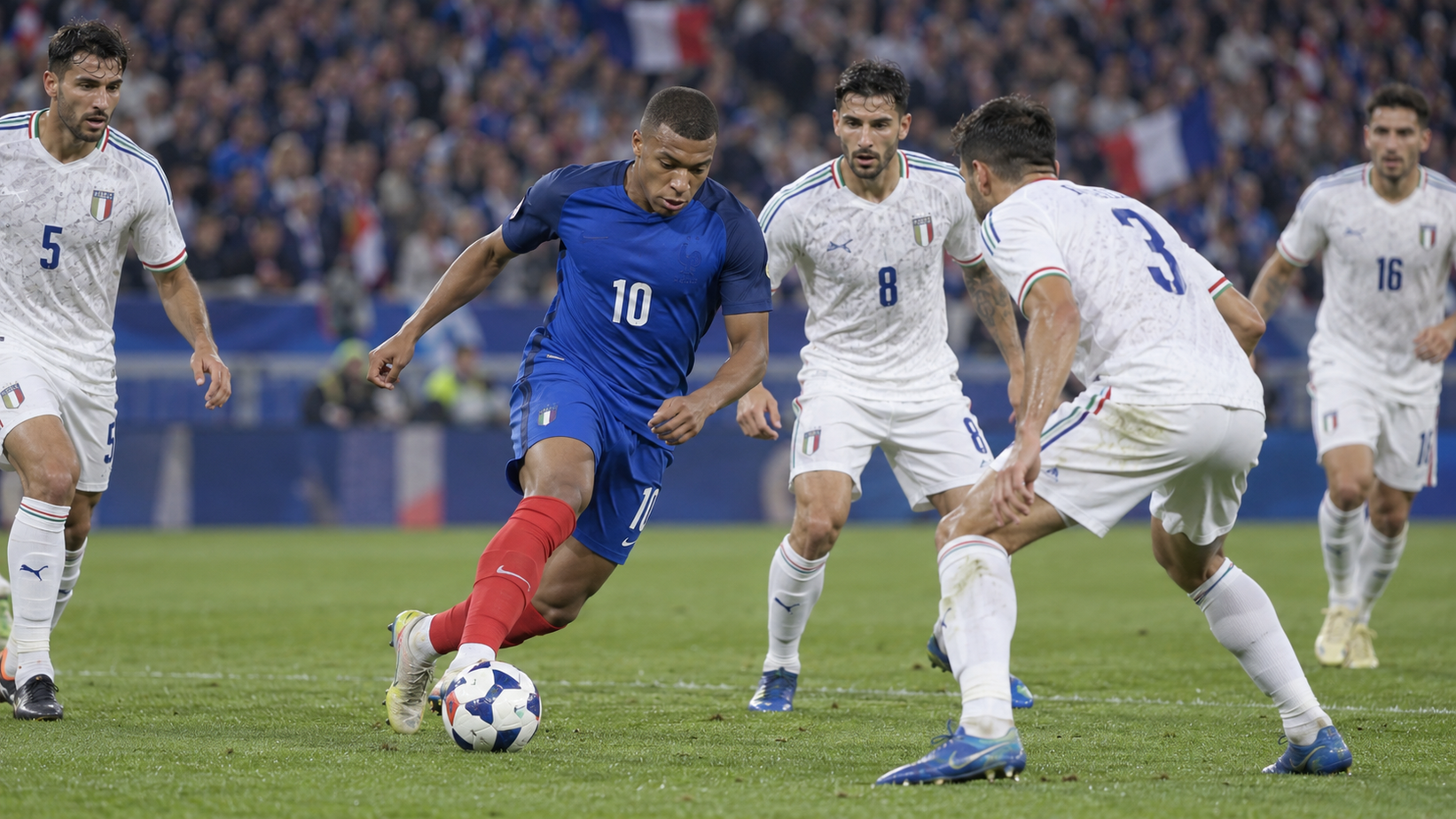
Italy accepted spending part of the match without the ball, but never gave up on playing their way out through a pass. That approach stopped France from constantly attacking a fully set defence. The visitors used a short drop from a midfielder and switched the side of attack before the home press could close the line. They did not create a large number of chances, but they came out often enough that the French defence could not settle in the middle of the pitch.
The draw gives Zidane a clear list of fixes
For Zidane, the draw is more useful as a diagnosis than as a result. The squad has the quality to accelerate and win individual duels, but it must organise its cover behind the ball more precisely. Two players cannot leave the central zone at the same time if the last midfielder is left alone against a counter. In training, the positioning after crosses, the reaction to a rebound and agreement on who cuts out the opponent’s first pass will be important.
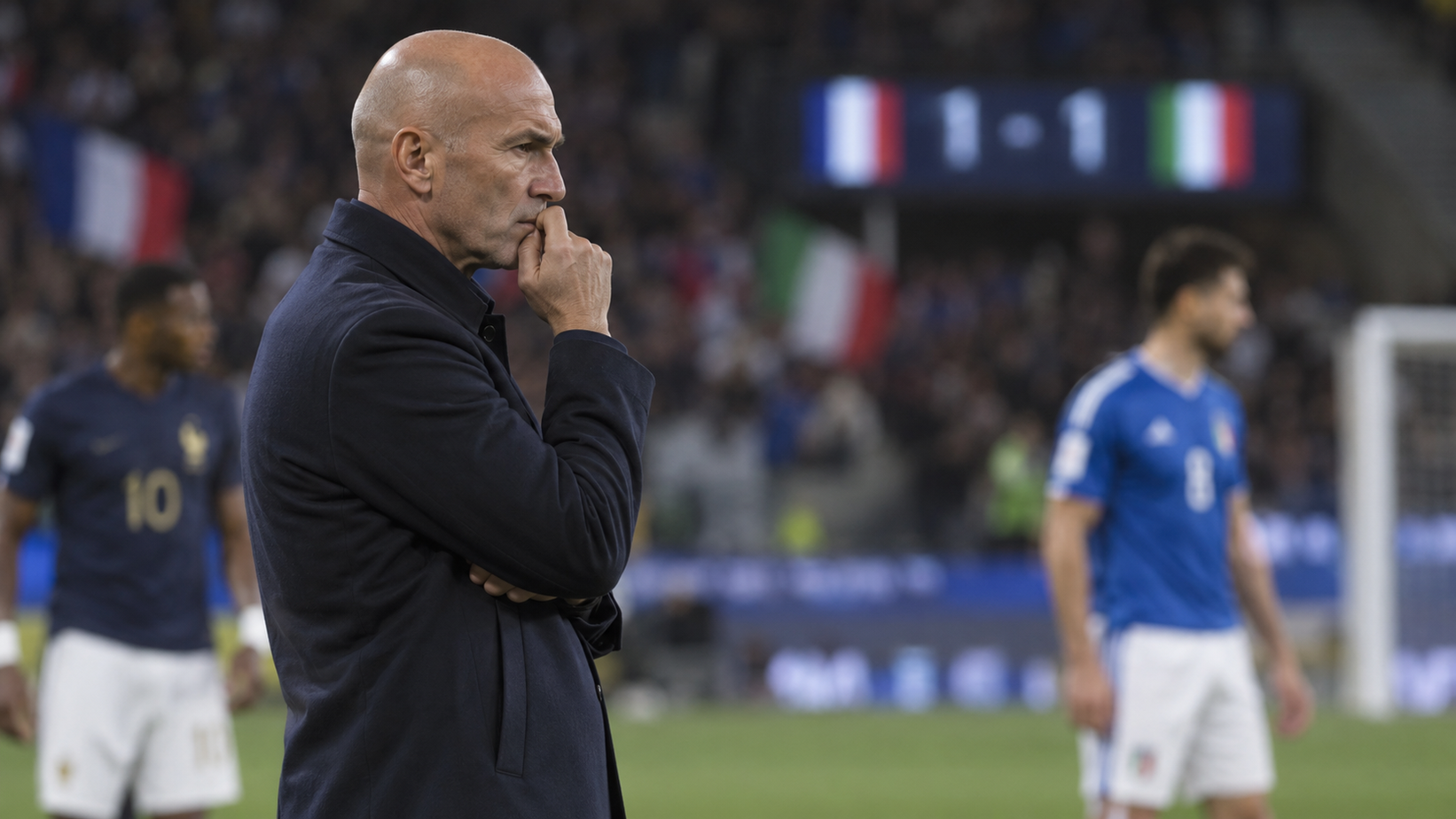
The new coach’s first home outing therefore brought no celebration, but it did not halt the process either. Italy showed weaknesses that other rivals will try to exploit, particularly behind the high full-backs. France now have a clear task: to keep their width and attacking boldness, while reducing the open ground left after a mistake. If that balance improves, the energy from the stands could become a real advantage on the scoreboard in the next match.
Zidane will have to separate the emotional picture of his return from the technical assessment. The ovations and the symbolism of the first home game may lift the mood, but the coach makes decisions based on the distances between the lines, the number of second balls won and the quality of chances. The draw against Italy provides plenty of material without the cost of a defeat. It is helpful that the problems surfaced early in the cycle, while there is still time to work on them on the training ground. France do not need to reduce the number of attackers, but to define more clearly who stays behind the ball when the move goes wide. Italy showed that a patient first pass can break through the initial rush of pressure. If the hosts fix that moment and shorten the gap between the midfield and the centre-backs, they will be able to keep an opponent under pressure for longer without exposing themselves to a dangerous counter.
The quality of chances should be judged by where the final shot is taken, not just by their total number. France may have had more attempts, but Italy created the more dangerous opportunity from a single run behind the defence. Zidane’s task is to increase the number of touches in the central area of the box while cutting down on open counters. That balance gives a more accurate picture of progress than possession figures or the atmosphere that accompanied his return.