
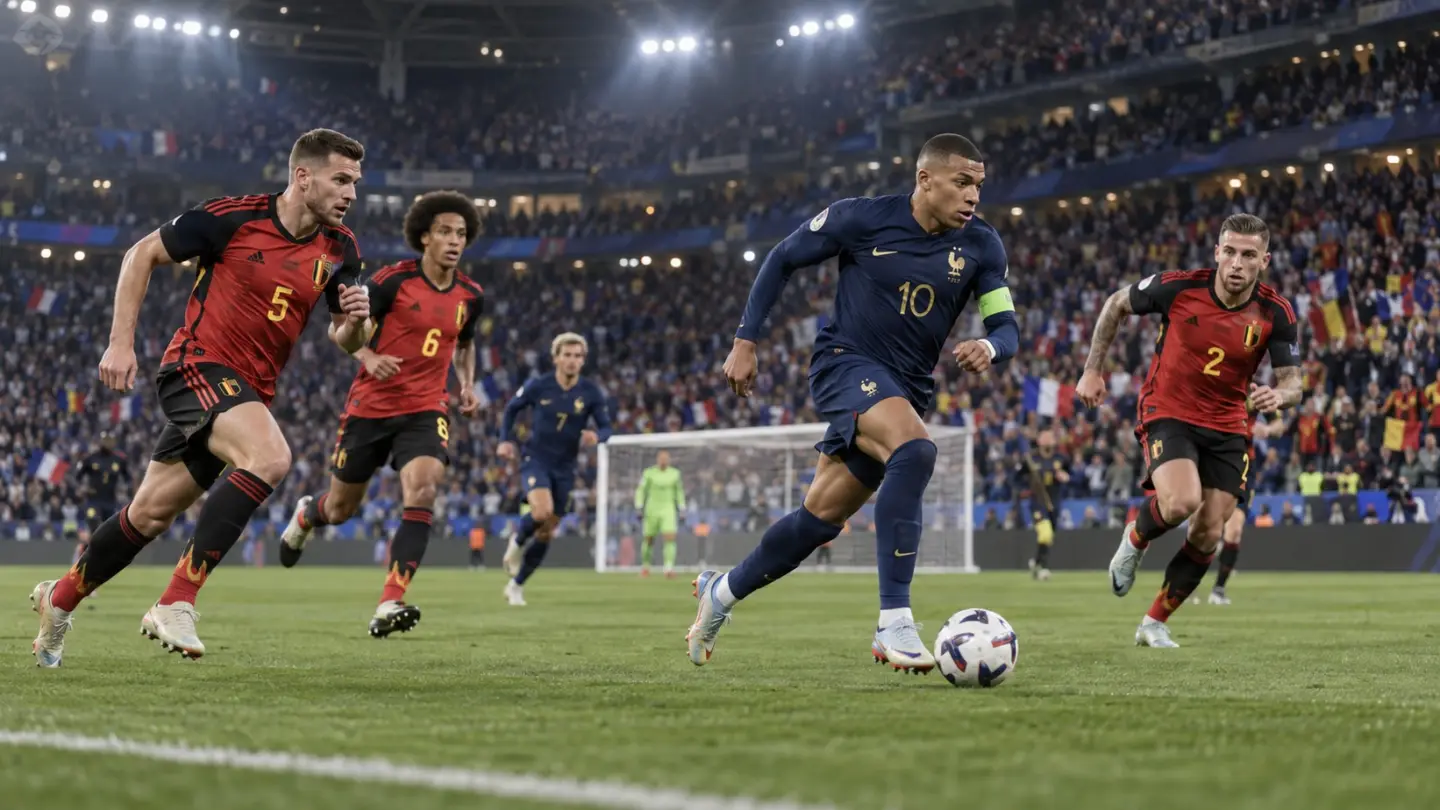
France beat Belgium 4:1 in the Nations League after a comeback that was packed into the final fifteen minutes. Belgium had gone into the break 1:0 up, but Dezir Doue equalised in the 77th minute. Rayan Cherki struck in the 81st, and Michael Olise sealed a convincing win with two goals, in the 88th minute and in the first minute of added time.
The final score looks one-sided, yet Belgium managed for a long time to hold the space in front of their box and protect their early lead. France enjoyed about 60 per cent possession and took 22 shots in total, against just four from the hosts. Belgium’s problem was not getting into the final third but the last pass and the choice of moment to shoot.
Doue’s goal changed the balance of risk. Belgium could no longer simply defend a narrow advantage, and the French players were rewarded for their persistence. Four minutes later Cherki finished a fresh attack and turned the game around, which forced his opponents to push their lines up and leave extra room between midfield and defence.
Belgium led, but could not withstand the French pressure
Olise exploited that space with two late goals. His movement from the right towards the centre forced the markers to choose between tracking him and closing down the pass. When Belgium pushed for the equaliser, they no longer had enough players behind the ball, and France could turn every won possession into a direct attack.
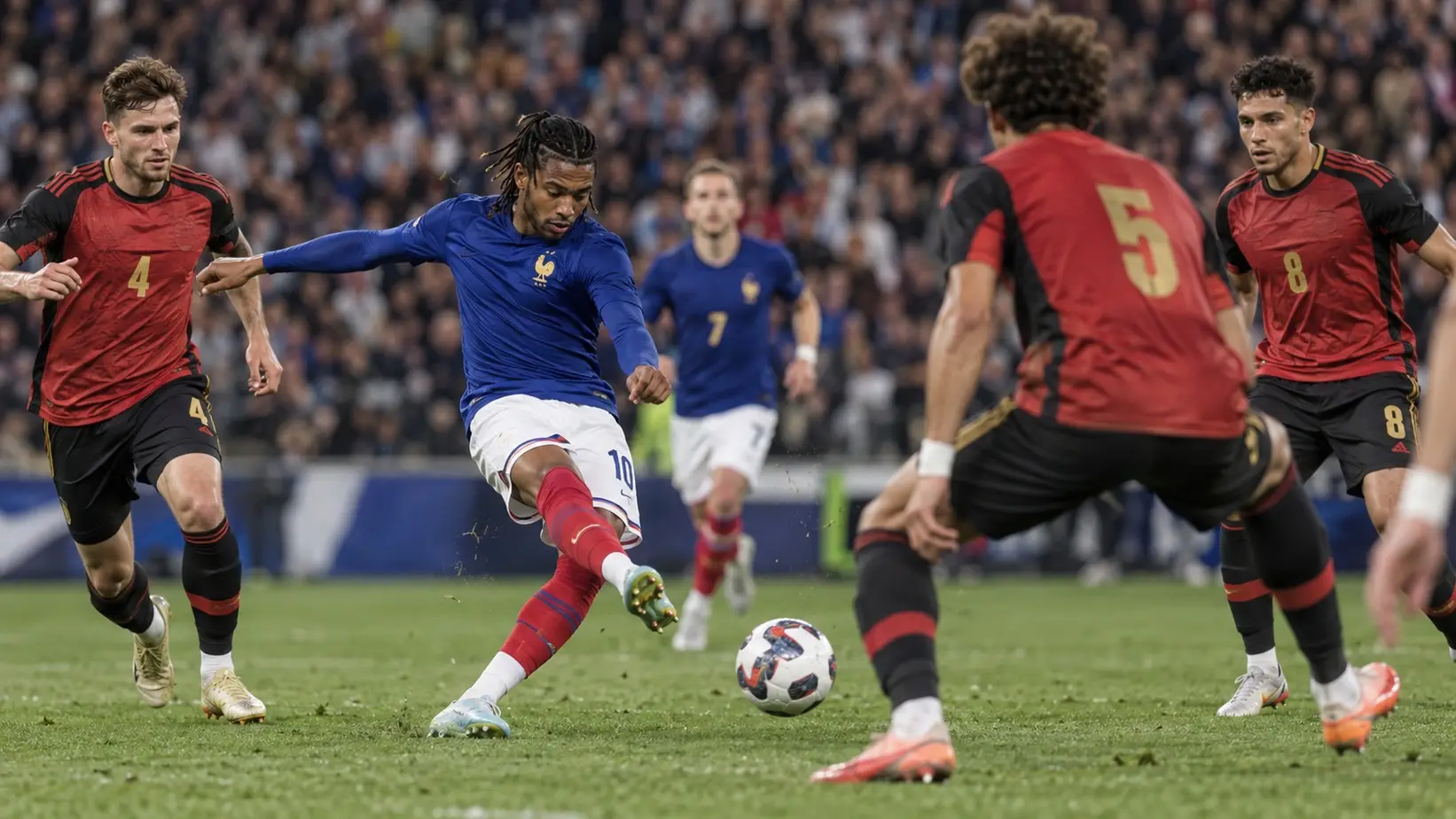
The shots-on-target count of 9:2 shows that the turnaround rested on the quality of the chances, not just on exceptional finishing. France built pressure over a long period and stopped Belgium from finding any relief through possession. By the time the first goal arrived, the visitors’ defence was already dealing with a heavy flow of runs and second balls.
Belgium need to analyse why they did not slow the game down after conceding the equaliser. A longer spell of possession or a calmer tactical phase could have broken France’s momentum. Instead, the gaps between their lines grew, and every lost duel brought fresh danger. Four goals conceded in fourteen minutes point to a loss of shape, not just of concentration.
Four goals after the 77th minute changed the picture in the group
France remain unbeaten in Group A1 and gain valuable depth in scoring options. When goals come from Doue, Cherki and Olise, an opponent cannot focus its whole plan on a single striker. The coach now has a basis for changing roles during matches and keeping the pressure up with fresh players without losing technical quality.
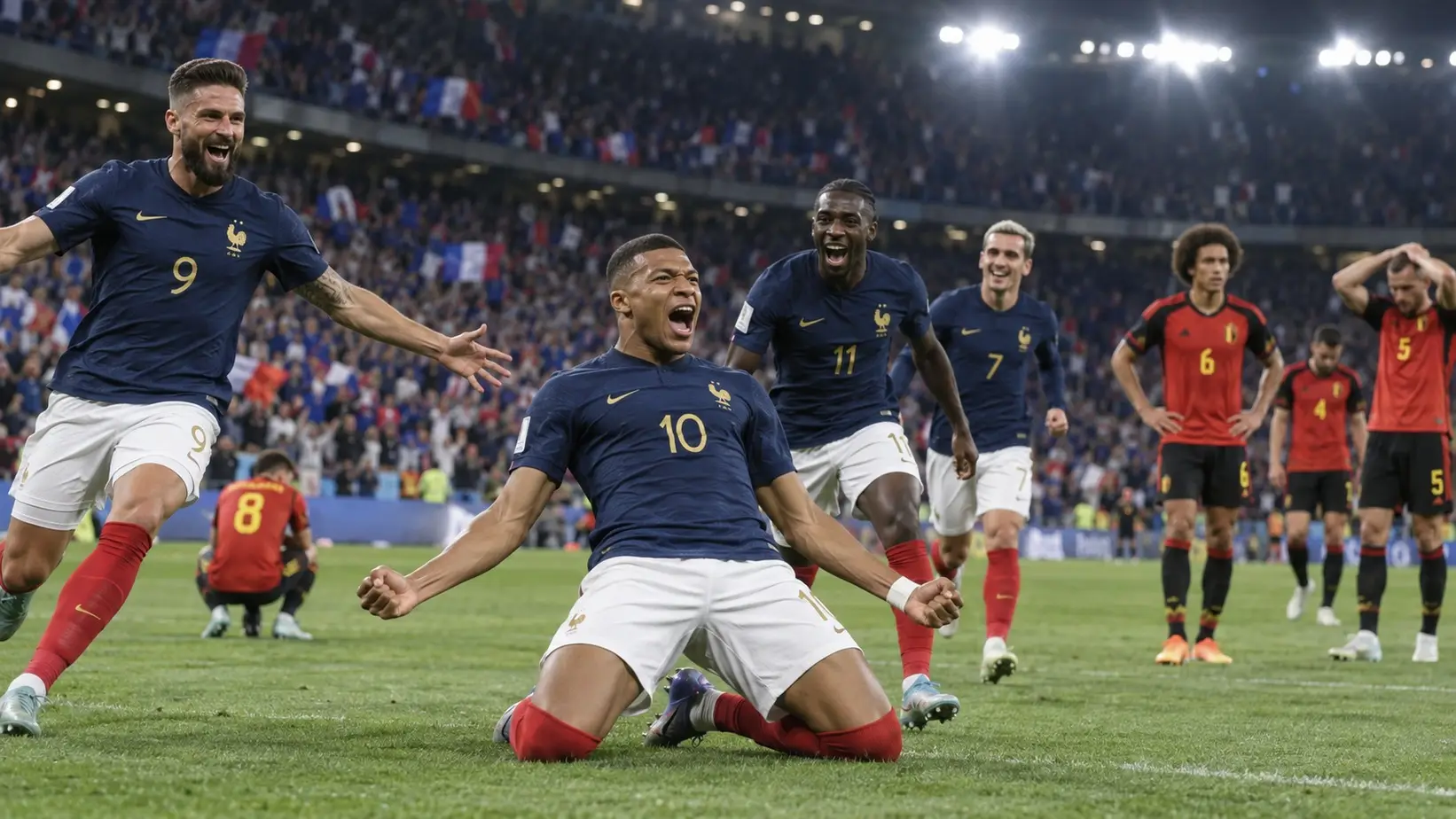
Future rivals will try to stop France from keeping the ball around the box for so long. Closing down the first pass into the centre more quickly may reduce the number of shots, but it opens up the flanks. Accuracy in crosses and return passes will therefore matter, so that dominance in possession turns into clear chances again before time becomes a problem.
The 4:1 win shows mental strength, but it also points to a slow start. France cannot wait until the 77th minute for their first goal in every match. If they keep up the intensity of the closing stages and find depth earlier, their control will be more complete. Belgium, for their part, must rebuild their response after conceding the first goal so that a single moment does not undo the whole plan.
For a full assessment it is worth tracking the number of French entries into the box, Belgium’s lost balls after the equaliser and the quality of chances before the 77th minute. That data will show whether the result came from a pattern that can be repeated or from a few exceptional moments. The final score describes the outcome, but it does not reveal how stable the plan was when the balance of power shifted and the opponent tried a different solution.
The immediate task for France is to turn possession into a lead earlier and to avoid relying on a late surge. Success will depend on keeping the strongest part of their current performance while fixing the weakness that was seen, without making major changes. Such an approach creates a clear link between this result and the next challenge, rather than treating each match as a separate story with no measurable follow-up.