
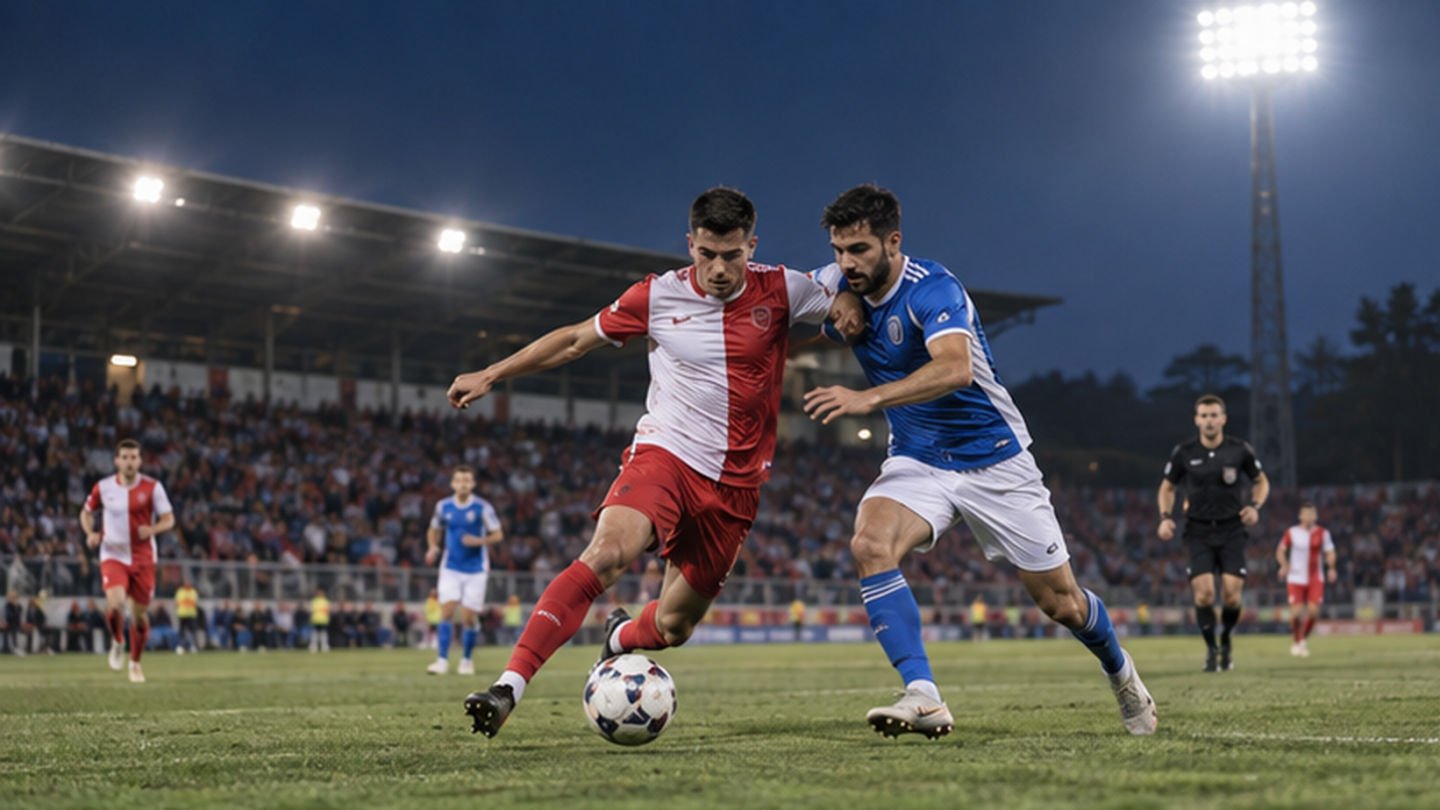
A review of home-grown footballers’ minutes in the Serbian SuperLiga singled out Mačva and Mladost from Lučani as the clubs that lean most heavily on Serbian players, while Vojvodina stands out as a positive surprise among sides with bigger ambitions. Such a figure does not automatically say anything about a team’s quality, but it does show where young and domestic players are genuinely getting a chance in competitive matches. The gap between the number of registered players and actual minutes matters most when judging a club’s development record.
Mačva and Mladost work with different budgets and goals from clubs that play in Europe on a regular basis, so their reliance on the domestic pool is partly a sporting model and partly an economic necessity. Still, consistent minutes let players correct their mistakes on the pitch rather than sit on the bench after one poor display. Vojvodina carries more pressure for results, which is why its high share of Serbian footballers suggests local talent can earn trust even in a more ambitious project.
Minutes count for more than names on the roster
A club can register plenty of young players and still spend most of the season fielding more experienced foreigners. That is why a serious analysis has to look at the percentage of minutes, the number of starts and the roles in important matches. Five minutes at the end of a settled game carry a very different development value from a place in the starting eleven against a direct rival. It is worth tracking whether home-grown players are doing the demanding jobs in midfield, defence and attacking organisation.

Foreign players can raise the level of the league when they bring experience or a skill that is missing, so the aim is not to close the market. The problem arises when an average import blocks an academy graduate without any clear gain in results. The most successful model combines a few foreign leaders with a domestic core that understands the league and can later generate income through a transfer. Mačva, Mladost and Vojvodina offer different examples of how such a balance can be built within each club’s means.
What the figure means for Serbian football
More minutes for domestic players widen the pool for younger national team squads and give coaches more candidates who play senior football every week. That does not mean every regular starter has international quality, but it lowers the risk of a whole generation spending its key years without competitive experience. The federation and the league should follow progress across several seasons, because a single month can be shaped by injuries, the transfer window or a coach’s short-term decision.
The real test comes when results dip. A club that immediately drops its young players shows that development was never really part of the strategy. A steadier approach keeps clear criteria, backing from the coach and competition in training. The rest of the season will show whether these clubs keep a domestic core in matches under greater pressure. If minutes stay high with acceptable results, their model will carry far more weight than any single statistical table.
For fans, it is useful to judge performance, not just passports. A home-grown player has to earn his place through quality, and the club has to give him a genuine opportunity to show it. Transparent data on minutes, age and positions allows a fairer debate. Mačva and Mladost are currently in front, Vojvodina is drawing attention, and the rest of the league now has a benchmark against which to measure its own development plans. It would be worth publishing the same indicators after every round of the championship, together with a comparison of players under the age of 21. That would separate a stable club model from a short spell caused by injuries or suspensions. A longer run of data could also show how far home-grown footballers progress from their first chance to a regular first-team role.