
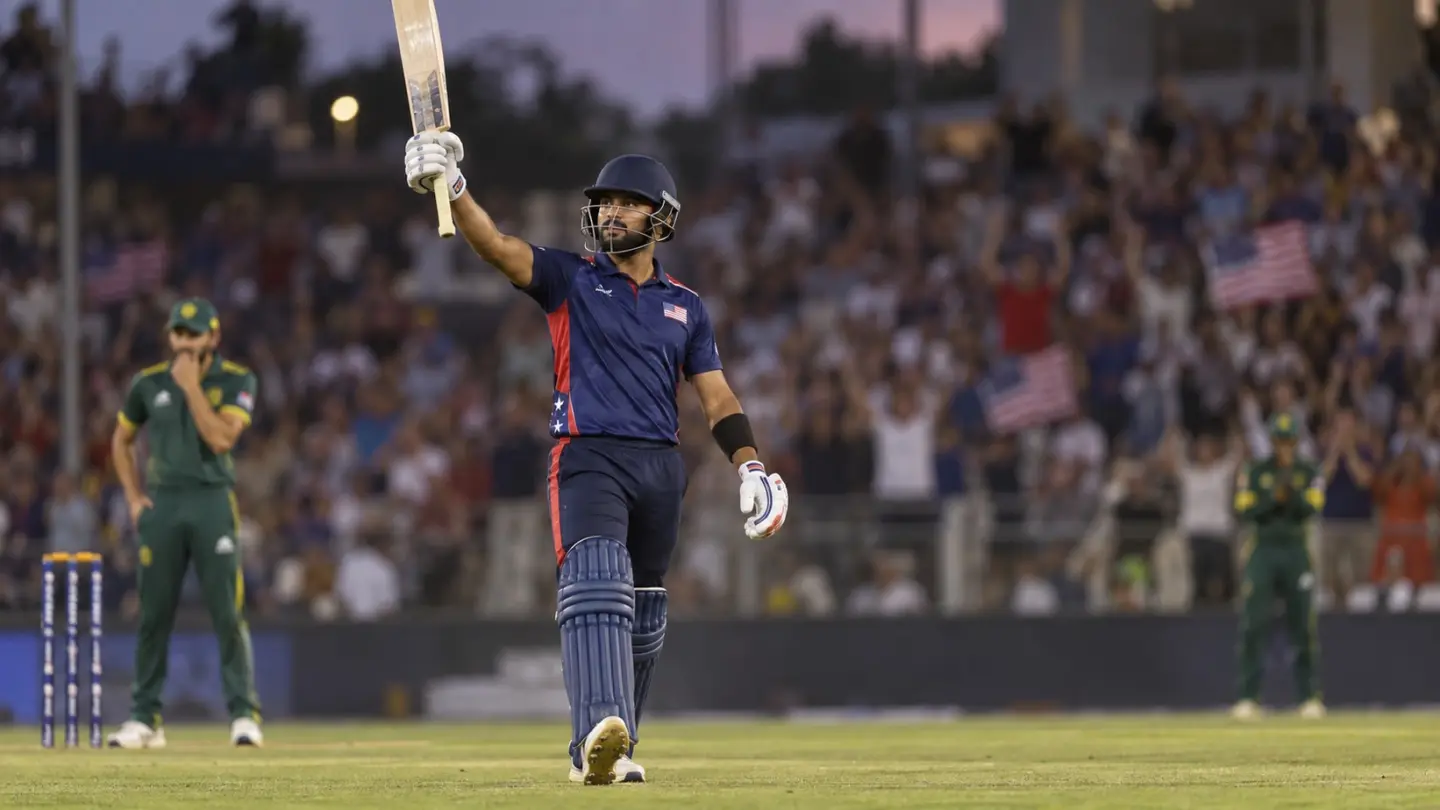
The United States national team beat the United Arab Emirates by six wickets in the World Cup League 2, chasing down a target of 330 runs with 332/4 in 48.5 overs. Milind Kumar remained unbeaten on 116 from 84 balls and was named player of the match. His innings featured seven fours and five sixes.
UAE posted 330/8, a total that usually forces the opposition to take risks from the first over. The USA, however, kept up the required rate without swinging at every ball. Monank Patel made 55 and Sai Mukamala added 56, so the middle order did not have to repair an early collapse and could instead carry on from a rhythm already established.
Milind Kumar took responsibility for the finish on entering and chose his bowlers carefully, stepping up the tempo against those he could punish. Seven fours show he did not rely solely on high-risk shots over the boundary. The five sixes came when the field was spread back or the length gave him a clean swing, which kept the required rate under control.
Milind Kumar turned a tough target into a controlled chase
Shubham Ranjane added an unbeaten 57 from 49 balls and, together with Milind, removed UAE’s last chance of a comeback. Their partnership was important because the target still demanded discipline in the closing overs. Rather than chasing one big over, the pair ran between the wickets and punished every short ball.

For the UAE defence, the problem was not only the total runs conceded but the lack of two quick wickets in the same period. One dismissal did not break the momentum, because each new batter came in alongside a partner who already understood the surface. Without such a run of wickets, it was impossible to push up the required rate and force the USA into risky shots.
Winning in 48.5 overs means the American side left just seven balls unused. That underlines how evenly the chase was paced: quick enough that the target never looked out of reach, yet without needless loss of wickets. Losing four batters in a chase of 330 is a sign of control, particularly at a level where the pressure of the standings shapes every decision.
Partnerships stopped UAE from creating a decisive run of wickets
This match gives the USA evidence that several batters can deliver a large chase. Patel and Mukamala laid the foundation, while Milind and Ranjane finished the job. Such a division of labour reduces reliance on one batter and makes it harder for the opposition to build its plan around removing a main star early.

In their review, UAE will need to look at how they deployed bowlers in the middle part of the innings. When the opposition regularly takes four to six runs an over without much risk, the captain has to change the angle, the field or the length. Saving the best overs for the end has no value if the match is already under the rival’s control by then.
A score of 332/4 places this American win among their most mature big chases. Milind’s 116 remains the central performance, but the success came from four linked partnerships and a good reading of the required rate. If the USA carry that composure into their next World Cup League 2 matches, they will be able to handle targets demanding close to seven runs an over on equal terms.
For a full assessment, it is worth tracking the scoring rate in the middle overs, the number of dot balls and the ability of the American middle order to finish big chases. That data will show whether the result came from a repeatable pattern or from a few exceptional moments. The final score describes the outcome but does not reveal how stable the plan was when the balance shifted and the opponent tried a different solution.
The immediate task for the USA will be to repeat that calm when early partnerships fail to produce fifty runs. Success will depend on keeping the strongest part of this performance and fixing the weakness spotted without changing too much. That approach creates a clear link between this result and the next challenge, rather than treating each display as a separate story with no measurable follow-up.