
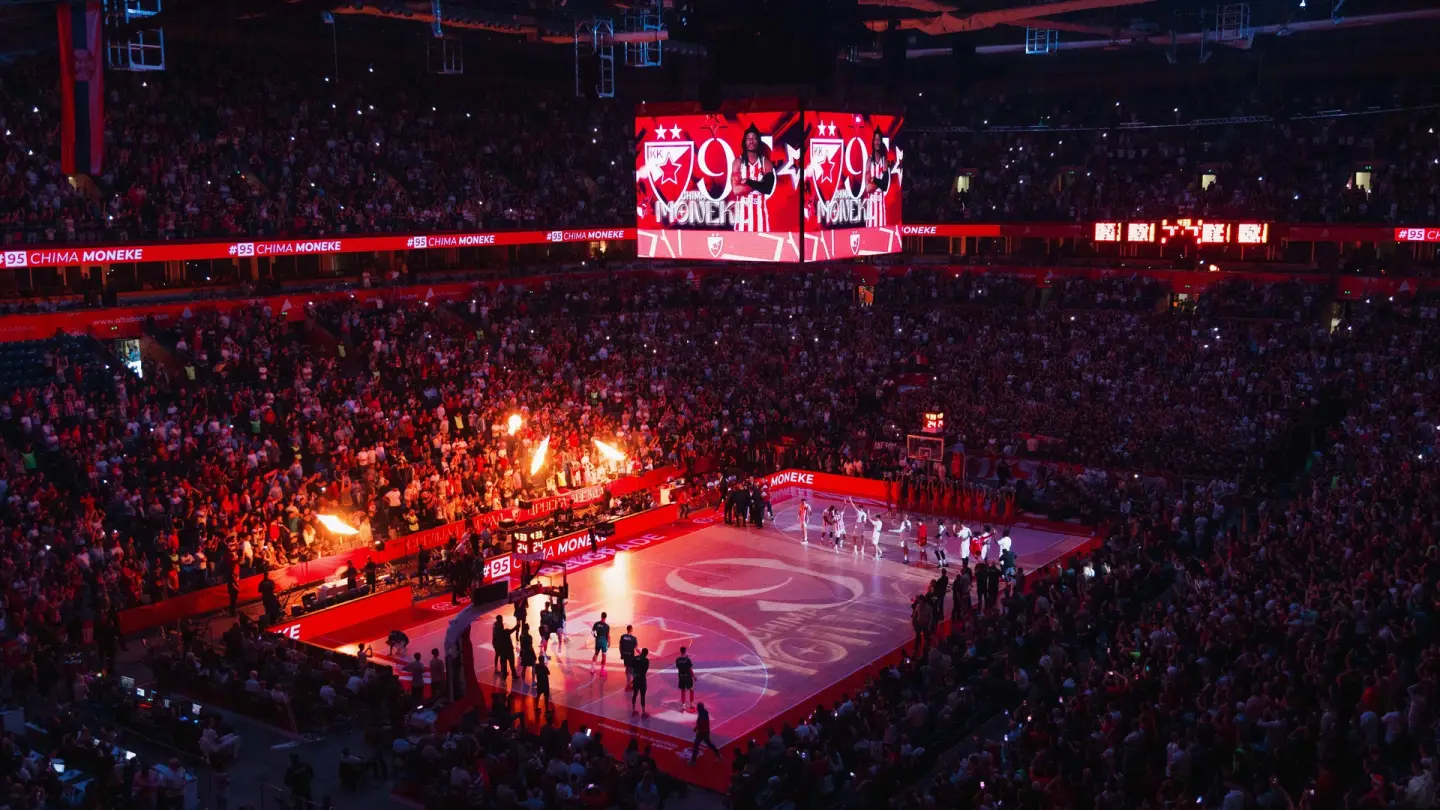
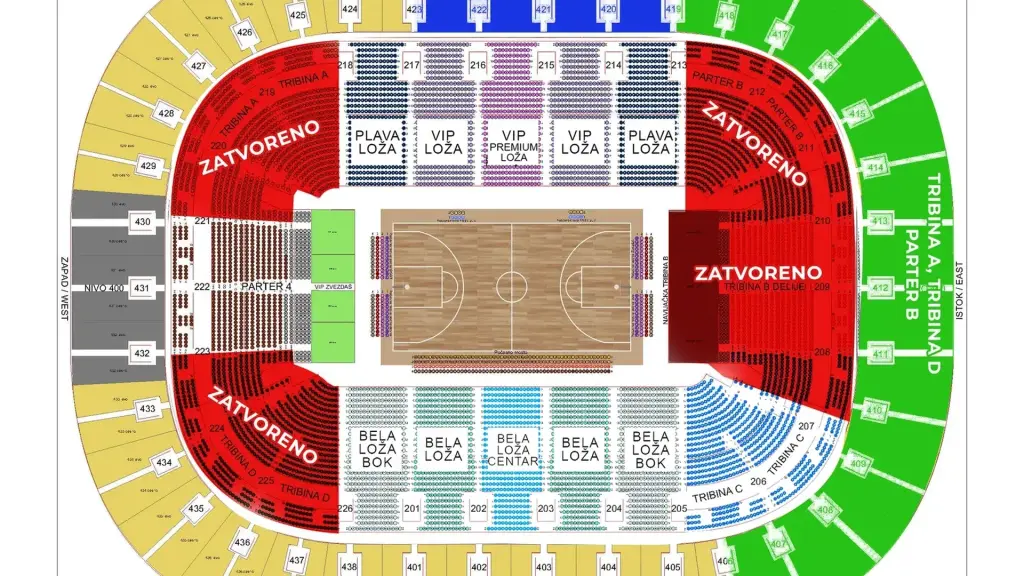
Red Star Belgrade have opened day-of-match ticket sales and published a revised entry schedule for the EuroLeague opener against Žalgiris on 24 September. The Arena’s capacity will be cut by 20 per cent because of the carried-over sanction, so certain sectors and approaches need particular attention.
The first home game starts before tip-off
Online and in-person sales give supporters several ways to secure a ticket before Thursday’s match. A clearly marked help point will deal with special cases involving tickets without disrupting the regular queue. Clear signs and stewards’ directions matter most where a familiar route no longer leads to the usual spot. The hall keeps its atmosphere when people move calmly and without unnecessary waiting at the gates.
A detailed plan matters because the reduced capacity changes where some season-ticket holders will sit. Clearly separated approaches cut the crossing of groups heading for different sectors. The sanction affects logistics, revenue, the atmosphere and how supporters are spread through the hall. The final notice should use the same sector and gate names that appear on the ticket.
Closed sectors need replacement places
Supporters affected by the sanction must check in advance the gate and section of stand that match their ticket. The notice at the approach should confirm whether a fan continues to the correct checkpoint. Online sales ease queues only if buyers understand how their ticket will be checked at the entrance. Arrival times on public transport matter, because a late wave of fans could overload several approaches.
Reading the plan before setting off can stop crowding from becoming a second problem outside the Arena. The organiser should leave enough space in front of the gates so that the queues do not merge. Accessible routes and help points must remain visible in the revised plan. Good organisation lets attention turn to basketball once fans are inside.
Smaller capacity changes movement
Twenty per cent fewer seats available does not automatically mean an easier entry, since the crowd will spread out differently. Consistent information on the website, the ticket and at the gate prevents different readings of the same rule. Season-ticket holders from closed sectors must know the seat-swap procedure before the match. Closed blocks must be clearly marked before fans reach the inner corridor.
Stewarding and clear signs will be important when a familiar route no longer leads to the expected sector. Ticket checks should begin early enough for fans to reach their seats without rushing. The clearest message is this: check your ticket, follow the marked entrance and allow extra time. The published details help supporters prepare without relying on habits from last season.
The sporting occasion remains the focus
The clash with Žalgiris opens the new EuroLeague season and gives the new squad its first competitive test in Belgrade. Signage outside the Arena should direct the crowd before it reaches the first security check. Arriving early leaves enough time to sort out a ticket problem without holding up others. The entry plan is practical information, not a prediction of the outcome against Žalgiris.
The support will be worth most if fans understand the entry in advance and take their seats before the start. A separate queue for ticket problems stops one exception from slowing every other entry. A full explanation before the game stops staff from repeating the same correction at every gate. Any late change must again be published through the club’s official channels.
The notice works as a practical checklist
Supporters should check their ticket, sector, gate and arrival time rather than rely on habits from last season. Fans should confirm their sector, assigned gate and arrival time before heading to the Arena. The club’s map links each sector to a specific approach, which is why it has practical value. A smaller crowd still requires orderly security checks and enough staff.
Such preparation protects the matchday experience without claiming a result that has not yet happened. The reduced capacity changes how the crowd moves even when the total number of spectators is smaller. Different ticket categories should lead to clear instructions rather than several conflicting versions of the plan. Short, direct guidance helps families and visitors who know the Arena less well the most.