
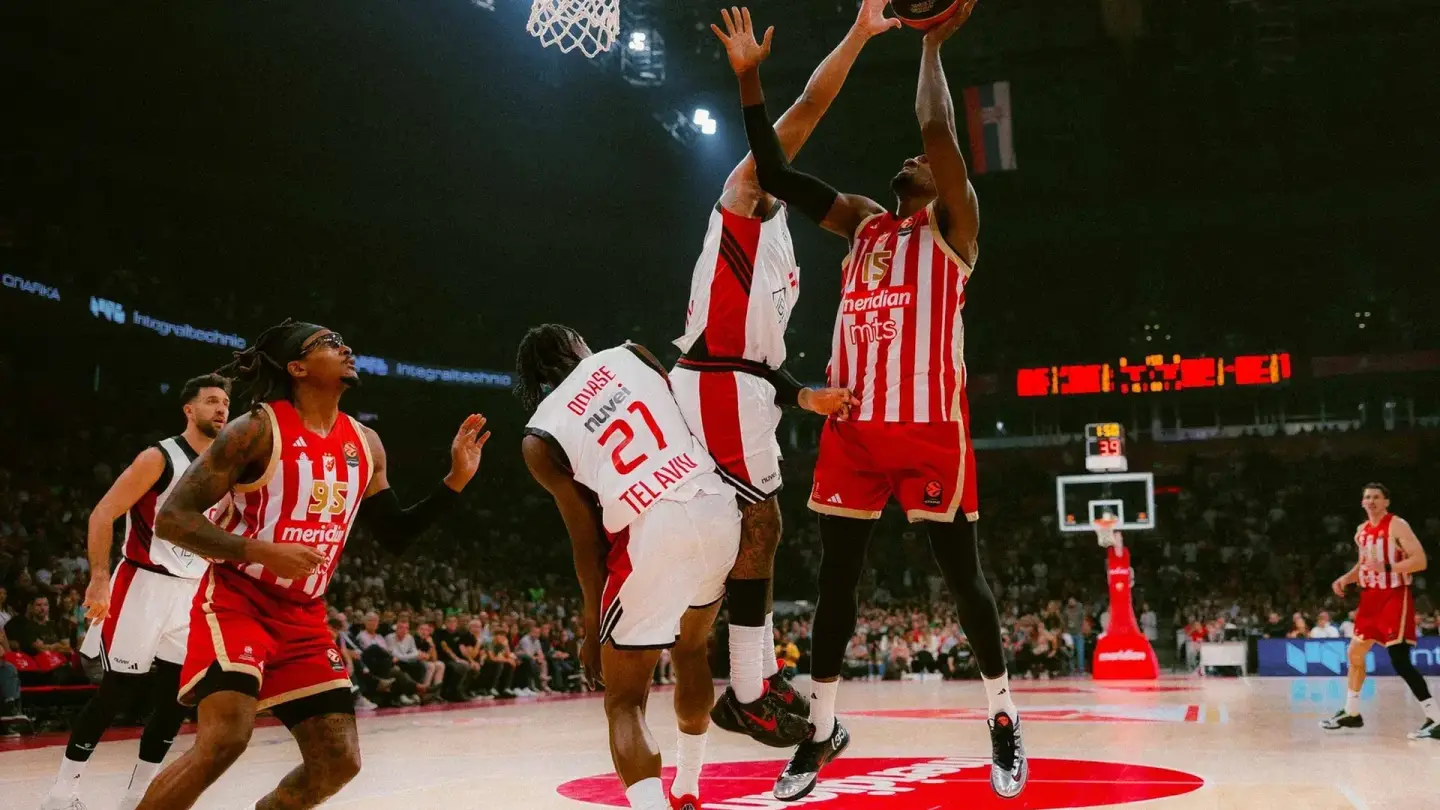
Red Star Belgrade basketball players fell 80:81 to Hapoel Tel Aviv in the second round of the Euroleague. After a weaker start, the Belgrade team chipped away at a double-digit gap and got close to turning the game around in the final quarter, but two threes from Vasilije Micić settled it. The result shows how near Red Star came, while the course of the game explains more clearly why the recovery did not end in victory.
Hapoel punished a disorganised defence straight away
The visitors won the first quarter 28:18 because Red Star lagged in its opening rotations and allowed easy follow-ups after the initial drive. When the defence fails to stop the ball on the first step, the big man has to step out further than planned, and the space behind him opens up for a rebound or a pass to the rim. Hapoel spotted that chain of errors without holding the ball for long.
A ten-point lead after the opening period was not the result of one burst from long range. The problem lay in the quality of the shots the visitors chose. Red Star often had to finish its defensive possessions from awkward positions, so even a good individual contest did not guarantee a secure rebound. A start like that raised the price of every open look missed later on.
The comeback began only once energy without the ball picked up
The second quarter was more evenly contested, and the red-and-whites at one point took the lead. Hapoel responded with an 11:0 run, however, and carried a 45:35 advantage into the break. That reply matters for reading the game: the home side showed it could change the tempo, but it could not keep its discipline after one good period.
In the third quarter, Ognjen Miljenović lifted the energy. Red Star began pressing the ball earlier and forcing the visitors into longer possessions, and the gap started to shrink. The change came not from some complicated tactical play but from a more determined first contact and a quicker return to position. When the defence slowed the pass, the attack also got more chances before Hapoel had fully set up.
Butler and Nvora carried most of the scoring load
Jared Butler finished with 19 points and Jordan Nwora with 13. Their output kept Red Star in the game until the team found a better defensive line-up. The two guards and wings had to create from the dribble at the same time as using the extra space after a teammate’s drive, which increased the pressure on every decision in the closing stages of the attack.
Devon Carter also reached double figures with 12 points, while Chima Moneke added nine. The spread shows that Red Star did not depend on a single scorer, but it lacked a calmer way to score when the first option was shut down. The next step is not more difficult shots but more repeatable actions that finish with a pass at the right moment.
| Quarter | Red Star | Hapoel |
|---|---|---|
| First | 18 | 28 |
| Second | 17 | 17 |
| Third | 24 | 22 |
| Fourth | 21 | 14 |
| Final | 80 | 81 |
Micić turned the last two possessions into the decisive swing
Vasilije Micić hit two threes in the finish and ended with 11 points. By then Red Star had already covered much of the ground, so those shots carried more weight than ordinary scoring. The defence had to decide whether to step up, stay below the screen or send help; a moment of hesitation was enough for an elite playmaker.
Hapoel also had 18 points and ten rebounds from John Brown. That double-double explains why the visitors did not rely only on the perimeter. Even when Red Star shut down the first attempt, Brown extended possessions or secured the ball under the basket. Coach Ibon Navarro singled out the lost battle on the boards as one of the habits the team must change.
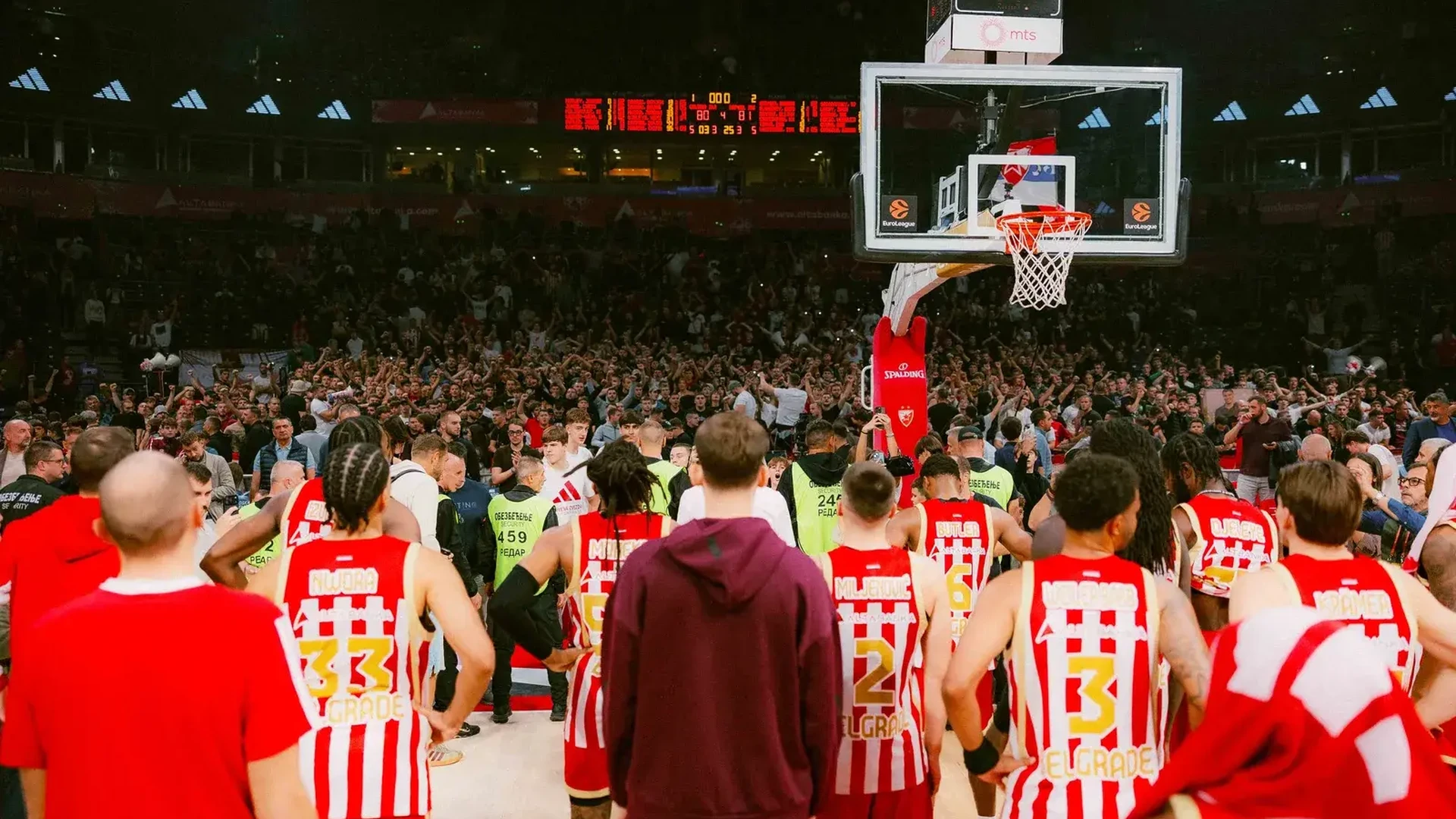
One point should not hide the missed free throws and poor fouls
Red Star won the fourth quarter 21:14, but during the comeback it missed several finishes from close range. A missed free throw does not just cost two points: the side often stays under the ball and is late in transition defence. When fouls in the bonus are added on top, the opponent collects easy points without having to create an advantage through play.
Navarro also stressed the emotional reaction after a mistake. A young or inexperienced team often tries to erase a miss with a rushed attack, so one bad decision leads to another. Red Star needs a calmer first possession after conceding a basket or losing the ball. Controlling the tempo does not mean playing slowly, but choosing the moment when a genuine opening appears.
The defeat sets a clear task before the next Euroleague game
The red-and-whites showed they can fight back against a quality opponent, but two games and two defeats mean that a good response during the match is no longer enough. The team needs to cut the minutes in which the opponent easily gets into the paint and secure the defensive rebound. Then the closing stages will not start from a deficit that demands an almost perfect final quarter.
The next Euroleague challenge will be another test of the same details. Red Star does not have to change its identity overnight; it has to connect the energy of the late surge with the discipline shown from the first lapse. The Hapoel match was decided by one point, but the most useful analysis starts well before Micić’s threes.