
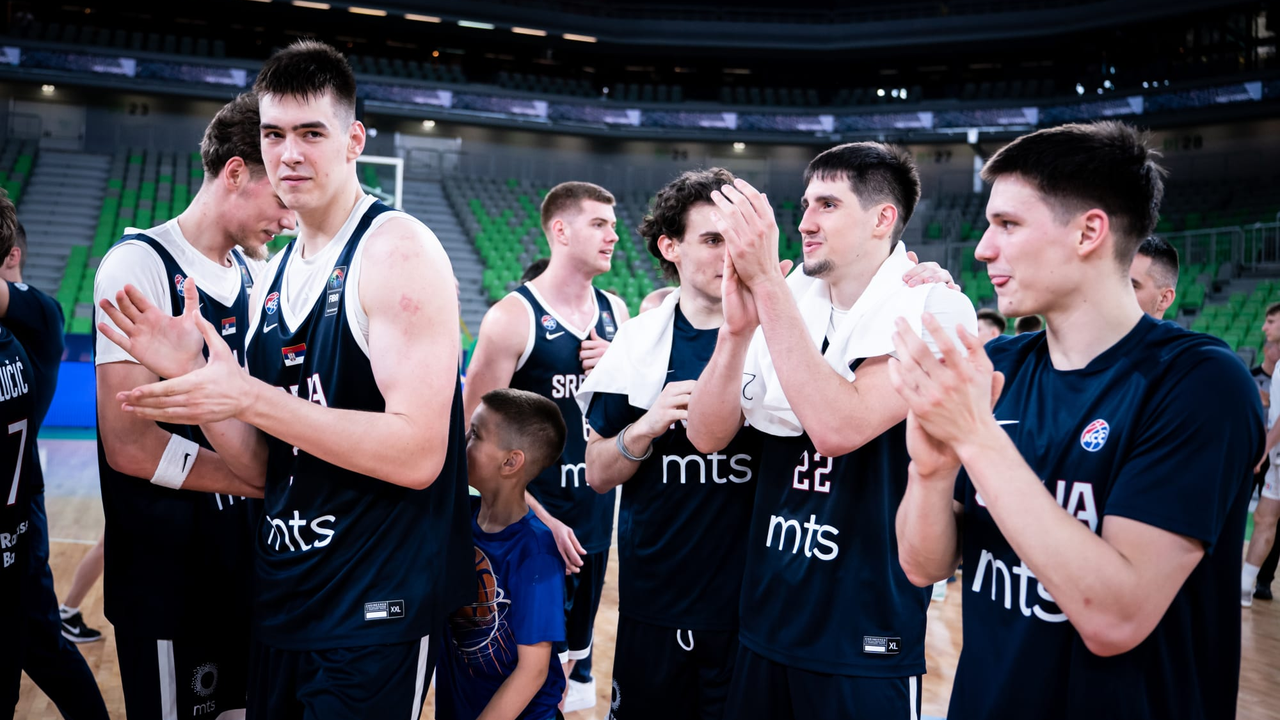
Serbia won all three group matches at the European U20 Championship and now face Italy in the round of 16 in Ljubljana on 15 July at 18.30. One defeat ends the tournament, so earlier wins offer no guarantee of success in this game.
The Serbian side beat Latvia 89:66, Lithuania 79:57 and Poland 84:67. Italy reached the same stage by a harder route. The defending champions lost to France and Germany, then beat Turkey 71:67 and kept alive their chance to defend the title.
Three wins built a solid base
Serbia did not need a single tight finish to top their group. All three matches were won by double-digit margins, and they scored at least 79 points each time. Serbia took an early lead against Latvia. They held Lithuania to just 57 points, and they also beat Poland without a nervy finish.
The three games gave Serbia useful experience. Their players competed on consecutive days, used different line-ups and attacked different defences. That may help them adjust faster to Italy. Experience does not guarantee victory, but the squad already knows how to solve similar problems. Serbia scored 252 points in the group and conceded 190, a difference of 62. Italy scored 191 and conceded 219. Still, the knockout tie starts at 0:0.
Nikola Džepina carries a major share of the play
Nikola Džepina had the strongest output in the Serbian side during the group stage. He averaged 17.7 points and 8.7 rebounds, with an efficiency rating of 23.7. He scores close to the basket and rebounds well. He can also find an open teammate when the first action does not produce a shot.
Italy will try to stop Džepina from receiving the ball near the basket. They may use physical contact and send an extra defender his way. The other Serbian players must move and offer a safe pass. Cutting behind the defence or quickly passing to an open teammate can create a clear shot.
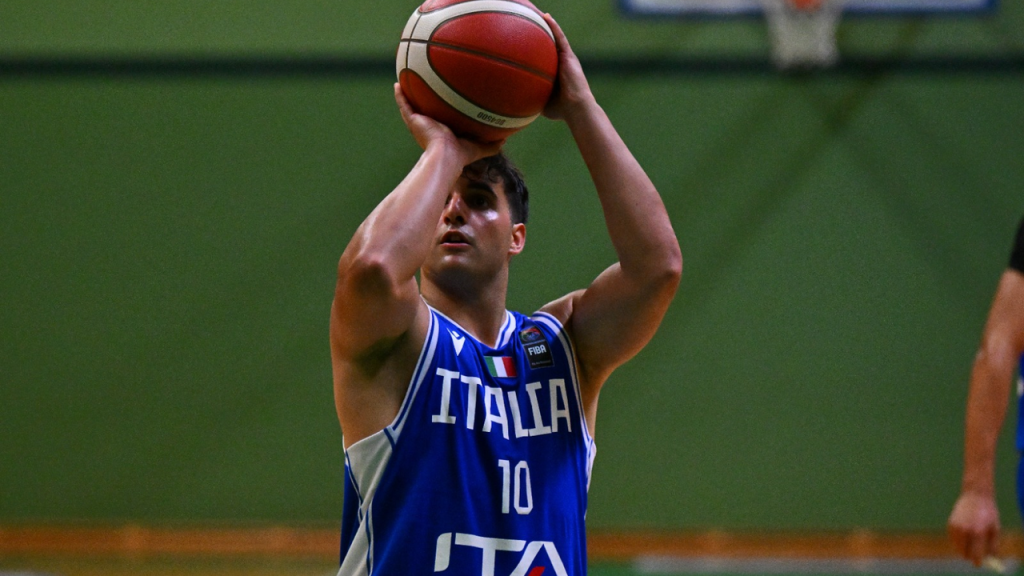
Italian players during their first win at the 2026 tournament
Italy arrive with urgency, not calm
Italy’s route through the group was uneven. A 67:53 loss to France was followed by an 85:67 defeat to Germany. The 71:67 win over Turkey brought their first success and showed that the defending champions can survive a tight finish. Serbia should respect that last impression more than the earlier results.
Italy had to win their final group match to stay in the tournament, so their players already know what pressure feels like. They can attack the basket early, fight for every rebound and use fouls to halt Serbia’s fast break. Serbia must answer with the same energy, but without rushing.
| Signal | Meaning |
|---|---|
| Start | 15 July at 18.30, Ljubljana |
| Serbia’s record | Three wins, 252 points scored and 190 conceded |
| Key performer | Nikola Džepina: 17.7 points and 8.7 rebounds |
The defensive rebound could set the tempo
After an Italian miss, Serbia must grab the ball first. Otherwise Italy get another chance to score. A secured rebound lets Serbia start a fast break before the opposing defence is set.
All five Serbian players must help after a miss. Smaller players should collect balls that bounce away from the basket. Another teammate has to step in when a tall player leaves to contest an Italian shooter. That way Serbia can choose between a quick attack and a slower one.
Serbia must pick good shots
Young teams often release the ball too early in a match where a defeat ends the tournament. Serbia do not need to make that mistake. The players should first create a clear advantage. They can attack a defender who is running late, find a favourable matchup or pass to an open teammate.
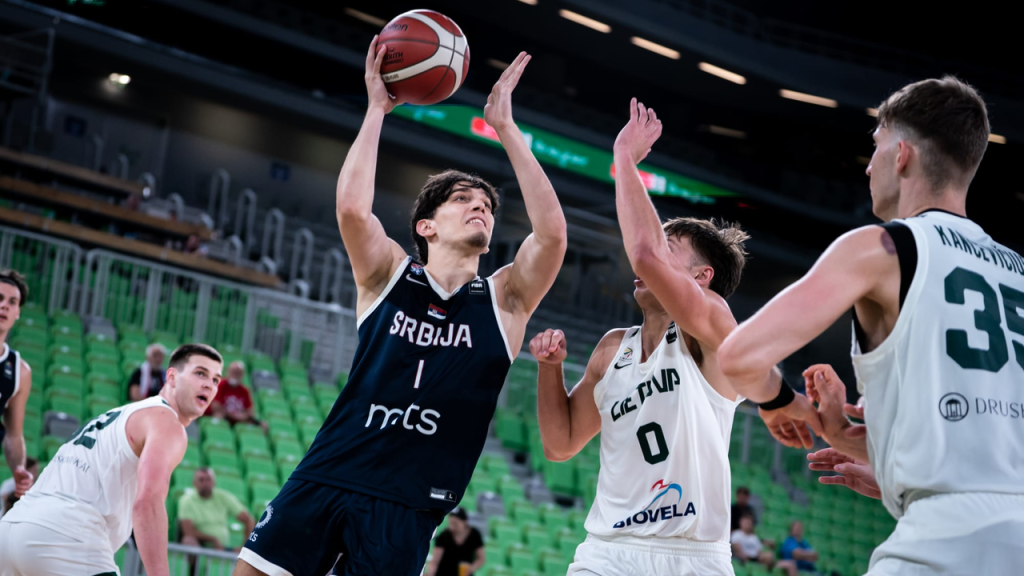
Serbia’s players in attack against Lithuania in the group stage of 2026
Serbia must look after the ball. A careless pass can give Italy an easy fast break before Serbia have set their defence. Careful play does not mean slow play. Every pass needs a clear purpose, and enough space between teammates opens up several safe options.
Bench minutes shape the final quarter
Because of the crowded schedule in Ljubljana, recovery matters. Reserves must help so that the main players have energy in the final quarter. A player off the bench does not need to score much. Good defence, one secured rebound and disciplined attacking can all help the team.
Italy face the same fatigue problem, but they may have fewer reserves to call on. Serbia should keep moving the ball and the Italian defence. If Italy’s main players have to defend hard on every possession, they may run out of energy in the final quarter.
Late-game moments call for simple roles
If the score is level in the closing minutes, Serbia need a simple attacking plan. Džepina can draw defenders close to the basket. Teammates can then create an open shot with a pass, a drive or a screen. They must not stand and wait for one player to attempt a difficult shot.
Timeouts and free throws will slow the game down. Serbia’s instructions must stay short and clear. Every player needs to know who guards whom after a miss and who marks the Italian with the ball. The squad also needs to know how the next possession begins.
A place in the quarter-finals must be earned again
Serbia won the top tier of the European U20 Championship in 2007, 2008 and 2015. They also won Division B in 2022. That history will not decide the next match. Serbia need patient attacks, a shared effort for loose balls and controlled pace.
The winner advances to the quarter-finals, but Serbia have no need to think about their next opponent yet. The first task is for Serbia to play the next attack and defence without an unnecessary error. The team must keep control in every part of the game.