
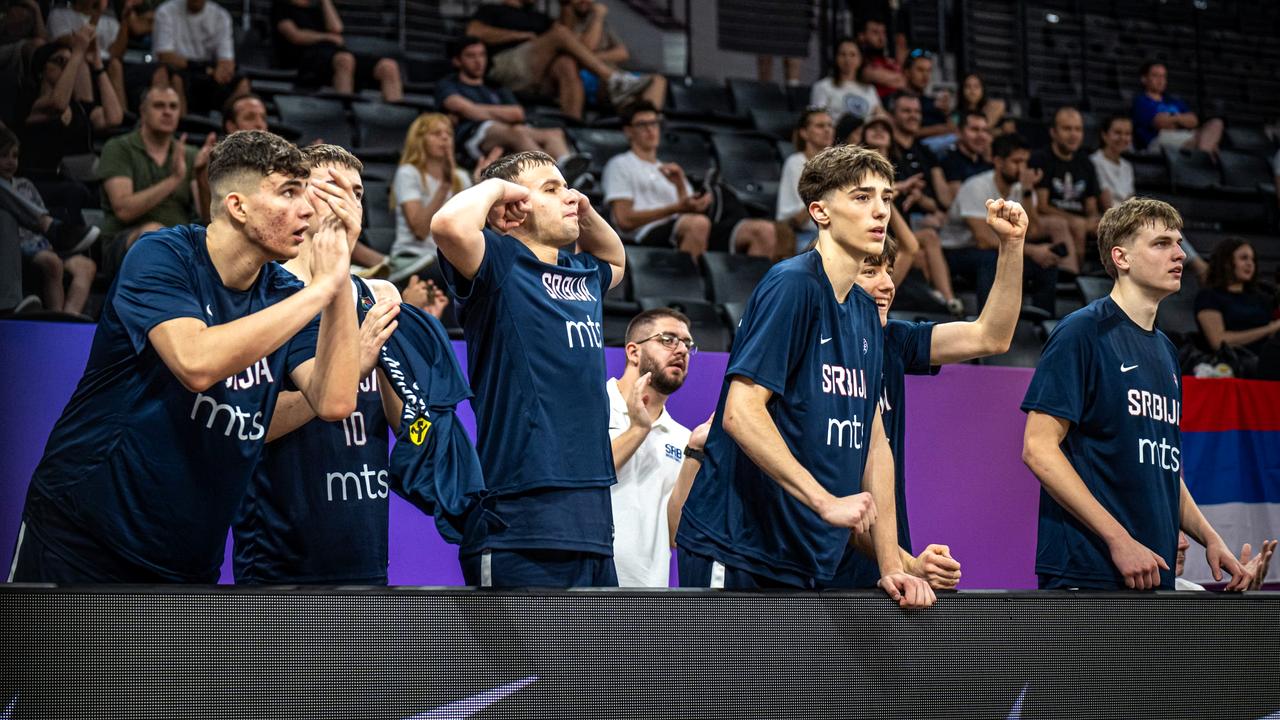
Serbia U17 need a response against Venezuela after the Australia opener
Serbia’s men’s U17 side lost 88:66 to Australia in their opening game at the World Championship in Istanbul, so the clash with Venezuela immediately becomes a test of how they respond.
The defeat was not the product of one bad minute. Australia built their advantage across the first half, Serbia looked for a way back in the third quarter, and the final period showed where control needs to be better.
What really broke the rhythm
Australia beat Serbia 88:66 in the first round of Group D.
Serbia went into a double-digit deficit in the second quarter and were never able to cut it fully.
The third period brought a better tempo, but not a scoring comeback good enough to change the outcome.
Where the pressure showed
Kusturica was the most efficient, with 17 points, Lukić added 16 and Stepanović 10.
Serbia face Venezuela in the second round on 28 June.
The opener made clear that a quick defensive transition after a missed shot is essential.
Key details
| Area | Detail |
|---|---|
| Result | Australia U17 88:66 Serbia U17 |
| Group | World Championship, Group D |
| Serbia’s points | Kusturica 17, Lukić 16, Stepanović 10 |
| Next | Venezuela |
What the coach now has to measure
Australia’s control in the final period turned the game into a clear lesson for a developing side.
The next match will show whether Serbia can answer with a calmer start.
How the next game changes

Serbia fell into a double-digit hole in the second quarter and could not close it completely. Add the fact that the opener exposed the need for a quick defensive transition after a missed shot, and it becomes clear why the next session has to separate a good spell from a repeatable performance. The coaching staff must link that detail to rebounding, because that is where a game is most quickly steadied or lost.
The points from Serbia, Kusturica 17, Lukić 16 and Stepanović 10, give the coach a precise starting point for discussion, but the response has to show in the first attack, not just in the box score. The next match therefore demands practical proof: a good spell has to be repeated before the pressure becomes hard to handle.
Kusturica was the most efficient with 17 points, Lukić added 16 and Stepanović 10. Serbia cannot afford to wait for the opposition to start a run, so they need to settle the final moments of each quarter earlier and cut down the easy points they give away. Opponents will punish cheap possessions, so the approach to the end of each quarter has to be part of the plan from the opening minutes.
The Australia U17 88:66 Serbia U17 scoreline only matters if the team links it to better decisions in getting back on defence after a missed shot. If Australia U17 88:66 Serbia U17 remains just a number, the same pressure will return as soon as the opponent raises the tempo.

The opener showed that a quick defensive transition after a missed shot is essential. The next step is not a general reaction but a more specific choice within the part of the game known as the second unit’s response. The clearest improvement would come through better spacing, firmer contact play and a calmer exit from the first poor spell.
The coaching task is practical: keep what worked, shorten the poor minutes and turn the period after a timeout into a more stable part of the plan. For Serbia, the key is that this shows up in the next possession, not only in the final score.
The next match will show whether Serbia can respond with a calmer start. Preparation must therefore set out how minutes are distributed, because that is where it becomes clear whether the reaction is real or just a short run. A better answer would mean fewer hurried decisions and more control before the bench has to fix the rhythm.
Australia beat Serbia 88:66 in the first round of Group D. From that detail follows the need for a calmer defensive transition, with fewer forced passes and a quicker return to shape. At that point the result becomes useful preparation rather than just another entry on the calendar.
Final assessment
The next appearance should not be judged on the result alone. What matters far more is whether Serbia show a cleaner start, a calmer response to a run by the opponent and sharper decisions in the minutes when a game turns.

Further reading on the match
Serbia’s U17 start should be read as a warning for development, not as a final verdict on the generation. Australia punished the lost possessions and imposed their tempo physically, but a stronger third phase shows Serbia have enough attacking answers to keep the second match very important.
Kusturica, Lukić and Stepanović gave Serbia a scoring base. That matters, because a heavy opening defeat often strips young sides of a clear attacking reference point. Against Venezuela those goals need to arrive earlier in the attack, with a better setup around the first break.
The bigger fix is defensive. Australia grew the gap whenever Serbia missed chances and closed their way back into defence too slowly. That detail can be corrected, but only if the full-backs and wingers instantly know who stops the ball, who guards the rebound and who takes the first pass.
Venezuela now becomes a test of reaction speed. Serbia have no time for a long recovery in a short group stage. The first five minutes will show whether the players carried the defeat to Australia as a burden or as a clearer plan for contact, rebounds and a safer first pass.