

Partizan won 92:79 away against Paris and, after two rounds of the Euroleague, holds a 2-0 record. The hosts started with a 10:0 burst, yet the black-and-whites had seized the lead before the break. Carlik Jones finished with 20 points, Luka Vildoza scored 16 and grabbed six steals, and a final-quarter run of 25:16 underlined the team’s grip on the contest.
The 0:10 opening did not push Partizan off its plan
In the opening minutes Paris used its speed and punished a handful of turnovers. The visitors could have answered with a string of quick shots, but they gradually returned the ball to their playmakers. Jones and Nikola Tanasković ended the surge with a 7:0 spell, and the first quarter closed at an acceptable 18:15.
That response mattered more than the immediate equaliser. Partizan cut down the possessions in which Paris ran at an unset defence and began choosing better angles to attack. Once the tempo was back under control, the hosts could no longer build an advantage on early energy and crowd pressure alone.
The second quarter changed the direction of the game
Partizan won the second period 29:22 and went into the break ahead 44:40. The offence grew wider, and the ball stayed in one place for less time. Paris had to guard both the drive and the pass to its big men, so help from the perimeter did not arrive without cost.
The black-and-whites also did a better job of closing down the hosts’ first pass after a rebound. Paris is most dangerous when it crosses the centre line quickly and shoots before the defence has settled. Slowing that first step allowed Partizan to set five players behind the ball. From then on the game looked more like a positional contest, and that suited the visitors.
Jones provided the scoring while Vildoza changed the flow of possessions
Carlik Jones finished with 20 points and was Partizan’s most efficient player. His ability to finish a drive or stop in the mid-range stopped Paris from simply defending the passing lane. When help arrived early, space opened up for a team-mate on the wing.
Vildoza’s 16 points were only part of his contribution. His six steals were a career high in the Euroleague and directly disrupted the rhythm of the game. A steal does not always produce points, but it forces the opposing guard to begin the next possession more cautiously. Partizan used that uncertainty to push the defence a step further up the floor.
| Quarter | Paris | Partizan |
|---|---|---|
| First | 18 | 15 |
| Second | 22 | 29 |
| Third | 23 | 23 |
| Fourth | 16 | 25 |
| Final | 79 | 92 |
The third quarter kept the balance before the final push
Both sides scored 23 points in the third period, so Partizan entered the final ten minutes with a four-point cushion. Importantly, the visitors did not let Paris build a big run after the break. Every home basket was answered before the energy in the arena could shift.
An evenly split quarter was not a passive protection of the score. Partizan kept attacking the rim and drawing fouls rather than burning the clock too early. That approach keeps the defence honest. If a team starts playing only against the shot clock, possessions end with late, difficult attempts, and a lead quickly turns into a burden.
The closing 25:16 showed the difference in decision-making
In the fourth quarter Partizan linked its defensive stops to controlled attacks. Vildoza finished a fast break when a lane opened, and Alessandro Pajola hit an important three that extended the margin. Paris was forced to chase the score and increasingly ended possessions early, before it had found its best option.
The visitors did not respond with the same hurry. When there was no easy transition, the ball returned to an organised attack. That consumed time and reduced the number of possessions in which the hosts could produce a run of three-pointers. The finish therefore looked calmer than might have been expected after a 0:10 start.
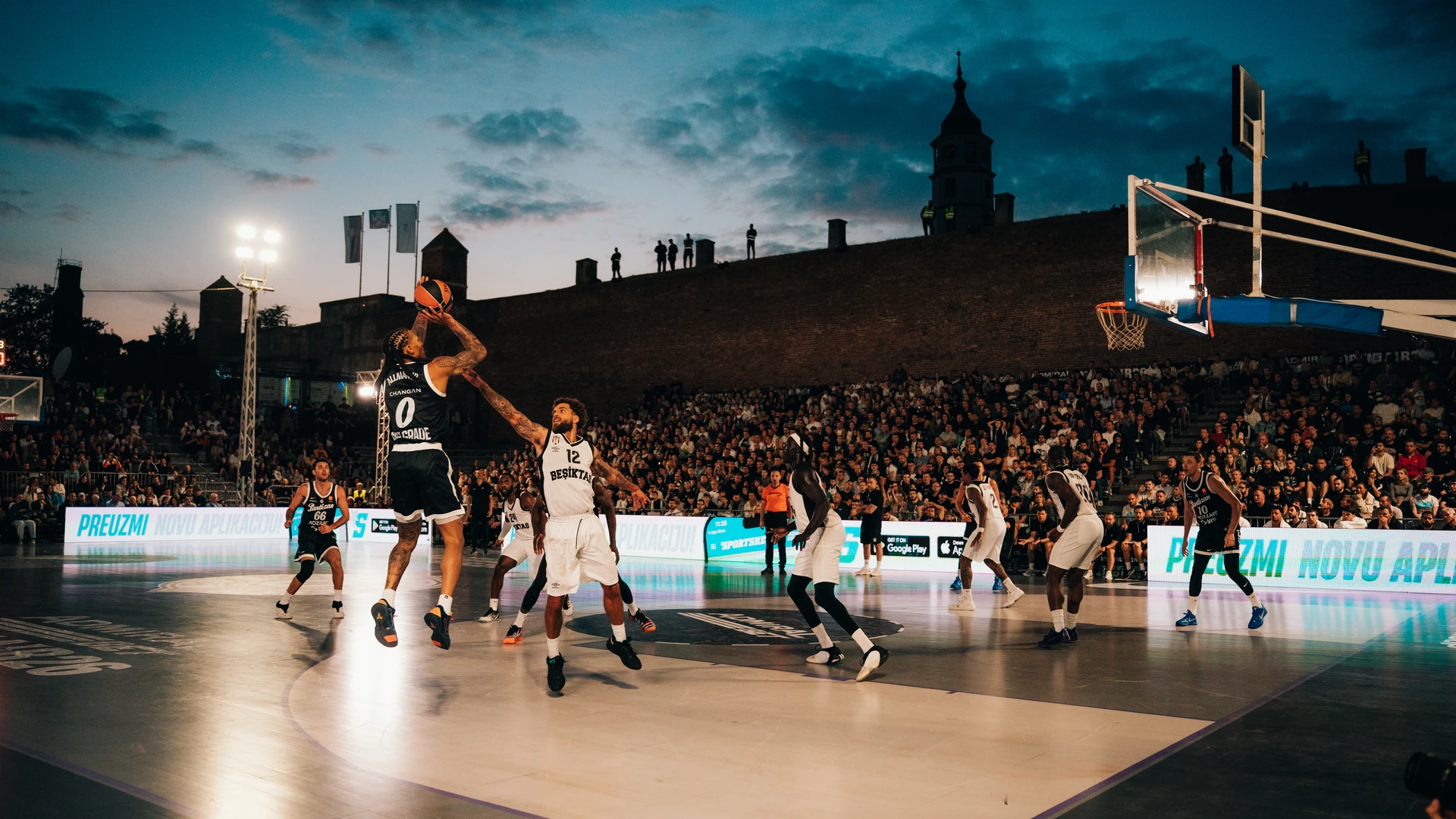
A 2-0 start is good, but adaptability is the more valuable asset
Partizan has beaten Olimpia Milano and Paris in the first two rounds, two teams with very different styles. In the French capital it had to survive a fast start, regain control of the ball and close out the game without relying on a single scorer. That kind of in-game adjustment matters over a long Euroleague season.
A 92:79 result should not hide the poor opening minutes, but it places them in a useful context. The team recognised the problem and answered without panic. Jones’s scoring, Vildoza’s steals and a collective fourth quarter together delivered the win. The next challenge is to bring the same level of focus to the first minutes, so that a slow start is not repeated.
The away win sets a standard for the nights ahead
The Euroleague season changes opponents and arenas quickly, so one victory cannot be celebrated for long. Still, the way Partizan reacted after 0:10 gives the coaching staff a useful model. The timeout and rotations did not spark a sudden revolution, but they returned the team to its basic structure and to more patient shot selection.
Players from the bench now have clear evidence that their minutes are not only a rest for the starters. Extra energy on defence, one good block or a secure pass can change the course of a quarter. If Partizan keeps that spread of responsibility, the 2-0 start will be more than a pleasant beginning and will form the basis of a steadier rhythm through a demanding schedule.