
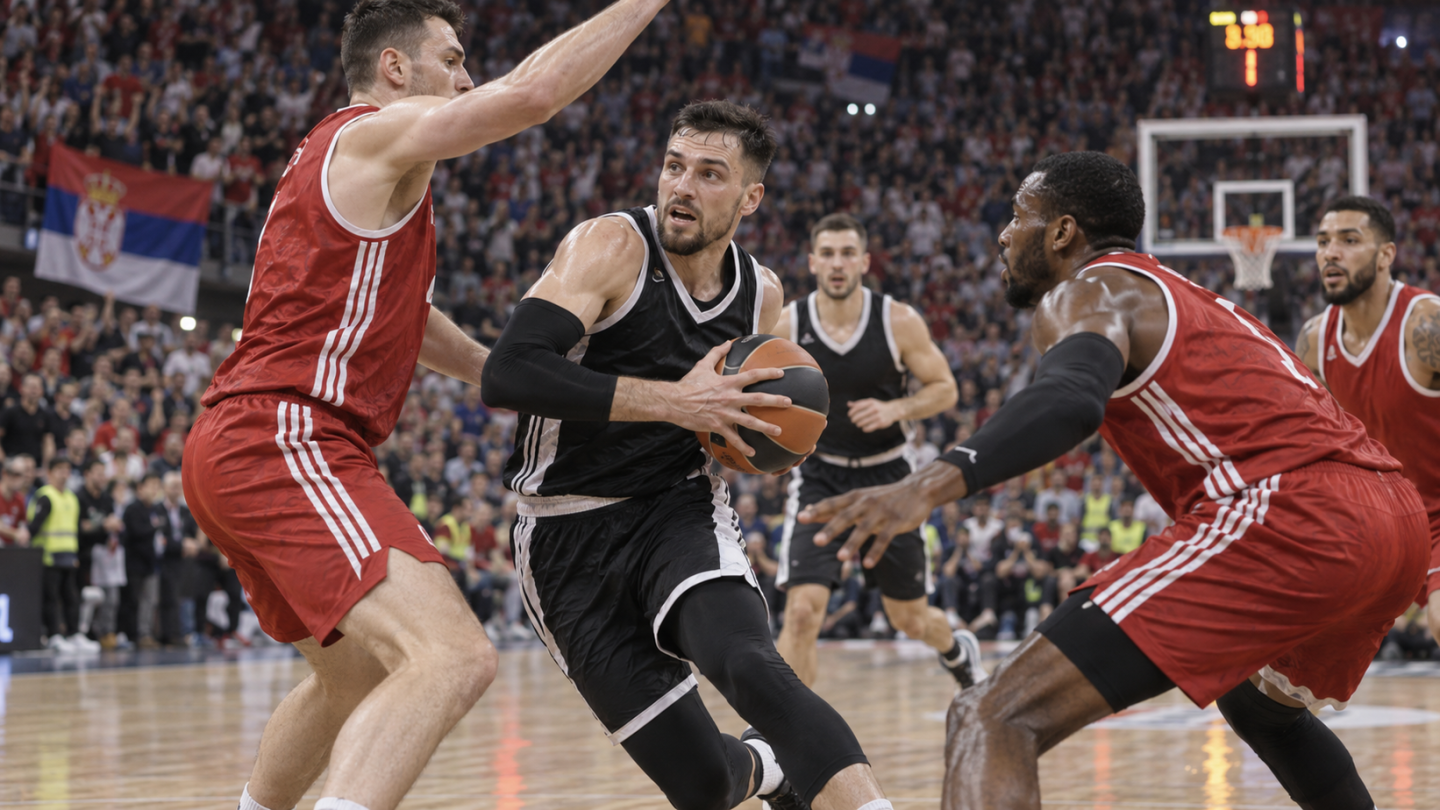
Partizan won 86:84 in Munich, came back from 13 points down and kept its perfect record after the first three rounds of the Euroleague. Before a crowd of 11,500, the hosts led 65:52 in the 29th minute and still held a seven-point advantage with four minutes to play. The Belgrade side then tightened its defence, quickened the transition game and, with a 9:0 run, completely changed the course of the closing stages.
Toney Jekiri was Partizan’s most efficient player with 17 points, while Jones added 12 in the final quarter. Bayern were led by Dwayne Washington with 20 points, and Johannes Thiemann chipped in 17 and five rebounds. The home side turned the ball over 17 times, against Partizan’s eight, and a late bad pass handed the visitors possession with 24 seconds left. Washington’s difficult shot for the win rimmed out.
Jones’s 12 points in the last quarter changed the game
Jones’s performance was more than a string of baskets. His drives forced Bayern’s defence to collapse, which opened passing lanes to the big man and more room on the perimeter. Partizan scored 29 points in the last ten minutes, despite managing just 11 in the third quarter. The change of pace showed that the team can find another solution when its original attack loses rhythm.

The turnaround began with pressure on the first pass. Bayern had been getting into the paint with ease earlier, but in the closing stages they tried to speed up their decisions and made mistakes. Partizan punished the lost balls before the hosts could set up their defence. That approach carries the risk of an open shot if the first wave of pressure is broken, but in this game it shifted the energy and the possession count at the right moment.
The 3-0 start speaks to character but also points to room for improvement
Three wins to open the season give Partizan a valuable cushion, but they must not hide the third quarter or the 13-point deficit. Against a more accurate opponent there may not be time for a late comeback. The coaching staff should look at how the team defends the paint without unnecessary help, and why the attack loses its flow of the ball after halftime. A steadier middle phase would reduce their reliance on dramatic finishes.
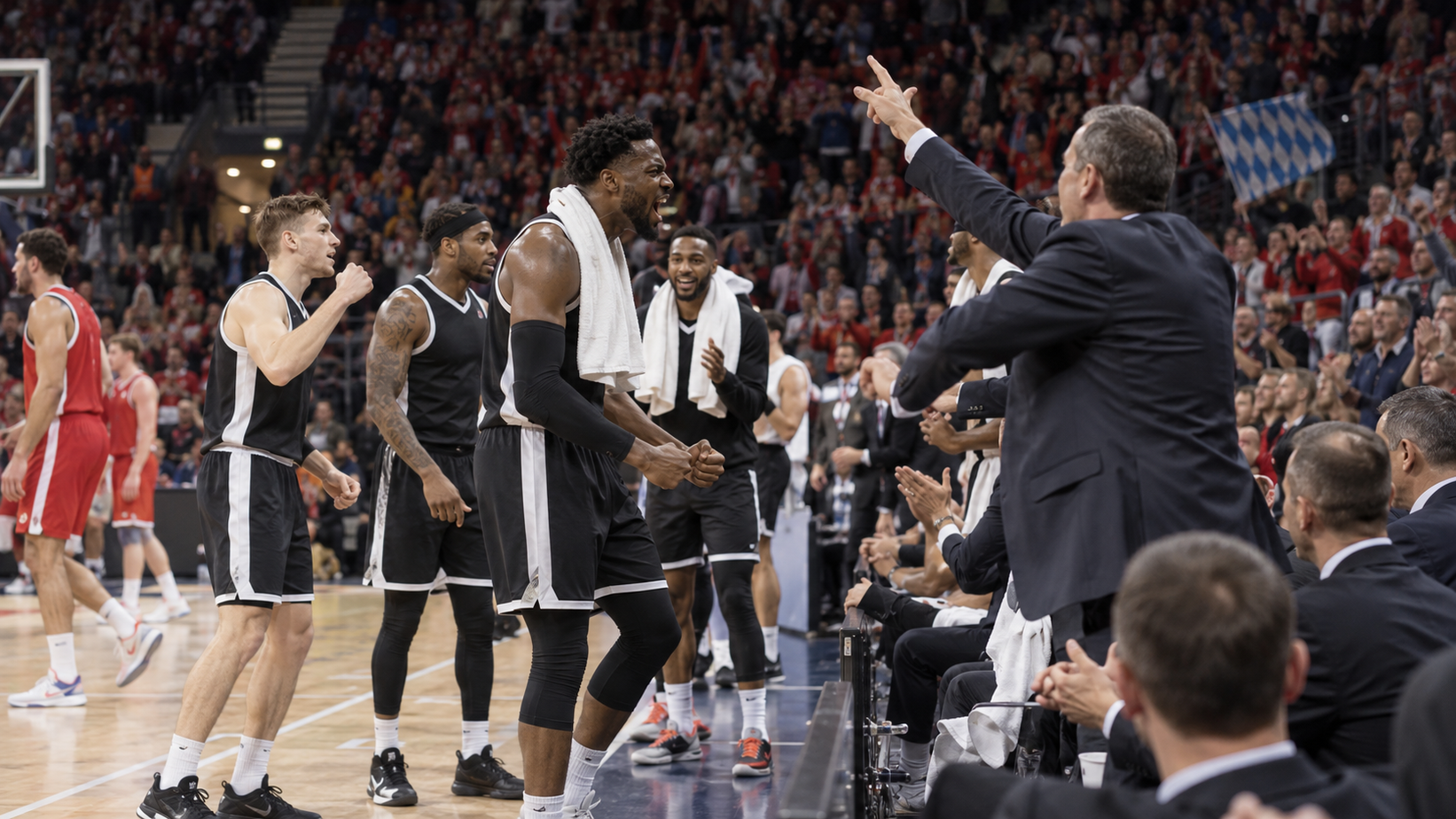
The win carries extra weight thanks to the support of around 2,000 Partizan fans in a sold-out arena. The team responded to the pressure and stayed calm when Bayern got the final shot. A 3-0 record is no guarantee for the rest of the season, but it does confirm that the new roster already has a mechanism for tight finishes. The next step is to show the same intensity earlier and build wins through all forty minutes, not just the last five.
In the upcoming games, the Partizan lineup that closes out matches deserves particular attention. Jekiri’s play near the basket, Jones’s creation and defensive mobility must stay connected rather than depend on one player’s mood in the moment. The coach can use the win in Munich as an example of why controlling turnovers matters: eight mistakes left enough possessions for a comeback, while Bayern’s 17 wiped out a good shooting night and a big lead. A 3-0 start will now raise expectations, especially before games where Partizan go in as favourites. The bigger test is not just repeating a dramatic turnaround, but playing calmly when a win is expected. If the team keeps the energy from the last quarter and gets the ball moving earlier, it can build a stable position instead of constantly spending its emotional reserve.
Every possession kept in a tight finish adds to the value of the good defence played in the previous attack.
An important indicator will be the balance between assists and turnovers when the opponent raises the physicality. Partizan protected the ball well enough in Munich for the late pressure to make sense. If that balance stays favourable, the team will have more chances to use Jekiri later and Jones in the second action. Otherwise, every defensive run will be undone by easy transition points for the opponent, and comebacks will become much harder.