
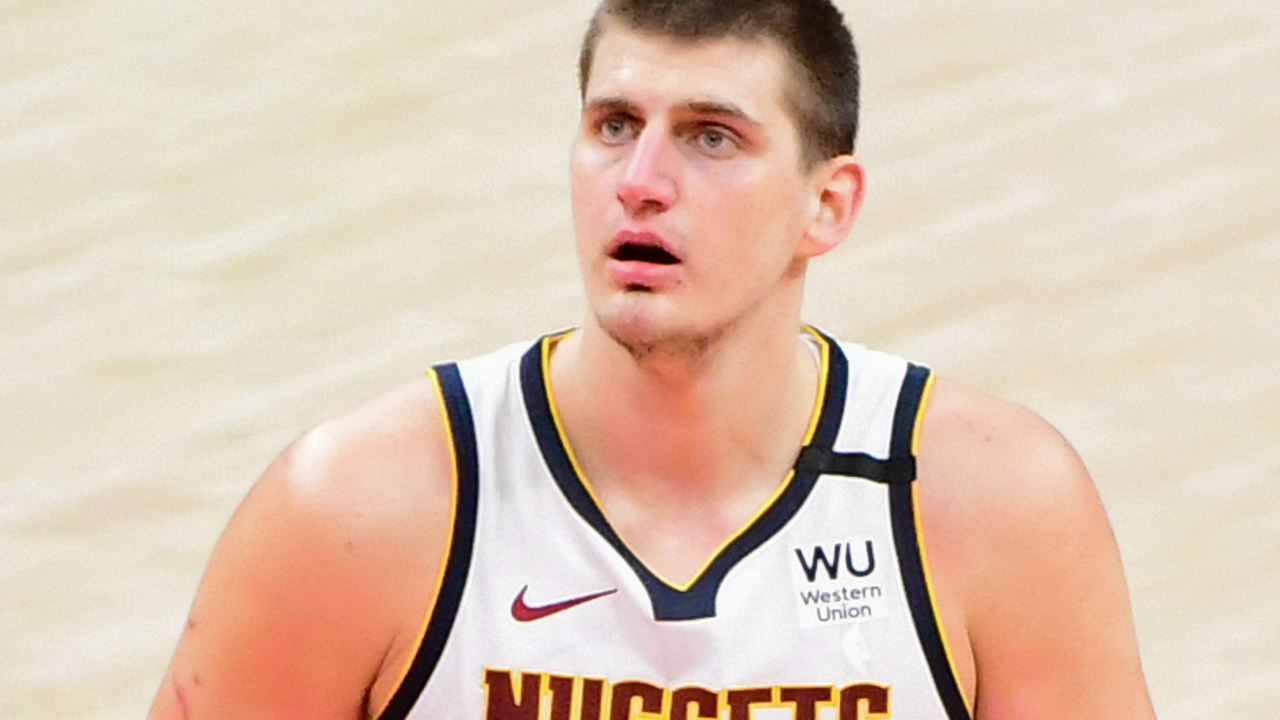
For a player who keeps rewriting what a centre is expected to do, finishing second can still feel like a strange sort of triumph. Nikola Jokić ended the 2026 NBA MVP race as the runner-up, yet the numbers behind his name read more like a statement than a near miss. He collected 10 first-place votes, trailing Shai Gilgeous-Alexander, who took the trophy with 83.
Second on the ballot, untouchable on the floor
The headline result is simple enough. Gilgeous-Alexander won the award, and the gap in first-place votes was wide. But MVP voting has always been a story told in two layers, and the second layer rewards Jokić handsomely. Picking up 10 first-place votes means a meaningful slice of the electorate still looked at the whole league and concluded that nobody shaped their team’s identity more completely than the Denver centre.
That distinction matters because runners-up often end up as footnotes. In Jokić’s case, the reverse holds. The vote reflected a campaign so dense with production that, even in defeat, he remained the reference point against which the other candidates were measured. There is a version of this race in which Jokić is the clear winner; the fact that it did not play out that way says more about the depth of the competition than about any dip in his form.
The production that defined his year
Set the trophy debate aside and the season speaks for itself. Jokić averaged a triple-double for a second straight year, a feat that once belonged to the realm of one-season rarities and that he has now turned into something close to routine. More striking still, he led the entire NBA in two separate categories that rarely belong to the same player.
- He was the league’s top rebounder, pulling down 12.9 boards per game.
- He also topped the league in assists, dishing out 10.7 per game.
- He sustained that output across the full season, keeping Denver functional at both ends of the floor.
Leading the league in both rebounds and assists in the same year is a rare statistical double, the kind of combination that blurs the usual boundaries between positions. Big men are supposed to rebound; point-producing players are supposed to create. Jokić did both at the highest rate in the sport, which is why the triple-double average almost reads as a by-product rather than a goal.
It is worth treating that detail carefully. The achievement is remarkable on its own terms, without reaching for sweeping historical superlatives. What can be stated plainly is that the feat is documented: first in the league for rebounds and first for assists, in the same season, from a player who works as a centre. That alone places his 2026 among the more unusual statistical seasons the league has seen.
Fifth All-NBA First Team nod, and a unanimous one
If the MVP result invited debate, the All-NBA decision did not. Jokić was named to the All-NBA First Team for the fifth time, and the selection was unanimous. In other words, every voter agreed on one thing even where they split on the MVP ballot: he belonged at the top tier without any dispute.
There is a quiet weight to that unanimity. The MVP vote forces a single winner and, by its nature, produces disagreement. The All-NBA selection asks a broader question about sustained excellence across the whole year, and on that question the verdict was complete. Five First Team nods also speak to a consistency that resists the usual peaks and troughs of a long career.
Why a unanimous endorsement cuts deeper than a vote count
Awards season generates plenty of noise, and it is easy to fixate on who finished first. But a unanimous All-NBA selection arguably tells the cleaner story. It removes the narrative variables, team success, late-season storylines and the rest, that tend to push MVP ballots one way or another. What remains is a straight assessment of quality, and on that measure the answer was unanimous.
What second place really signals
It would be easy to frame 2026 as the year Jokić fell short. The cleaner reading is that he set the bar so high that second place still demanded a genuinely exceptional rival to overtake him. Gilgeous-Alexander earned his trophy on his own merits, and a first-place split of 83 to 10 is decisive.
This is the ground great players eventually occupy. The discussion is no longer about whether they are elite, but about how their brilliance measures against an equally brilliant peer. In 2026 Jokić spent the season leading the league in two categories, again averaging a triple-double, and securing a unanimous place on the First Team. The MVP went elsewhere, but the season did not lose its shape for it.
For Serbian fans following every chapter of this run, the picture is reassuring. A player who has already reshaped expectations continues to perform at a level where second place arrives wrapped in qualifiers. More on his story can be found through our NBA coverage and our dedicated pages on basketball and Nikola Jokić.
Frequently asked questions
Where did Nikola Jokić finish in the 2026 MVP voting?
Jokić finished second in the 2026 NBA MVP voting. He received 10 first-place votes, while Shai Gilgeous-Alexander won the award with 83 first-place votes.
What did Jokić lead the league in during 2026?
He led the NBA in rebounds, averaging 12.9 per game, and in assists, averaging 10.7 per game. He also averaged a triple-double for a second straight season, a rare statistical combination for any player, let alone a centre.
Was Jokić named to the All-NBA First Team?
Yes. Jokić earned a place on the All-NBA First Team for the fifth time, and the selection was unanimous, with every voter placing him in the top tier.
The trophy may have travelled elsewhere, but Jokić’s 2026 reads as a season of quiet dominance. A unanimous First Team place, a second consecutive triple-double average and league-leading totals in both rebounds and assists make the runner-up label feel almost beside the point. The MVP race had a winner; the statistical story had only one true author.