
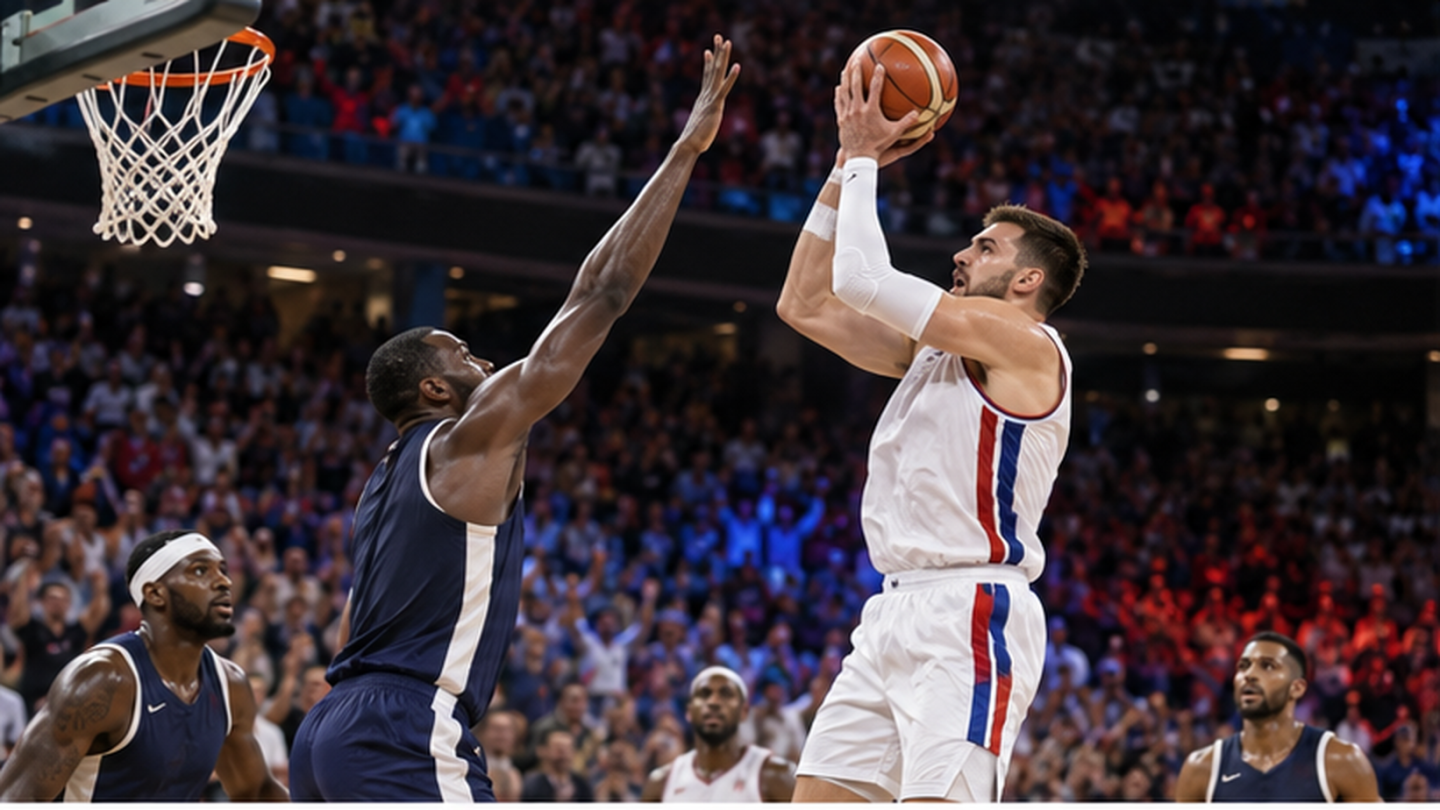
Marko Gudurić looked back on Serbia’s Olympic semi-final against the United States in Paris, especially the moment he hit a three-pointer with a foul late in the third quarter. Serbia had again moved to a 15-point advantage, the bench was celebrating, and Gudurić genuinely believed the game was over. The American side, however, turned it around in the final period and won 95:91, leaving Serbia with one of the most painful yet most admired performances in recent history.
That play was more than a difficult shot. Gudurić kept his balance under contact, knocked down the attempt from distance and earned an extra free throw just as the opponent was trying to cut the margin. A basket like that usually shifts the energy in the arena and can break a team chasing the score. Against a line-up featuring Stephen Curry, LeBron James and a string of elite players, though, no lead is truly safe until the clock runs out.
Serbia controlled the tempo for three quarters
Serbia’s game plan worked thanks to precise attacking, patient shot selection and every player’s willingness to accept his role. The ball moved quickly, the defence shut down the first drives, and the American stars struggled for a long time to impose their transition game. Gudurić pointed to the shared focus and energy from the bench. That connection allowed Serbia to play not as underdogs waiting for the favourite to slip, but as a side setting the terms itself.
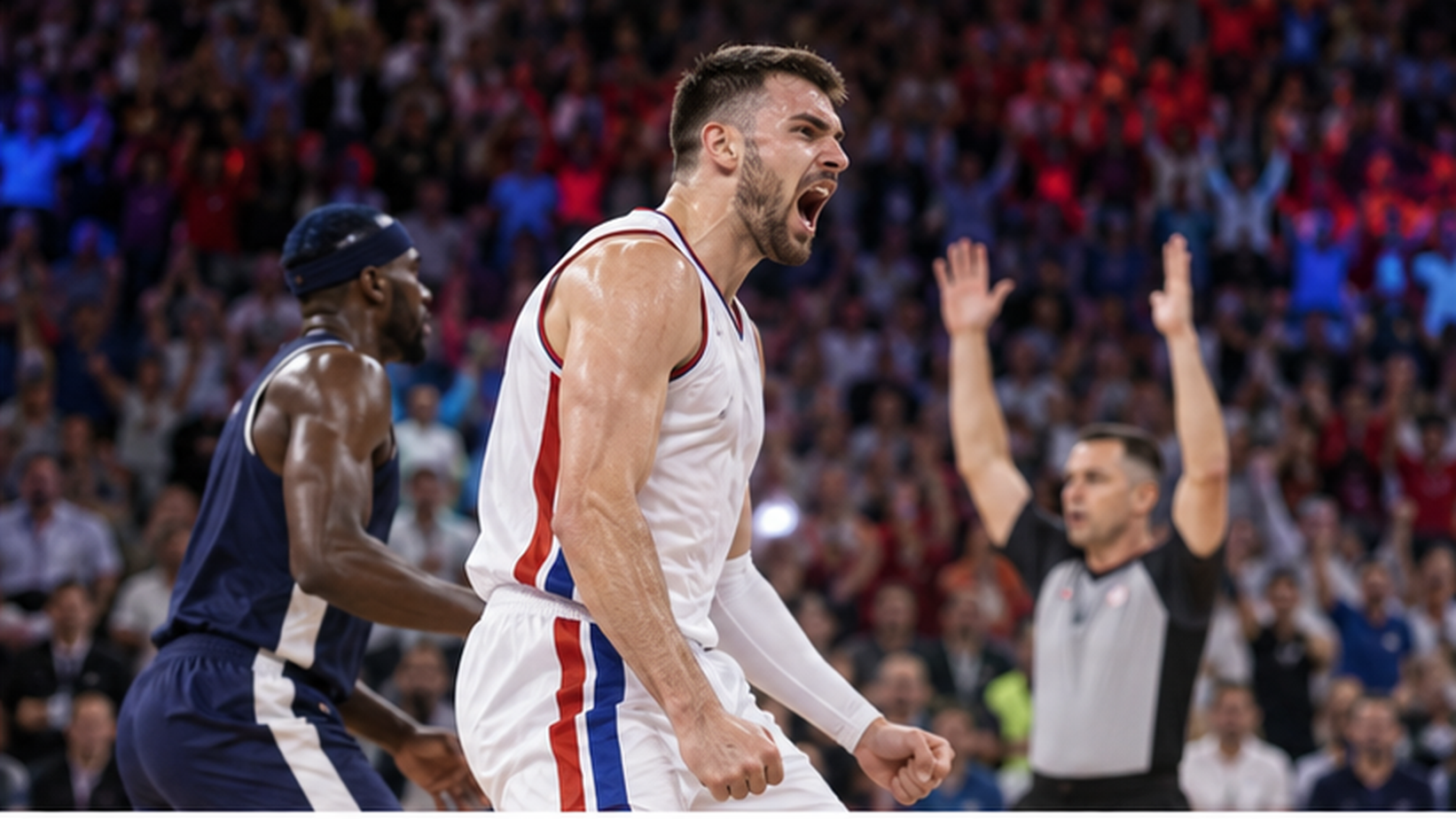
In the last quarter, fatigue began to affect decision-making. The USA raised the pressure, speeded up possessions and, through Curry’s baskets, gained the belief that they could come back. Serbia found open looks harder to create, and several attacks ended late or from poor positions. In a match of such high quality, a small shift in rhythm is enough to melt a lead. The American side used the depth of its roster and its experience in closing big games.
Defeat does not erase the value of the performance. Serbia forced a long list of NBA champions and All-Star players to play almost without room for error. That game showed how tactical discipline and mutual trust can narrow the gap in individual quality. At the same time, it exposed the cost of missed chances: against the best, the same standard must be held for the final five minutes, when every possession becomes a separate duel.
A memory that can help future close finishes
Gudurić’s candour matters because it shows how much emotion shapes the read of a situation. The feeling that a game is won can creep in without anyone consciously relaxing. Experienced teams therefore use clear agreements for the closing stages: who carries the ball, which set is run after a timeout and how to respond to a press. Serbia already has players with plenty of big-match experience, and the lesson from Paris could make the next close finish calmer.
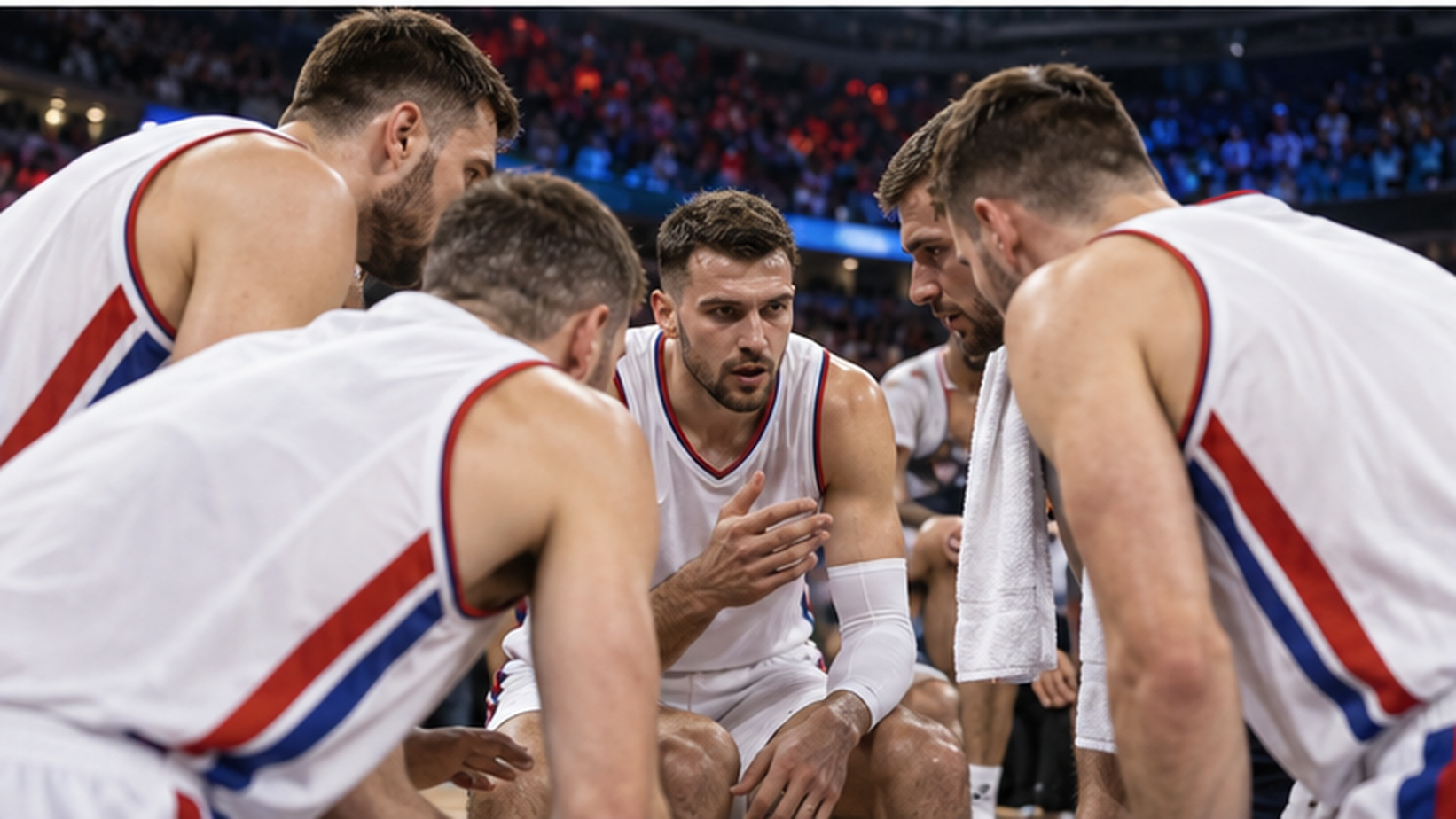
After the defeat the team came back and won the bronze medal, which speaks to the character of the group. Less than two days after the emotional release, they had to find their energy again and play a serious match. That reaction stopped the tournament from being remembered only for the missed sensation. The medal confirmed the quality, while the duel with the USA became proof that Serbia can compete on equal terms with the most expensive and deepest roster.
Gudurić looks at the moment from a distance now, but the details remain clear: the shot, the bench celebrating and the belief that victory was close. That is exactly why the game still provokes strong reactions among fans. It is not a story about a single miss or a single decision, but about the line between a great performance and a historic result. For future tournaments, the most valuable thing is to keep the courage shown in the first three quarters and add coolness in the final minutes. For younger players, the footage of that match can serve as a practical lesson in managing a lead. It is not enough to preserve energy; the team must keep attacking in the way that created the advantage, with better control of risk. Serbia will reach tight finishes again at future tournaments, and the value of the Paris experience will show when players recognise the moment to slow down and the moment to take a bold shot.