
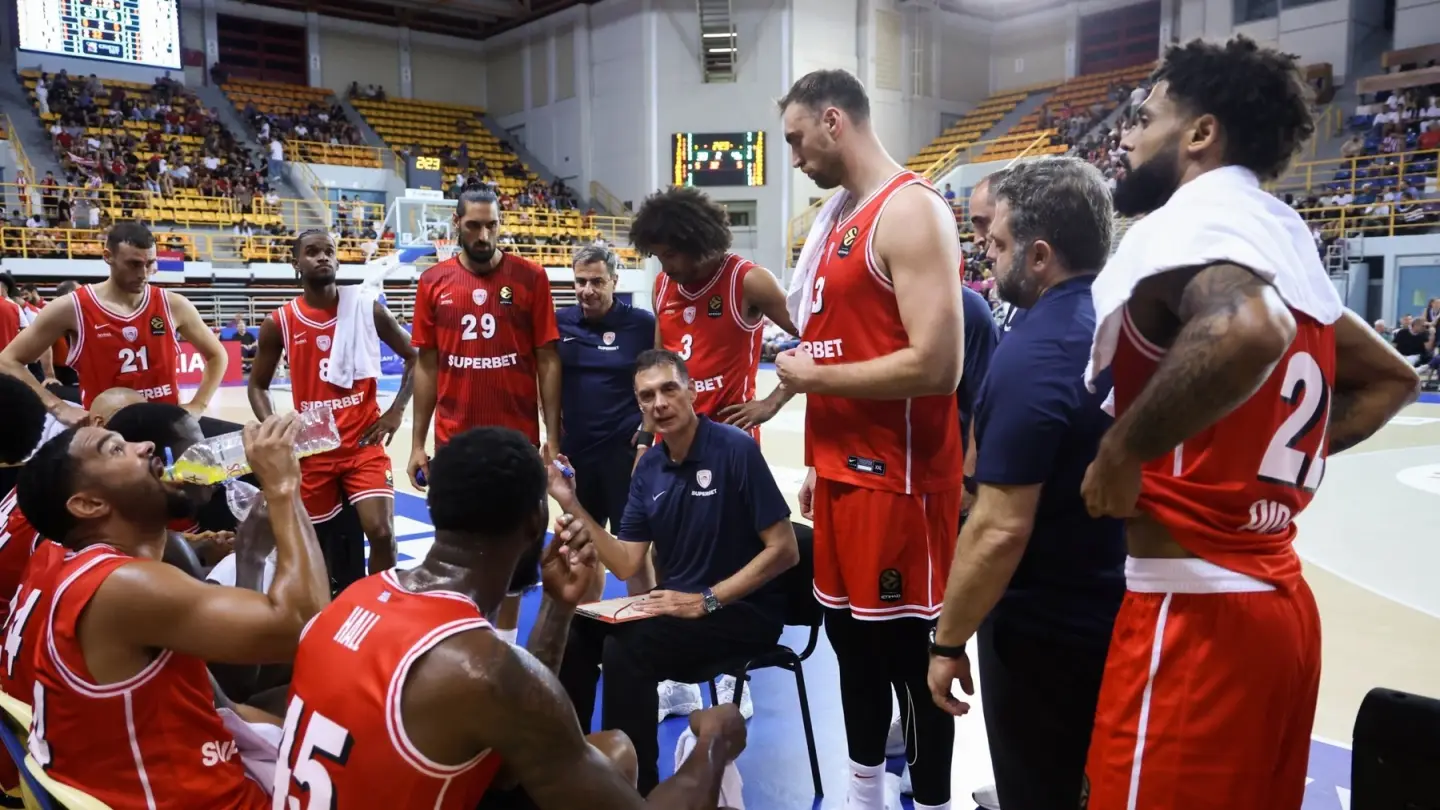
Crvena zvezda closed their tournament in Crete with an 87:77 loss to Olimpiacos. Belgrade were behind for most of the first half, but won both the third and fourth quarters after the break and narrowed the margin. David Kremer and Jordan Nwora each scored 16 points, Jared Butler chipped in 12, and Chris Jones dished out seven assists. Olimpiacos brought far more continuity to the floor, and Zvezda were only in their third game with a changed roster.
The first half showed what a slow response costs
Olimpiacos opened a gap while Zvezda were still sorting out their defensive assignments and the spacing on offence. A new group often knows the designed play but is a beat late when the first option disappears. The defence then has to recover, and the possession ends with a difficult shot. Training should repeat the second and third options at full speed. There is no need to add more plays straight away. What the players need is to make the decisions they already know faster.
The response after the break was encouraging
Zvezda won the third quarter 26:25 and the fourth 14:12. That response was not enough for a full comeback, but it showed the team can lift its energy and improve its shape within the same game. The coaching staff now needs to separate genuine progress from a dip in the rival’s rhythm. Better transition defence, more direct passing and surer rebounding must be repeated in the next test.
| Quarter | Crvena zvezda | Olimpiacos |
|---|---|---|
| 1 | 17 | 26 |
| 2 | 20 | 24 |
| 3 | 26 | 25 |
| 4 | 14 | 12 |
| Total | 77 | 87 |
Kremer proved his value at both ends
David Kremer scored 16 points, and the club highlighted his contribution in both attack and defence. A player like that can link different lineups if he guards a dangerous perimeter opponent and keeps the ball moving without having to run every possession. The next step is consistency alongside the other guards and forwards. One good game is a signal, but his real role becomes clear when an opponent changes its defence and takes away the first option.
Nwora scored while the system was still taking shape
Jordan Nwora also finished with 16 points, using individual moves to help when the offence was not fully connected. That ability matters late in the shot clock, but the team should also create chances for him through screens, early passes or cuts by team-mates. Isolation should not become the answer to every stall. At his best he attacks the rim and forces the defence to keep the other four players honest.
Seven assists point Jones towards organising the offence
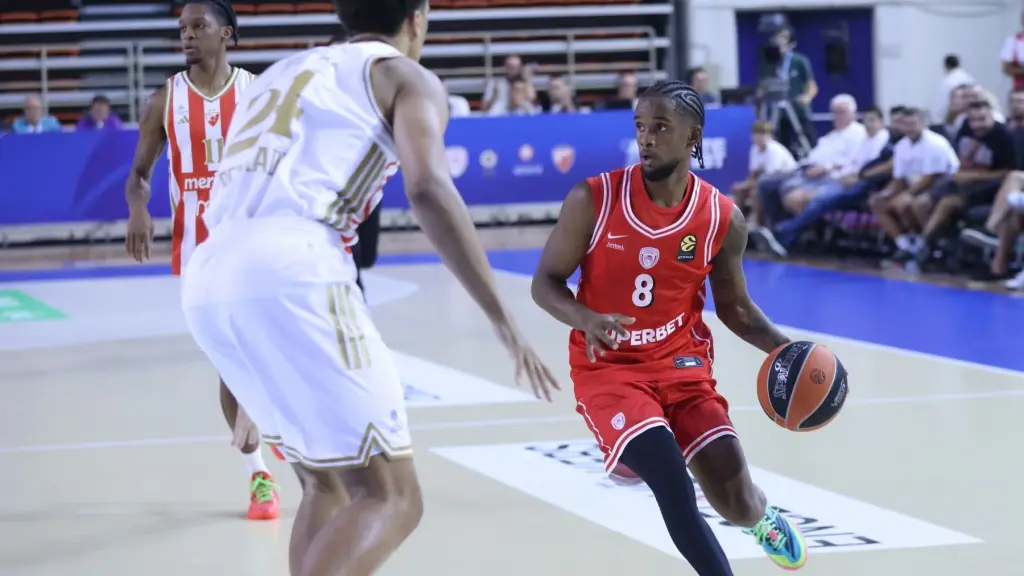
Chris Jones recorded seven assists, a useful return for a guard still getting to know new team-mates. More important than the total is where each pass landed, whether the receiver was balanced and which defensive reaction opened the space. Jones can set the tempo by telling a quick opportunity apart from the moment to enter the set offence. Turnovers and assists should be reviewed together so the same decision-making can be judged.
Matching up the bigs remains important
Donte Hall scored near the basket and grabbed nine rebounds for Olimpiacos, while Nikola Milutinov added seven. Zvezda must finish every defensive possession with all five players, not leave the centre alone against repeated attacks. Guards and forwards need to contain their opponents so the centre can contest the ball. On offence, good screening angles and moving the defence make life easier for the perimeter shooters.
The result of this preparation should be measured properly
An 87:77 defeat in the third game of a changed lineup exposes problems but does not define the season. Olimpiacos have more continuity, while some Zvezda players joined later or were not available. That context explains part of the slow start but does not remove it. The coaching staff can pick two or three priorities for the next block of work. A short list makes progress measurable and keeps the lineups from changing constantly.
The next session should turn observations into measurable tasks
After a strong preseason opponent, saying the team must be more aggressive is not enough. Zvezda can be more precise about what they want: an earlier return after a lost ball, fewer passes without an advantage and better protection of the rim after the first drive. Each task should be tested in short five-on-five runs with a clear limit on the number of mistakes or points allowed. That way the players see their progress, and the coach can separate a decision problem from a fitness problem. On offence it helps to rehearse the situations in which Olimpiacos stopped the first action, then look for a simple second option. The preseason defeat becomes valuable when it produces a structured plan, rather than being explained away by the stage of preparation.