
The backcourt gets a clearer playmaker
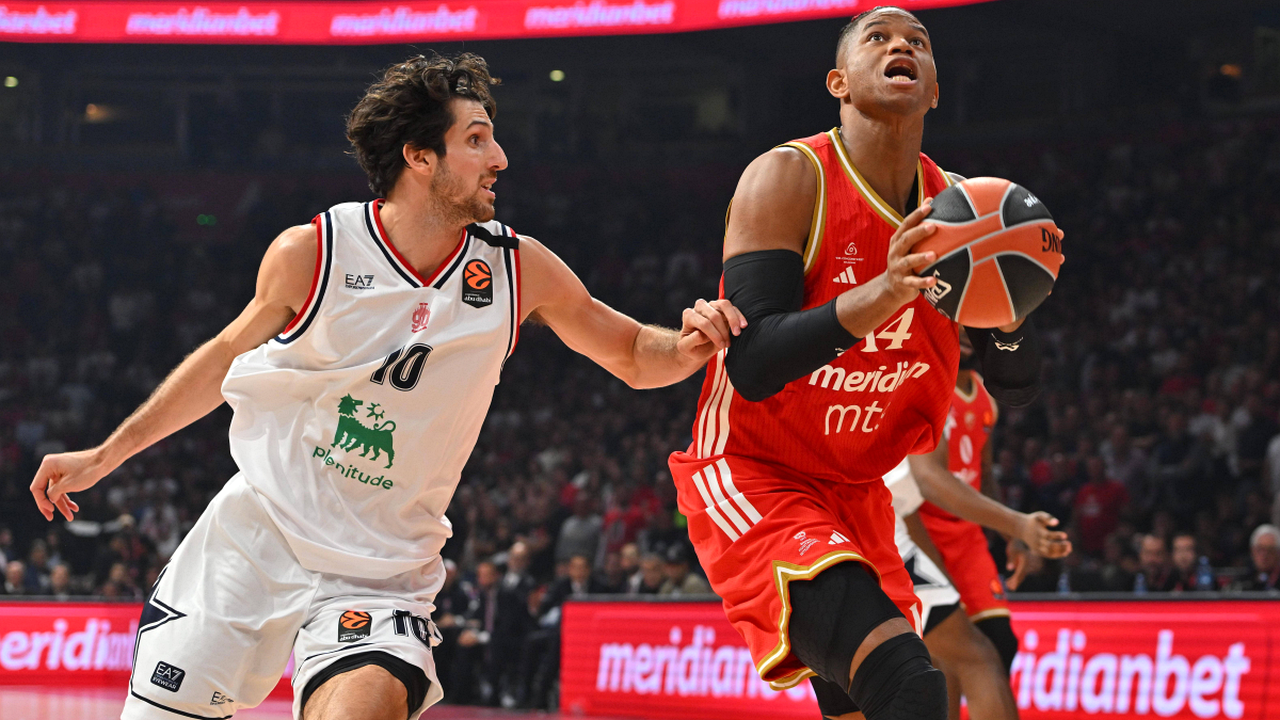
Chris Jones brings Red Star a guard who can handle the ball under pressure, organise the attack in the final stages of the possession and take charge when the first action breaks down. That matters most in the EuroLeague, where a clean fast break is rarely earned without precise first and second passes.
His arrival does not solve everything on its own. Zvezda still needs to decide who starts the offence against aggressive defences, who takes the other side of the action, and which line-ups give Jones enough room for his decisions to carry real value.
If the hierarchy is left to settle by itself, the signing may look less clear than it really is. If the role is defined early, Jones can become the player who steadies the difficult spells, rather than just another name in the rotation.
Two moves in the same frame
| Arrival | Chris Jones joins the guard rotation and brings experience in running the offence. |
|---|---|
| Departure | Jasiel Rivero leaves the inside line and opens the question of his replacement in the paint. |
| Risk | Better guard quality will not have its full effect unless the frontcourt plan is secured. |
| Zvezda’s task | Bring together playmaking, spacing and rebounding into one clear picture for the summer. |
| Main test | Late-game attacks and defensive rebounding against EuroLeague physicality. |

Rivero’s exit changes the conversation about the paint
Rivero’s departure from the roster brings the discussion back to the inside line. A playmaker can create an advantage, but that advantage has to finish through the post, a roll, a rebound or a foul. If Zvezda fixes the guards while the interior picture stays unclear, the squad will still look uneven.
That does not mean the club has to chase an identical profile. Zvezda could go for a more mobile player, a better rim protector, or a centre who reads the short pass more quickly. But whichever option they choose has to explain the whole plan, not simply fill an empty spot on the list.
In the EuroLeague the frontcourt question is a daily one. There are not many games where you can hide a weak rebound or a poor pass out of the post. That is why Jones’s arrival and Rivero’s departure must be read together.
Two moves should be judged as one summer direction
The easy reading is that Jones is a good signing and Rivero’s exit is a separate matter. In practice, both belong to the same system. A guard who penetrates must know who is opening up in the short roll. A centre setting a screen must know when Jones is looking for an angle to pass, and when he is attacking alone.
If the link between the perimeter and the inside line is built early, Zvezda could get far more than the combined quality of the new arrivals. If it is not built, the roster will depend on individual solutions at the moments when opponents shut down the first option.
That makes this summer a test of the plan for Zvezda. The goal is visible, but the job is not finished until it is explained how the new guard quality will work alongside the new division of labour in the paint.
Domestic rotation cannot hide the EuroLeague questions
In the regional and domestic rhythm, some imbalances can be covered by the depth of the roster. The EuroLeague does not allow that. There, a late attack, first contact in the paint and defensive rebounding quickly become public problems if they are not solved before the season.
Jones can improve a lot on offence, especially when Zvezda loses its first option. But if the opponent keeps attacking a mismatch or winning second-chance rebounds, every good possession loses value. The next move therefore needs to explain the defence as well.
The club does not have to rush for a title, but it does need to know what it is looking for. The summer window is not only a transfer market, it is also about balancing responsibilities. In that sense, Rivero’s departure is as important a piece of information as Jones’s arrival.
The next move needs to explain the full picture
Zvezda’s early sign is ambitious but unfinished. Jones brings a quality that shows up straight away, particularly in possessions where the ball must be in safe hands. Rivero’s exit, however, calls for an answer that shows how the club sees the physical side of next season.
If the next move combines rebounding, shot-blocking and defensive reliability, Jones’s arrival will look even more significant. If a gap remains in the paint, the guard improvement will carry too much of the load.
So this is not just a story about one signing and one departure. It is a story about whether Zvezda is building a coherent team logic. Once that logic becomes clear, the summer signal will carry its full weight.
It will be especially important how Jones fits alongside players who do not need much of the ball but must be ready when his penetration forces the defence to collapse. Details like these often make the difference between a roster that looks good on paper and a team that genuinely has answers.
For that reason Zvezda should not measure the summer by the number of names it adds. It should measure how well the roles complement one another. If the guard pressure, inside solidity and spacing come together, this transitional period can gain a much clearer meaning.