
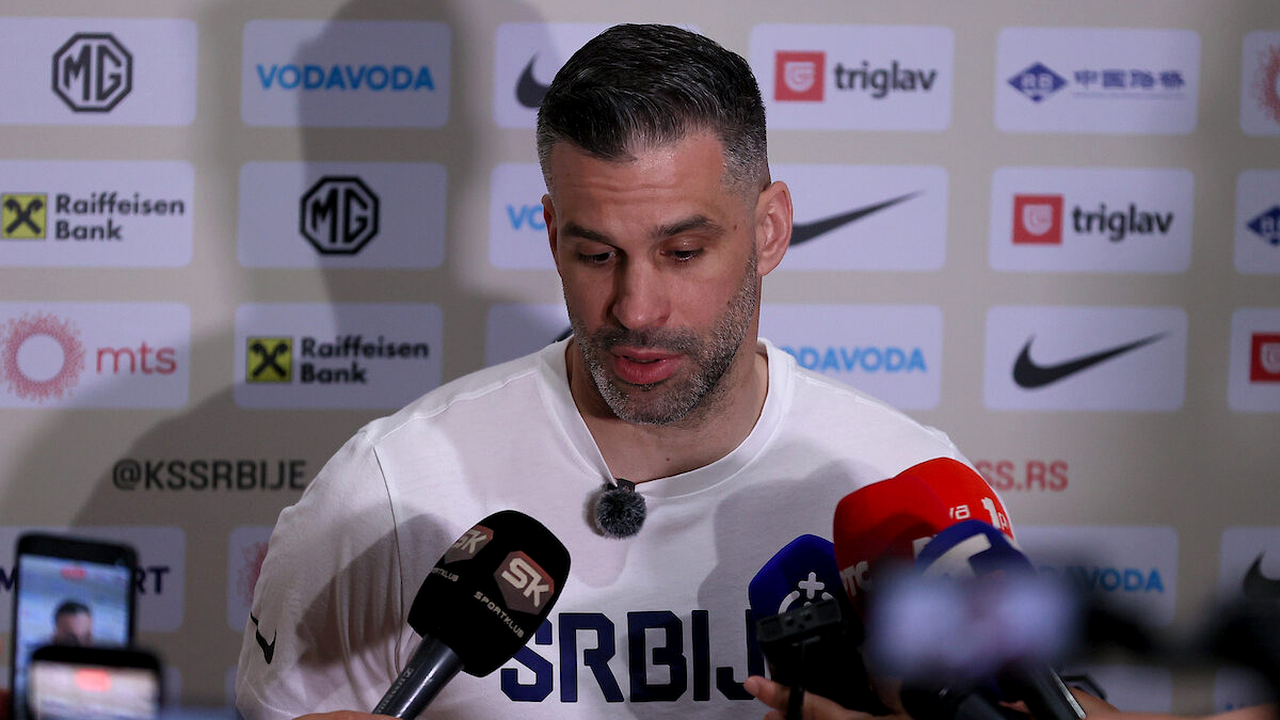
Dušan Alimpijević said plainly what is often taken for granted in basketball: Nikola Jokić is the focal point of Serbia’s game. The message is not just praise. It is also a reminder of how Serbia has to build its attack.
Jokić as the centre of the plan
Alimpijević’s view that Jokić is the best player in the world opens an important basketball angle. For Serbian fans it is not a new thought, but who says it and when matters.
When a coach talks about Jokić, the subject is not only individual quality. It is how an entire system is built around a player like him.
Serbia has to know what it gains when Jokić is on the floor, and also what it must do when an opponent tries to push him out of the main role.
The message is more than a compliment
Jokić’s influence does not end with points. He shifts his teammates’ positions, the speed of passing and the way the defence decides how much risk to take.
That is why Alimpijević’s message is useful as a basketball angle. It brings the story back to roles rather than just to a name.
When Serbia has a clear first option, the other players know more easily where they should be. That is the difference between a good attack and one that only waits for a star’s move.
| Point | Note |
|---|---|
| Coach | Dušan Alimpijević. |
| Player | Nikola Jokić. |
| Main idea | Jokić as the first option in Serbia’s game. |
| What to watch | Teammates’ movement and decisions off the ball. |
Also read: Dispute over Marakana puts Red Star’s reconstruction under new pressure. More news: Serbia drawn into a tough group for the Mundobasket qualifiers.
Teammates have to read the space
Most of the work is not about Jokić always having the ball. More important is that the other players recognise when to cut, when to stay in the corner and when to take responsibility.
If everything comes down to watching Jokić, the opponent will close the passing lanes more easily. If the movement continues, his advantage grows.
It is a simple basketball principle, but a hard one to carry out under pressure.
Leadership is not just a voice in the dressing room
Jokić’s leadership shows most in decisions made during play. He can calm an attack, speed up a pass or find a teammate who has not touched the ball for several minutes.
Such things do not always look like big plays, but they make the difference in matches against strong rivals.
That is why the coach’s message matters: Serbia must not see Jokić only as a scorer, but as a systemic advantage.
The next test
The next test comes only when the national team is together again. Then it will be clear how clear the roles around Jokić are.
If teammates quickly find their rhythm, Serbia will look much more dangerous. If they wait only for his magic, the attack will be easier to read.
The conclusion is simple: the message is not a sensation, but a single coach’s sentence explains what it means on the court.
How the message turns into play
Praise for Jokić has value only if it leads to clear play. Serbia must know when to go through him, and when to use the defence’s attention to open up other players.
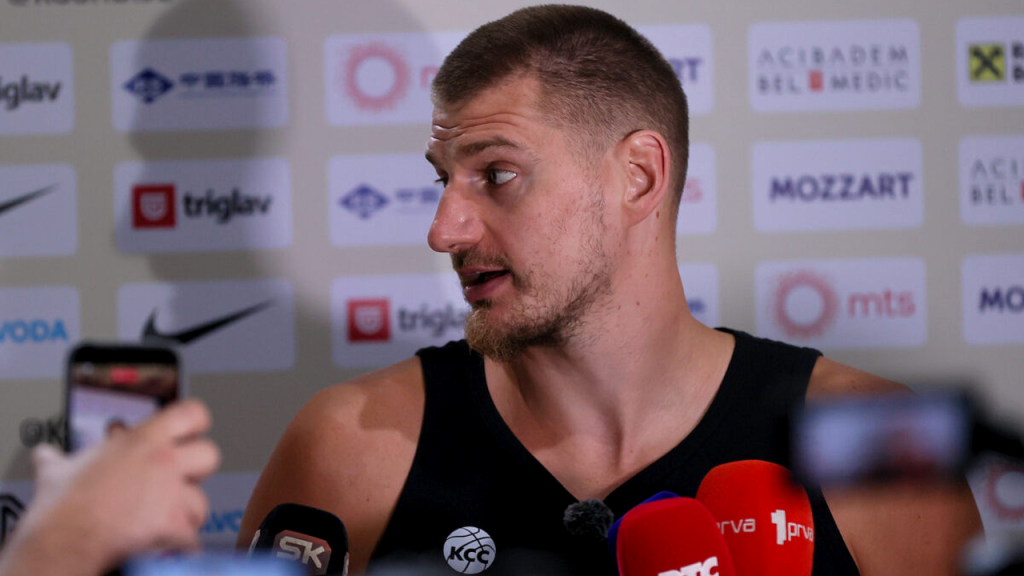
The best attack around Jokić is not one where everyone stands and waits. It needs movement off the ball, proper passing angles and the nerve to shoot when the ball arrives in time.
That is a part of leadership that does not always show in the statistics. Jokić can settle a team, but his teammates must recognise the moment and give him room through their own decisions.
So Alimpijević’s sentence is not just a compliment. It is a reminder that Serbia must build a system around its best player, not just look to him as a rescue in difficult minutes.
Why the others must help the leader
When Jokić is the first option, the other players cannot become spectators. A leader’s role only makes sense if the team works alongside him.
That means proper screens, quick spacing after the pass and readiness to take a shot when the defence shuts down the centre.
If Serbia does that, Jokić’s role becomes a system. If not, even the best player in the world will have to carry too much.
One more angle in the attack
Serbia must use Jokić both as a scorer and as an organiser. If the opponent has to guard both options, every teammate gets more space.
That demands quick decisions. When the ball leaves his hands, the next player must not stall the attack and let the defence return to a comfortable position.
That is where a team’s maturity shows. A good system does not just wait for a star’s move, but immediately builds on the advantage it has created.
Jokić must open up the other players too
Jokić is at his strongest when the opponent does not know whether he will finish the play or find a teammate. So Serbia cannot stand still and wait only for his move.
Movement off the ball, the right angle for a shot and quick cuts towards the basket turn his advantage into an advantage for the whole team.
If teammates do this in time, the defence has to choose what to sacrifice. Then Jokić is not just the first option, but the centre of the system.
Responsibility does not rest only with the centre
A message about the best player has no value if the rest of the team does not take on its share of the work. Leadership also asks something of those who have the fewest minutes.
Serbia needs screens, transition runs, help on the boards and the courage to take a shot when the position is good.
That is how an attack is built that does not depend on one man in every possession. Jokić can carry the biggest role, but the team must carry the game alongside him.