
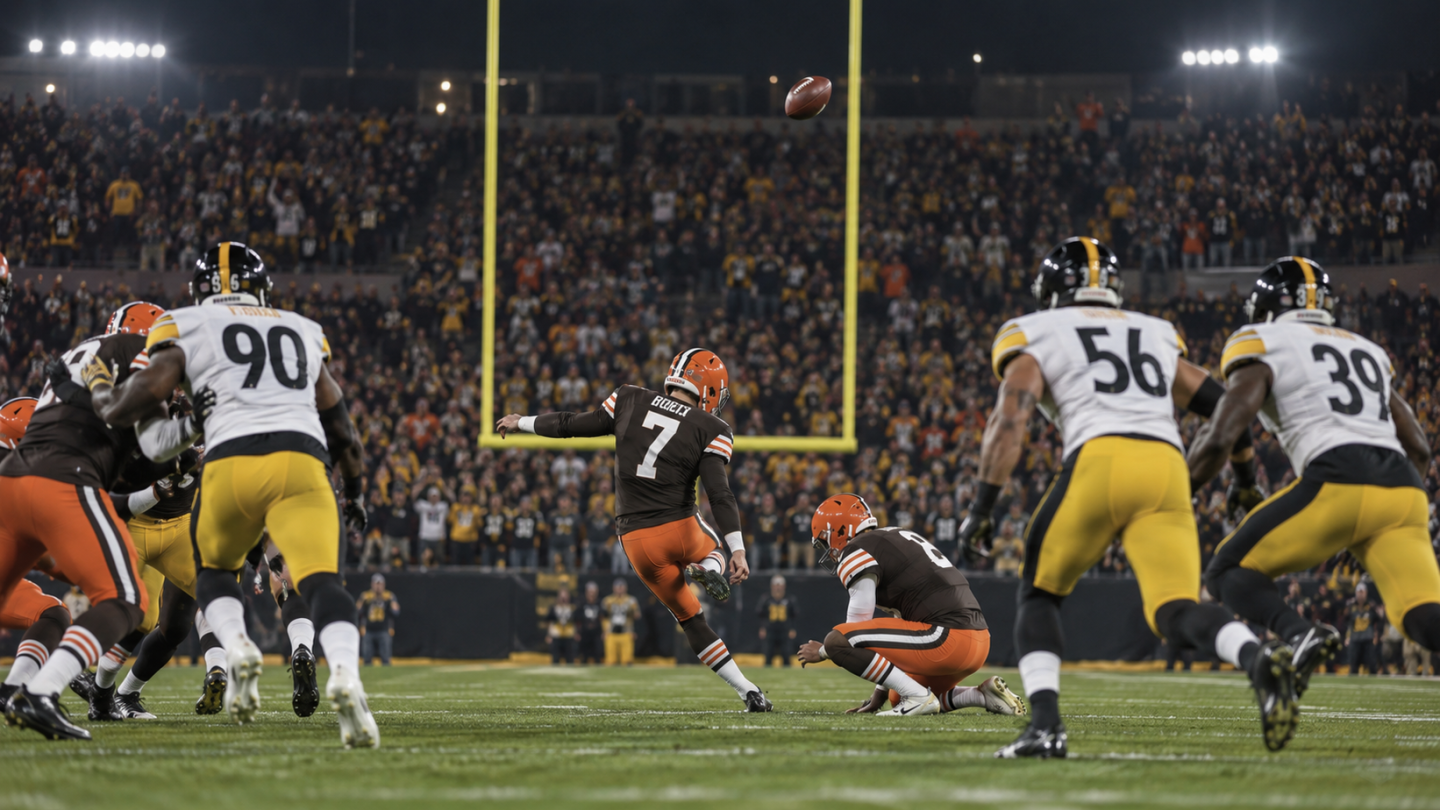
The Cleveland Browns beat the Pittsburgh Steelers 27:24, with Andre Smith kicking a 56-yard field goal in the closing moments. Pittsburgh had equalised just 102 seconds earlier with a touchdown and a successful two-point conversion, so the final possession demanded calm decision-making and a precise kick under the heaviest pressure.
Deshaun Watson finished the game with 24 completions from 33 attempts, 268 yards and a touchdown. The Cleveland defence picked off three passes, dropped Aaron Rodgers five times and recorded ten hits on the quarterback. Grant Delpit’s late interception removed any chance of another comeback.
After a slow start, the Browns turned a 0:7 deficit into a 21:7 lead. Jerome McLaughlin ran in a 28-yard touchdown, while young receivers Denzel Boston and KaeSi Concepcion stretched the field with their speed. Cleveland now sit 3-1 and top the division after four weeks.
Defence and special teams settled a tight game
The decisive factor was more than the final kick. For most of the evening, Cleveland controlled the middle of the field and forced Pittsburgh into difficult throws under pressure. Rodgers gained 299 yards and threw three touchdowns, but two intercepted passes cancelled out his numbers at the moments when possession mattered most.
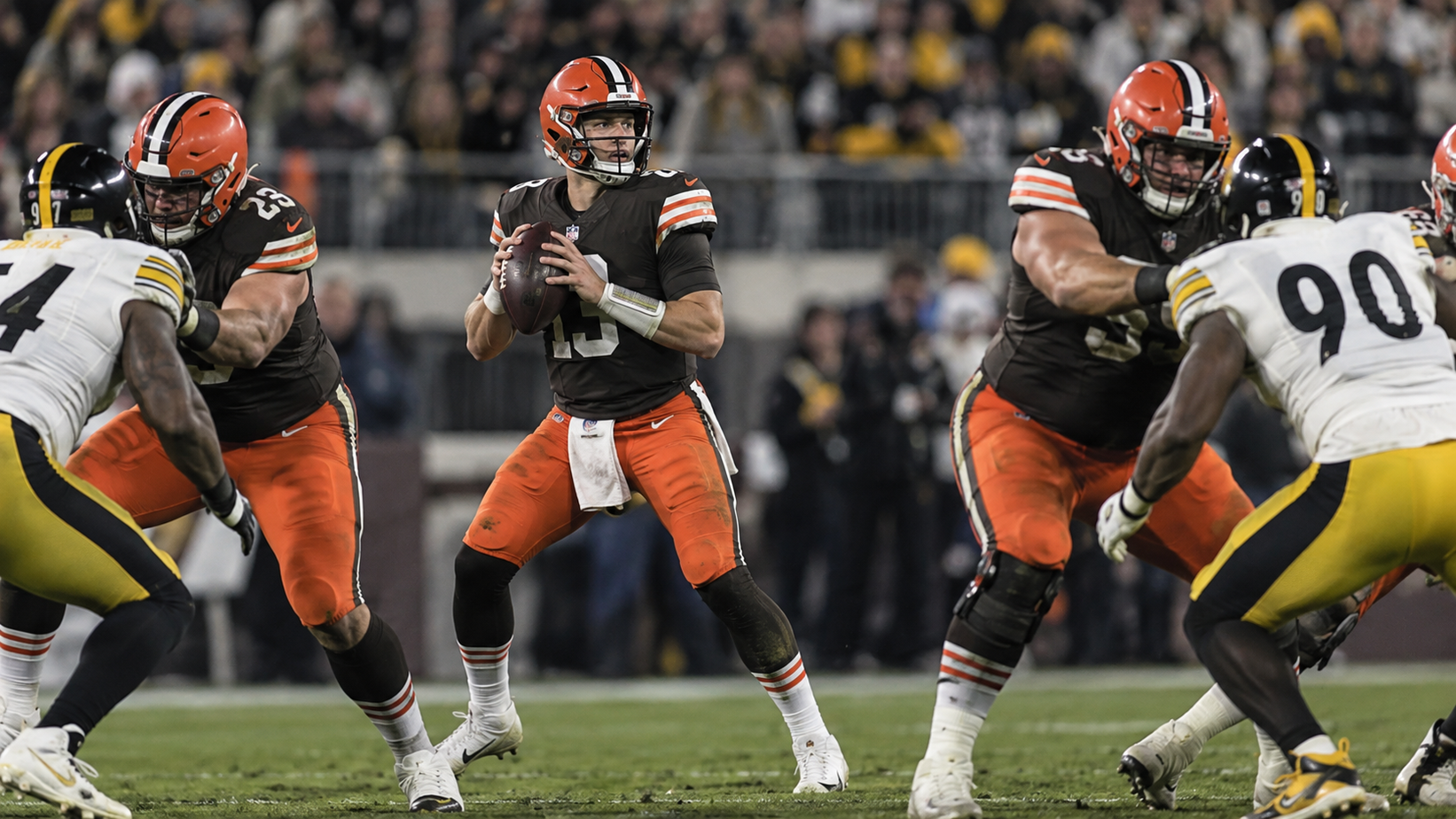
Pittsburgh too often left receivers unmarked in one-on-one situations. The Browns used man-to-man coverage, and their front line bought enough time to reach the quarterback. Jaylen Warren’s 93 rushing yards offered a steadier route, but the offence did not stay with that option for long enough.
Cleveland’s special teams also gave them an edge before the winning kick. Cory Bojorquez averaged 62.8 yards on four punts and once pinned the ball a single yard from the end zone. A position like that forces the opponent to play more cautiously and lets the defence attack without fear of a quick big gain.
Top of the table changes expectations for Cleveland
For the Browns, the most important thing is that the offence no longer depends on one play or one veteran. Boston caught four passes for 89 yards, Concepcion five for 64, and Harold Fannin Jr. added a touchdown. That depth makes it harder for a rival to shut down Watson’s first read and stop the momentum entirely.
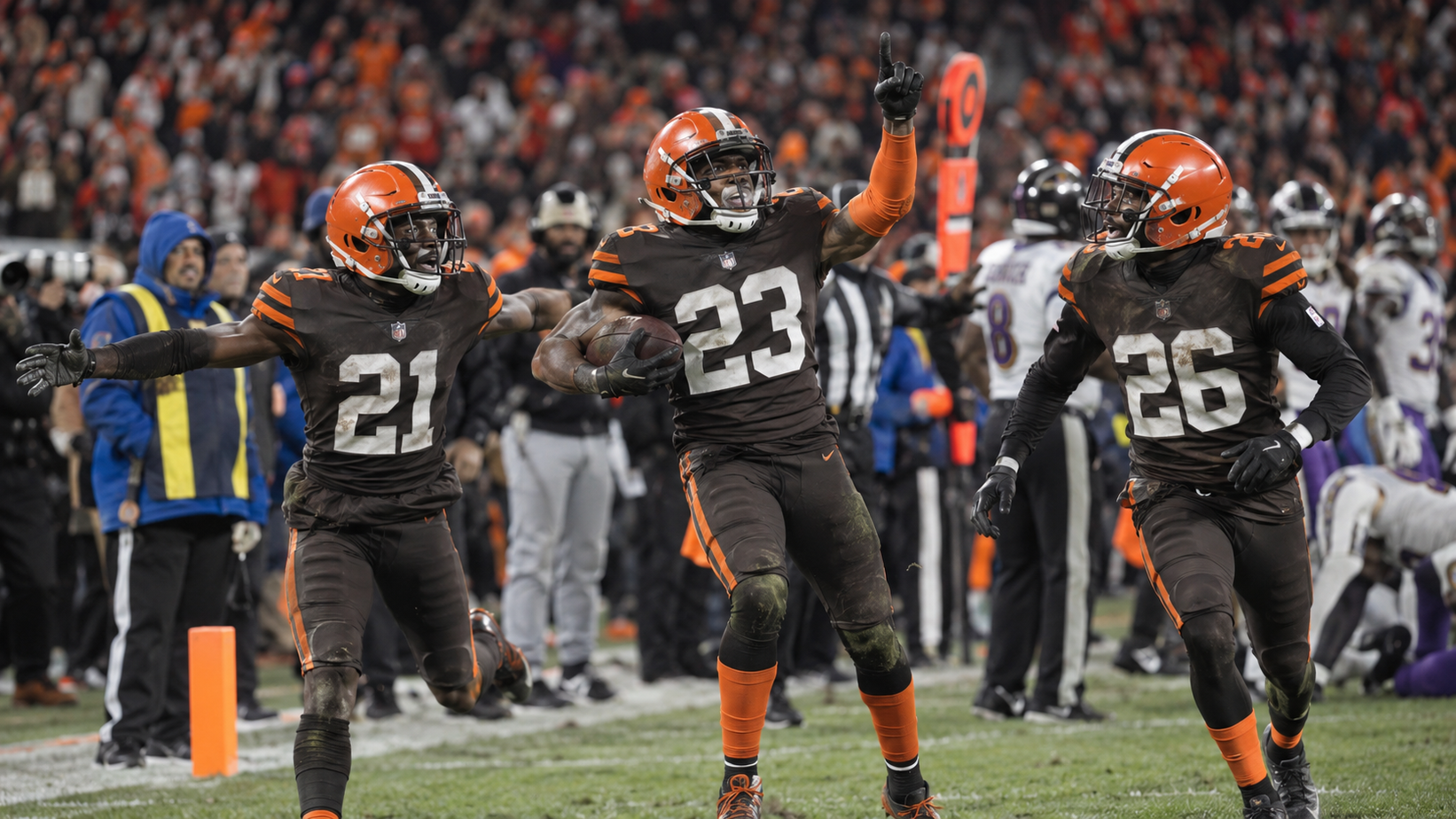
Still, Cleveland must sharpen how they finish possessions. Two turnovers in the second half pulled Pittsburgh back into a game that could have been settled earlier. Against a more efficient attack, mistakes like those usually mean defeat, so the coaching staff will look closely at ball security and throw selection when protecting a lead.
The result carries extra weight because of the direct rivalry within the AFC North. A 3-1 record gives Cleveland room, but the division remains tight and any head-to-head game could decide the final standings. If the defence keeps this level of pressure and the young receivers continue to develop, the Browns will no longer be just a pleasant surprise early in the season.
The next game will show whether Cleveland can carry the same identity beyond an emotional divisional clash. Coaches will track third-down conversion rate, ball security in the second half and the number of pressures without a blitz. Those three indicators give a more precise picture than the 3-1 record alone. If the offence cuts down on empty possessions, the defence will not have to solve a last-minute problem every week. The next performance or the official result will show how far this conclusion holds under new pressure. The numbers should be read together with the quality of the opponent, the conditions and the decisions made in key moments. It is important to separate the current result from the longer trend: one win confirms good preparation, but only repetition shows stability. The coaching staff should therefore measure a few clear indicators, compare them with the previous outing and change only what has proven to be a weak point. That approach protects confidence while leaving room for improvement. The reaction of direct rivals will also matter, since preparation changes as soon as an opponent recognises a successful pattern. For that reason, the analysis should also cover situations where the original plan did not work. The best performances come when a team or athlete keeps its core strength and makes a small, timely adjustment during the event.