
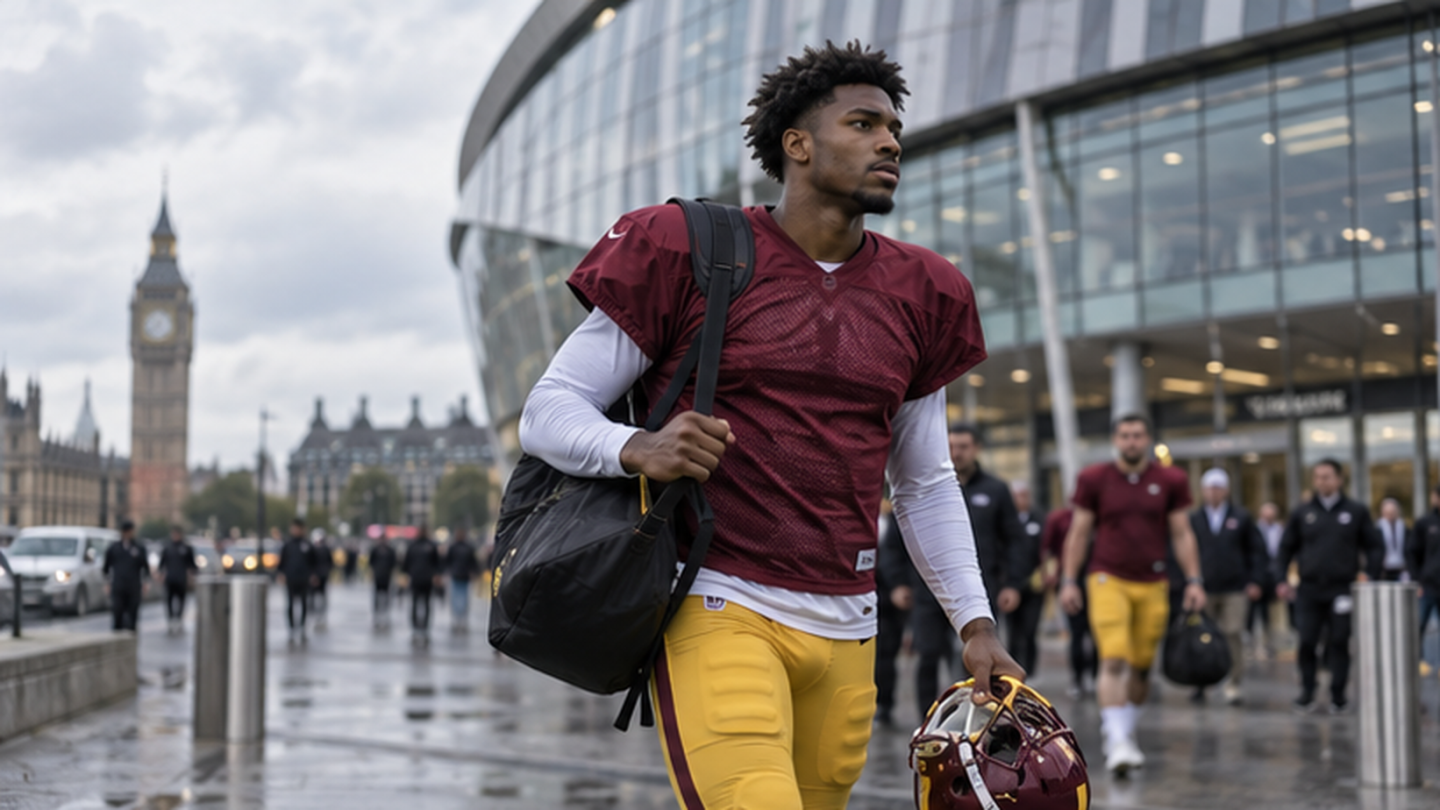
Washington quarterback Jayden Daniels has flown to London with the squad, but his appearance in the NFL game at Tottenham’s stadium has yet to be confirmed. The trip suggests he has not been ruled out in advance, while the final decision will depend on the medical assessment and how he responds in training. Washington has to prepare two plans, because the presence of the starting quarterback changes play selection, the pace of the offence and the way opposing defences line up close to the line of scrimmage.
With a quarterback whose status is in doubt, the key is to separate taking part in a limited session from genuine readiness for contact and full-workload football. Daniels must show he can move safely, change direction and protect himself when a play breaks down. The coaching staff will judge not only his first series but his ability to last the whole game without raising the risk. The transatlantic journey also complicates his routine of sleep, recovery and treatment.
Washington prepares a backup plan
If Daniels is not cleared, the backup quarterback must run an offence suited to his strengths. It is not enough to take over the same playbook and expect the same rhythm. Coaches usually increase quick passes, add a protection player and call runs that reduce long third-down situations. The aim is for the backup to make clear decisions and avoid turnovers, while the special teams and defence take on more of the responsibility for field position.
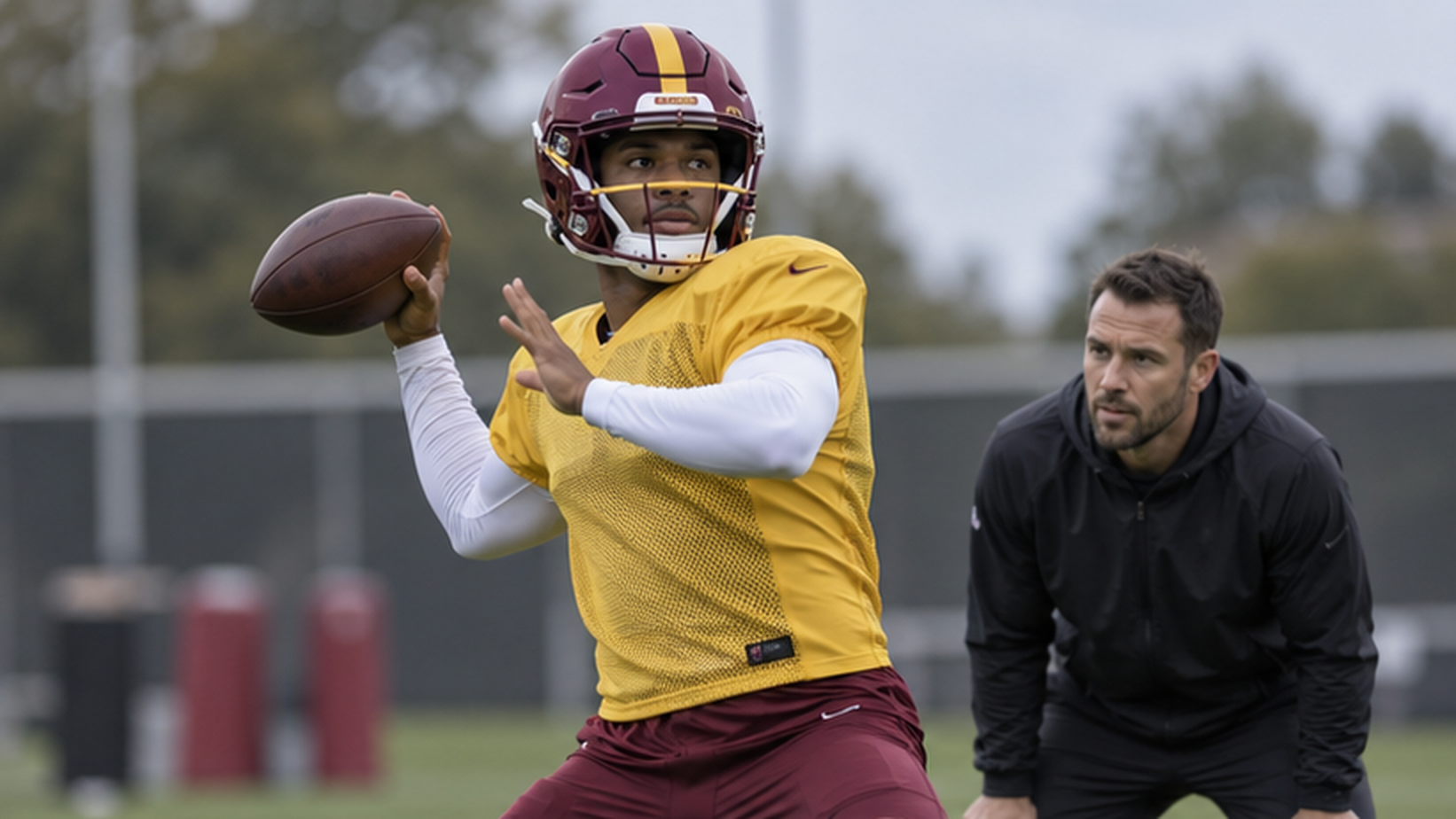
Daniels’s mobility normally forces a defence to leave an extra player back as insurance, which opens space for runners and short throws. If his movement is limited, the opponent can send pressure more aggressively and close off the inside routes. That is why his name on the team sheet alone is not enough; Washington must judge whether he can execute the elements that make the offence different. A partly fit quarterback can sometimes narrow the playbook more than a fully ready backup.
The London game brings its own rhythm
Matches in Europe disrupt the standard weekly preparation of NFL teams. Travel, the time difference and an unfamiliar stadium affect the training schedule, while the atmosphere is often more neutral than on a regular road trip. A team that settles into a routine quickly tends to make fewer technical mistakes in the first quarter. Washington therefore cannot let waiting on the Daniels decision slow the rest of its preparation or divide the players’ attention.
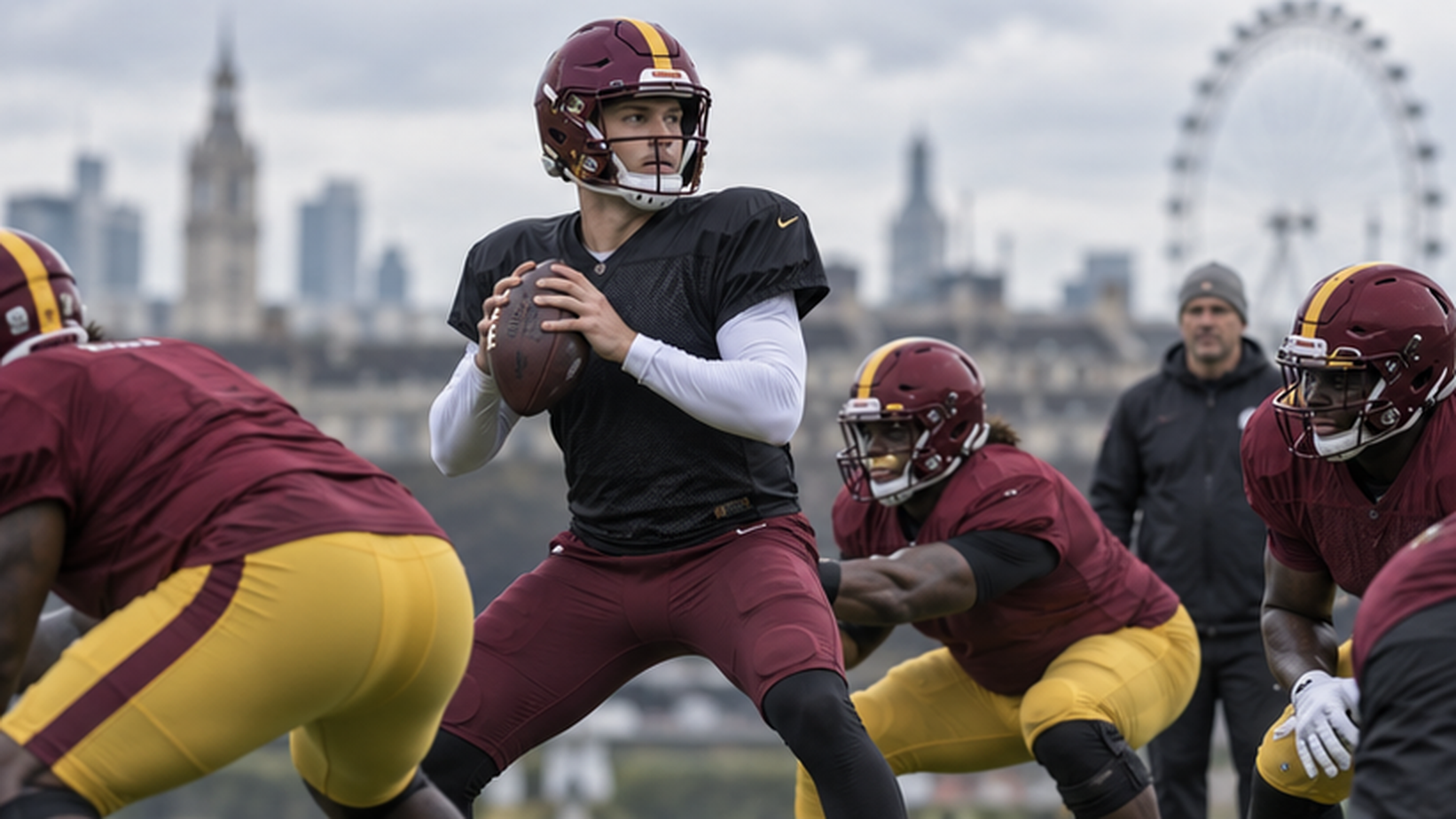
The opponent will prepare for both possibilities and look for an early signal in the formation, the motion and the first plays. Washington can hide part of its plan, but not the physical condition of its players. If Daniels starts, it matters that the offence does not immediately reveal any avoidance of a particular side or type of play. If he stays on the sideline, the backup needs enough repetitions before the game so that communication in a loud stadium does not become another problem.
The final update is expected after the last assessment and the official status report before kick-off. Until then, the only certainty is that Daniels is in London and taking an active part in preparations. Fans should not read the trip as a guarantee that he will play. For Washington, making the right medical and sporting call matters more than rushing its most important player back for a high-profile international event. The decision also affects the number of active players, since the team must set its backup option in advance. The medical report, warm-up and ability to run the full plan will count for more than a short clip from training. If there is a concern that contact could worsen his condition, it is more sensible to protect the quarterback for the rest of the season. Long-term availability is worth more than a single attractive game, even one played before an international crowd and carrying strong commercial interest. A cautious decision also protects the team’s stability over the coming weeks.