Olga Danilovic Leads Serbia's Women Into Wimbledon 2026

- Author: SerbianSport
- SerbianSport
Danilovic Steps Forward as Serbia's Flag-Bearer on the Hallowed Grass of SW19
When the gates of the All England Club swing open for Wimbledon 2026 on 29 June, Olga Danilovic will carry more than just a racket bag onto those famous lawns. She carries the hopes of a nation hungry for a new women's standard-bearer, a country whose tennis identity has long been defined by the extraordinary shadow of Novak Djokovic, but which is slowly, purposefully building a generation of women capable of competing at the very top of the game.
Danilovic, who has established herself as the undisputed Serbian women's number one, arrives at Wimbledon 2026 with ambition coursing through every fibre of her game. The main draw is set to be revealed on 26 June, with the tournament proper beginning three days later and running until 12 July. In a women's draw headed by world number one Aryna Sabalenka, the field remains fiercely competitive and full of intrigue. For Danilovic, the question is not whether she belongs at this level, but how far she can go when the conditions and the moment align.
Building a Career Worth Watching
Olga Danilovic's rise through professional tennis has been anything but a straight line. She grew up in one of the most tennis-rich environments on the planet, with Serbia producing more elite players per capita than almost any other nation. The pressure of expectation in such a country can be suffocating, yet Danilovic has consistently shown the mental toughness to handle it, maturing into a complete clay-court performer before turning her attention more seriously to the other surfaces.
She is tall and possesses a naturally penetrating ball-strike that can dismantle opponents before they have time to settle. Those physical attributes, combined with a competitive nature that coaches and hitting partners frequently cite, have allowed her to win matches against top-50 opposition on multiple occasions. The grass of Wimbledon offers a different kind of test — quick, low, unforgiving of hesitation — but the serve-and-groundstroke combination that defines her game is arguably better suited to the surface than it might first appear.
The broader Serbian tennis movement provides Danilovic with a support structure that few players from smaller nations can enjoy. Training facilities, a federation deeply invested in her development, and the galvanising example of Djokovic — who is also entered for Wimbledon 2026 and bidding for another title at the All England Club — all combine to create an environment in which ambition is not just permitted but expected.
Grass-Court Form and the Wimbledon Test
The grass-court season is famously brief and brutally revealing. Players who have spent months grinding on clay must re-calibrate everything — footwork, timing, tactics — within a narrow window of matches before the Grand Slam itself begins. Danilovic's ability to adapt quickly to different surfaces has been one of the hallmarks of her recent seasons, and that quality will be essential as she transitions from the slower clay swing to the fast, skidding conditions of the All England Club.
On grass, a powerful serve becomes an even more decisive weapon. The ability to generate angles out wide and awkward deliveries into the body are assets that right-handed returners find particularly difficult on a surface where the ball stays low and rushes through. If Danilovic can hold serve comfortably and put pressure on opponents' delivery games in return, she possesses the tools to cause upsets against higher-ranked players.
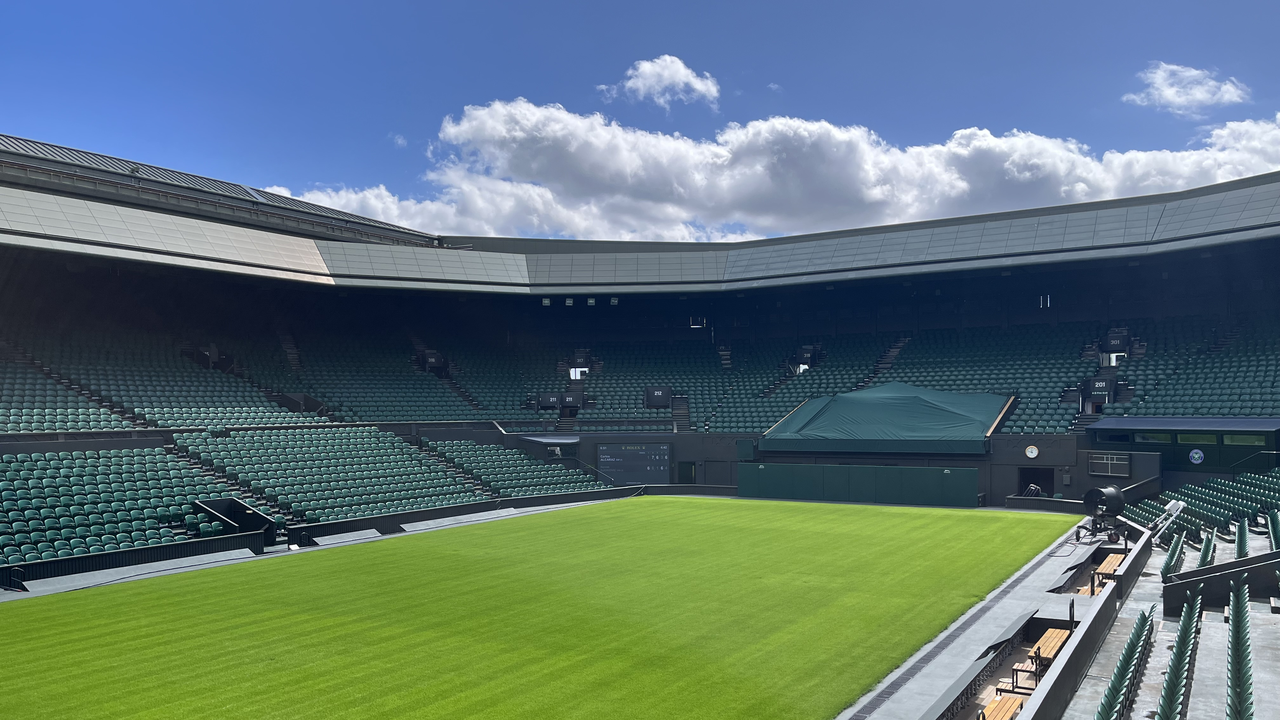
The challenge, as it is for every player who arrives at Wimbledon below the top tier of seedings, lies in the draw. With Carlos Alcaraz having withdrawn through injury — a development that reshapes the dynamics of the entire fortnight — the women's draw equally has its own talking points to navigate. Sabalenka, the women's number one seed, will be the player everyone must eventually overcome if they are to lift the Venus Rosewater Dish, and doing so on grass, where Sabalenka's powerful game translates particularly well, will require something close to a perfect performance.
What a Deep Run Would Mean for Serbian Women's Tennis
Context matters enormously in sport, and the context here is significant. Serbian women's tennis has historically operated in the vast slipstream of Djokovic's achievements, with the men's game dominating public attention, media coverage and investment. A sustained run at Wimbledon by Danilovic — a quarter-final, a semi-final, or beyond — would shift that dynamic in ways that could echo through the next decade of the sport in Serbia.
Young girls watching from Belgrade, Novi Sad or Nis would see a Serbian woman competing on the biggest stages and winning matches that matter. Sponsorships, federation funding, and the pipeline of talent all respond to visibility, and there is no stage in tennis more visible than the final week of Wimbledon. The ripple effects of a breakthrough performance are not merely symbolic; they are structural, influencing investment decisions and inspiring the next cohort of players who will follow in Danilovic's footsteps.
The full Serbian Wimbledon 2026 contingent is one of the strongest the country has assembled in recent memory, with multiple players across both draws capable of reaching the second week. But among the women, Danilovic stands alone as the figurehead, the player upon whose shoulders the narrative of the nation's women's game now rests. That is a weight she has shown she is ready to carry.
Discuss the news - leave a comment!
Go to comments ↓
Comments
0