Kecmanovic loses three-set match to Rinderknech in Montreal

- Author: SerbianSport
- SerbianSport
Miomir Kecmanovic lost 7-6, 4-6, 4-6 to Arthur Rinderknech at the Montreal Masters. The second-round match lasted two hours and 50 minutes.
Kecmanovic won a close opening set in a tie-break. Rinderknech then took one break in each remaining set and completed the comeback.
Kecmanovic took the first tie-break
The opening set remained close because both players protected serve during important games. Neither man created a lasting lead before the tie-break. Kecmanovic recovered from difficult moments and played the final points with greater accuracy. He won the tie-break 7-5 and moved ahead. Rinderknech continued relying on a strong first serve. The French player shortened several games and prevented Kecmanovic from controlling every return rally.
Kecmanovic still found chances when the first serve missed. His deeper returns placed pressure on the second ball and created longer exchanges. The first set gave the Serbian player an advantage but not full control. Rinderknech remained competitive in almost every service game.
One break changed the second set
Kecmanovic earned opportunities to break during the second set. He could not convert them, and Rinderknech stayed level through those difficult games. The French player then took his own chance. One successful return game created the margin needed for a 6-4 set. Kecmanovic continued competing in rallies but could not win back the lost service game. Rinderknech protected his advantage with direct serving in the final games.
The match therefore moved into a deciding set. Both players had won one close period through small differences on the most important points. Long games increased the physical demand. Nearly two hours had already passed, and neither player could expect a quick final set.
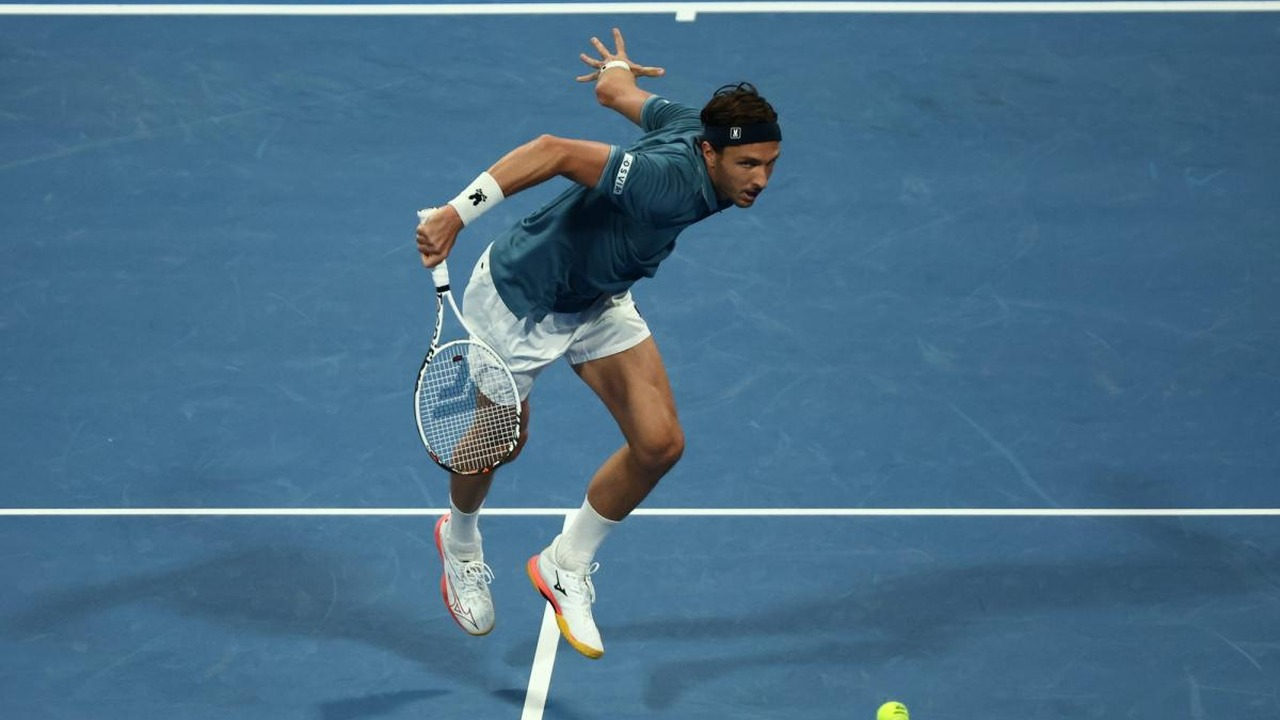
Arthur Rinderknech serves during a match on a hard court.
Kecmanovic missed break points in the deciding set
Kecmanovic created four break opportunities early in the third set. Rinderknech saved each one and avoided falling behind. Those escapes kept the French player close until the score reached 4-4. He then increased pressure on Kecmanovic's serve. Rinderknech secured the decisive break in the ninth game. The timing left Kecmanovic with only one immediate chance to respond.
The French player served out the match and completed a 4-6, 6-4, 6-4 comeback after losing the opening set. Kecmanovic's early opportunities became the key missed moment. He reached strong positions but did not turn them into a lead.
Frances Tiafoe is Rinderknech's next opponent
Rinderknech moved into the next round, where Frances Tiafoe awaits. The victory followed a demanding contest rather than a simple service display. Kecmanovic leaves Montreal after matching his opponent for almost three hours. The final difference was one break in each of the last two sets. His return game created enough chances to change the match. The problem came in converting those chances during the second and third sets.
The Serbian player also kept the score close after losing momentum. He remained level until the ninth game of the deciding set. The 7-6, 4-6, 4-6 result records a narrow defeat. Rinderknech handled the largest break points better and earned the place in the next round.
Rinderknech saved important break points
Kecmanovic reached several return positions that could have changed the score. Four early chances in the third set were the clearest example. Rinderknech protected those points with stronger first shots. Each save allowed him to continue serving without carrying a deficit into the next game.
Kecmanovic did not receive the same protection at 4-4. The French player converted his later opportunity and immediately moved within one service game of victory. This difference explains the result more clearly than the total match time. Both players competed closely, while Rinderknech converted the decisive late chance.
Two sets required a tie-break
A long contest requires repeated adjustments in movement and shot selection. Kecmanovic used deeper returns when Rinderknech's first-serve percentage dropped. Rinderknech answered by shortening points whenever the opportunity appeared. He protected energy and prevented every return game from becoming extended.
The final two sets ended with the same 6-4 score. Their pattern was similar, because one late break separated the players each time. Kecmanovic remained competitive until the closing minutes. Rinderknech advanced because he played the largest service and return points with greater precision.
Kecmanovic won the opening tie-break
Winning the tie-break gave Kecmanovic the lead without weakening Rinderknech's main weapon. The French player continued finding quick points on first serve. Kecmanovic needed to create pressure during the shorter second-serve windows. He reached those positions but did not secure the required break.
The same pattern returned early in the deciding set. Four chances appeared, and Rinderknech answered every one before the score could move. A narrow tennis match often turns on that repeated exchange. Kecmanovic created openings, while Rinderknech protected them and later converted his own chance.
Discuss the news - leave a comment!
Go to comments ↓
Comments
0