Djokovic Faces Auger-Aliassime With a Wimbledon Semifinal One Match Away

- Author: SerbianSport
- SerbianSport
Novak Djokovic returns to Centre Court on July 7 to face Felix Auger-Aliassime in the Wimbledon quarterfinals. The match gives Djokovic another direct test on grass.
The schedule gives Djokovic a clear stage
Djokovic will play Auger-Aliassime on Centre Court after the earlier matches on the main court. That puts the Serbian back in the place where he has built so much of his grass-court history. The setting is familiar, but the task is still demanding.
Auger-Aliassime brings a first-strike game that can shorten points and take time away from Djokovic. That is always a concern on grass. Djokovic will have to read the serve well, keep returns deep and make the Canadian play more balls than he wants.
The Safiullin win gave Djokovic rhythm
Djokovic had to work through Roman Safiullin in the previous round, and that may help him more than a quiet win would have. He had to adjust, defend and then attack with more purpose. Those are useful habits before a quarterfinal.
The key was that Djokovic found a more aggressive level when he needed it. He cannot allow Auger-Aliassime to control too many first shots. If Djokovic steps inside the baseline early, the match can move toward his patterns.
| Djokovic point | Main note |
|---|---|
| Round | Djokovic faces Auger-Aliassime in the Wimbledon quarterfinals. |
| Court | The match is scheduled for Centre Court. |
| Djokovic key | Deep returns and early baseline control. |
| Opponent danger | Auger-Aliassime can shorten points with serve and forehand. |
Also read: Serbia U20 Women Meet Poland After Italy Loss in Alytus. More news: Serbia Water Polo Training Gives Vujasinovic a Clean Preparation Block.
Auger-Aliassime has a real grass threat
This is not a matchup Djokovic can manage on name alone. Auger-Aliassime has the serve, forehand and court position to make the match uncomfortable. If he lands enough first serves, Djokovic may get fewer long rallies than he wants.
The Canadian also has to keep his own error count under control. Beating Djokovic on grass usually needs both power and patience. One without the other is not enough. Djokovic will test that balance from the first return game.
The Sinner path sits in the background
The draw keeps the idea of a Djokovic and Jannik Sinner meeting alive, but Djokovic cannot play that match early in his mind. Wimbledon quarterfinals punish players who look past the person at the net. Auger-Aliassime is strong enough to use any drop in focus.
Djokovic's best answer is simple. Hold serve cleanly, make the return games physical and make the scoreboard feel heavy for the opponent. If he does that, the pressure will move across the net.
A semifinal place would carry extra meaning
Another Wimbledon semifinal would not be just another line in Djokovic's record. At this stage of his career, each deep run adds a new proof of his grass-court control. He is still able to rebuild points and manage pressure better than almost anyone.
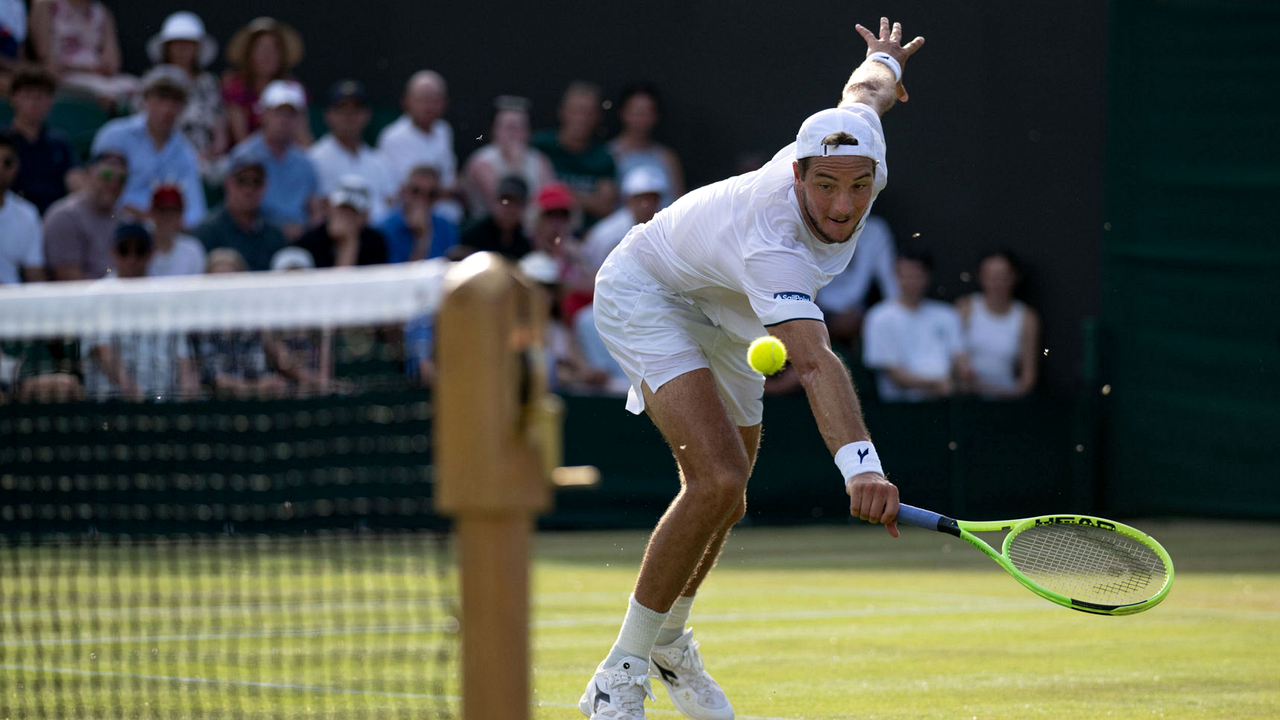
The match with Auger-Aliassime is the next proof point. It asks for sharp returns, calm service games and quick thinking. Djokovic has handled those questions many times, but he still has to answer them again on July 7.
The return games are the real scoreboard test
Djokovic does not need to break early to control the match, but he does need to make Auger-Aliassime feel pressure on serve. Even a few deep returns can change the way the Canadian chooses his next first shot.
Auger-Aliassime will try to keep points short. That is normal for his game on grass. Djokovic's answer is to make the first rally ball uncomfortable. A return at the feet or a low backhand slice can stop the point from becoming a clean forehand attack.
The Serbian also has to protect his own service rhythm. If he gives away cheap second-serve points, the match can become too emotional. Calm holds will let him play the return games with more patience.
For Serbian fans, the match is simple to read. If Djokovic is returning with depth and moving forward after neutral balls, he is in control. If he is reaching late and defending too often, the quarterfinal becomes more dangerous.
The crowd may feel the tension early
Centre Court knows what Djokovic has done at Wimbledon, but the crowd also reacts when a big server starts landing first strikes. Auger-Aliassime can create that tension if he holds with short points.
Djokovic's job is to make the match feel normal. Long return games, patient rallies and calm body language can pull the crowd back into his rhythm. That is a quiet weapon he has used for years.
Discuss the news - leave a comment!
Go to comments ↓
Comments
0